Rejoignez-nous pour un voyage dans le monde des livres!
Ajouter ce livre à l'électronique
Grey
Ecrivez un nouveau commentaire Default profile 50px
Grey
Abonnez-vous pour lire le livre complet ou lisez les premières pages gratuitement!
All characters reduced
Good Mood Revolution - Igniting the Power of Conscious Happiness - cover

Good Mood Revolution - Igniting the Power of Conscious Happiness

Matt O'Neill

Maison d'édition: Advantage Media Group

  • 0
  • 0
  • 0

Synopsis

Whether you're facing challenges or simply seeking to live a more fulfilling life, Good Mood Revolution is your companion on the journey to authentic happiness. Get ready to embrace the power of conscious happiness, light up the world with your positivity, and join the revolution that's changing lives one good mood at a time.
Disponible depuis: 17/12/2024.
Longueur d'impression: 206 pages.

D'autres livres qui pourraient vous intéresser

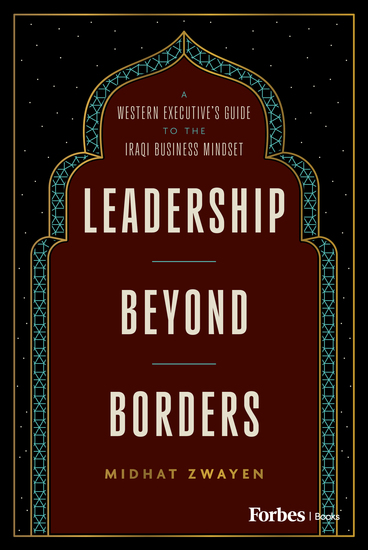
  • Leadership Beyond Borders - A Western Executive's Guide to the Iraqi Business Mindset - cover

    Leadership Beyond Borders - A...

    Midhat Zwayen

    • 0
    • 0
    • 0
    Western leaders face significant challenges when conducting business in Iraq, from navigating cultural differences to overcoming ingrained misconceptions. In Leadership Beyond Borders, Midhat Zwayen delivers a powerful guide to overcoming these obstacles with culturally attuned leadership practices.
    Voir livre
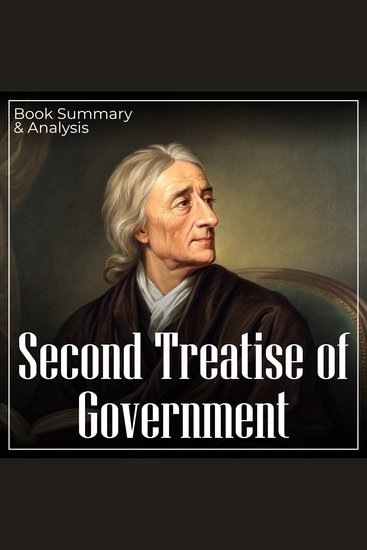
  • Second Treatise of Government: Book Summary & Analysis - cover

    Second Treatise of Government:...

    Briefly Summaries

    • 0
    • 0
    • 0
    This is a concise summary and analysis of Second Treatise of Government, by John Locke.
     
    It is not the original book and is not affiliated with or endorsed by John Locke.
     
    Ideal those seeking a quick and insightful overview.
     
    A foundational work in political philosophy and the Enlightenment, this text outlines a vision of a just and free society rooted in natural rights and the social contract. It argues for the legitimacy of government derived from the consent of the governed and provides a compelling case for individual liberty, property rights, and the rule of law. With its enduring influence on modern democratic systems, this work remains essential reading for understanding the principles of freedom and governance.
    Voir livre
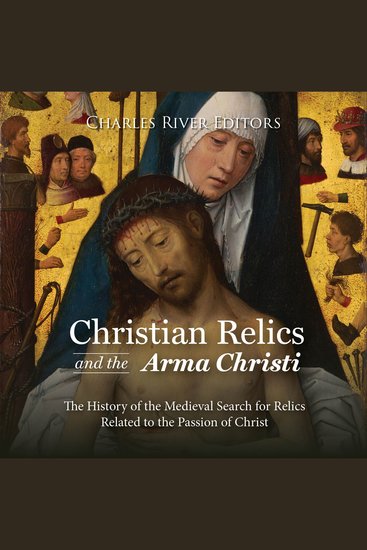
  • Christian Relics and the Arma Christi: The History of the Medieval Search for Relics Related to the Passion of Christ - cover

    Christian Relics and the Arma...

    Editors Charles River

    • 0
    • 0
    • 0
    Holy relics can be found in many different religions, whether Christian, pagan, Hindu, or Buddhist. A relic is defined as something directly associated with a revered saint, teacher, ancestor, or some miraculous manifestation of deity in the material world. A relic and a reliquary are two types of sacramental tools. A reliquary is a container or box for a relic, allowing it to be displayed to the public and thus transfer its powers to magical and liturgical works. There is another definition of a relic: anything that would be a miraculous manifestation of a deity in the material world. In Christianity, there are countless numbers of relics, most of them being associated with Jesus Christ. 
    In the early years of Christianity, it was forbidden to move and share the remains of saints and martyrs, and they were protected so that their final resting places, such as catacombs and cemeteries, remained intact. The earliest recorded Christian relics, specifically the bones and ashes of martyrs, date from the 2nd century. 200 years later, St. Ambrose and others set out to dig up the corpses and honor them. At that time, it was considered that every holy body could be dismembered and divided among the faithful to worship it. The remains of corpses sometimes came into someone else's hands as a gift, and sometimes they were stolen. At one point, the demand for holy bodies was such that bodyguards were assigned to dying saints to prevent their bodies from being dismembered after death. 
    The veneration of the relics of saints was so common among the faithful because they believed saints in Heaven interceded for believers on Earth. As a result, numerous healings and miracles were attributed to the relics, and many stories and myths about miracles arose from these beliefs. By word of mouth, the stories spread among the faithful, and finally, they were recorded in books.
    Voir livre

  • Plato's Laches - cover

    Plato's Laches

    Plato

    • 0
    • 0
    • 0
    Laches, a general in the Athenian army, saw Socrates fight bravely in the battle of Delium. When he and Nicias, another general, are asked to explain the idea of courage, they are at a loss and words fail them. How does courage differ from thoughtless and reckless audacity? Can a lion be said to be courageous? What about small children who have little idea of the dangers they face?
     
    Should we call people courageous who do not know whether their bravery will produce good or bad consequences? What kind of education and training promotes both courage and goodness in people, whether they are young or old? Plato constantly presents courage as an essential quality for all who seek to live a good life, so what does it mean when even the bravest leaders of Athens cannot tell us what courage really is?
    Voir livre
  • Strangers and Scapegoats - Extending God's Welcome to Those on the Margins - cover

    Strangers and Scapegoats -...

    Matthew S. Vos

    • 0
    • 0
    • 0
    We live in a world of oppositional relationships and increasing in-group/out-group divisions. Christian sociologist Matthew Vos explains how the problem of the stranger lies at the root of many problems humanity faces, such as racism, sexism, and nationalism. He applies classic sociological theory on "the stranger" to matters of faith and social justice, showing that an identity in Christ frees us to love strangers as neighbors and friends. The book also includes two guest chapters, one on intersex persons and the church and one on stranger-making in the "correctional" system.
    Voir livre
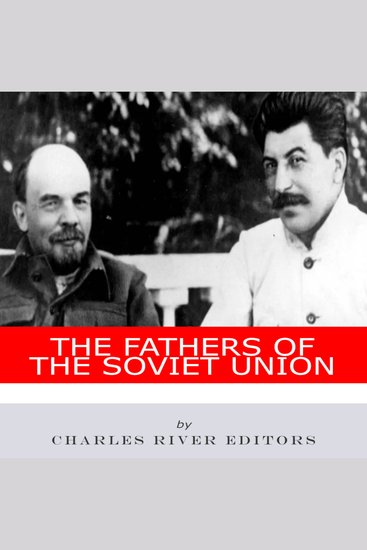
  • The Fathers of the Soviet Union - cover

    The Fathers of the Soviet Union

    Editors Charles River

    • 0
    • 0
    • 0
    Among the leaders of the 20th century, arguably none shaped the course of history as much as Vladimir Lenin (1870-1942), the Communist revolutionary and political theorist who led the Bolshevik Revolution that established the Soviet Union. In addition to shaping the Marxist-Leninist political thought that steered Soviet ideology, he was the first Soviet premier until his death and set the Soviet Union on its way to becoming one of the world’s two superpowers for most of the century, in addition to being the West’s Cold War adversary. 
    As it turned out, the creation of the Soviet Union came near the end of Lenin’s life, as he worked so hard that he had burned himself out by his 50s, dying in 1924 after a series of strokes had completely debilitated him. In the initial aftermath of Lenin’s death, Trotsky had been his ally’s heir apparent, and for those inclined to believe the Soviet experiment had started promisingly but gone astray, Trotsky became the embodiment of the betrayed promise of the early Bolshevik revolution. There were certain ironies in this widespread sympathetic interpretation of Trotsky’s legacy, because Trotsky had overseen and spearheaded campaigns of persecution against Russians suspected of “counterrevolutionary” leanings, and he had written a long tract defending these “terroristic” measures as necessary safeguards of the revolution. 
    Near the end of his life, Lenin expressly stated that the regime's power should not be put in the hands of the current General Secretary of the Communist Party, Joseph Stalin. Of course, Stalin managed to do just that, modernizing the Soviet Union at a breakneck pace on the backs of millions of poor laborers and prisoners. If Adolf Hitler had not inflicted the devastation of World War II upon Europe, it’s quite likely that the West would consider Stalin (1878-1953) the 20th century’s greatest tyrant.
    Voir livre