Join us on a literary world trip!
Add this book to bookshelf
Grey
Write a new comment Default profile 50px
Grey
Subscribe to read the full book or read the first pages for free!
All characters reduced
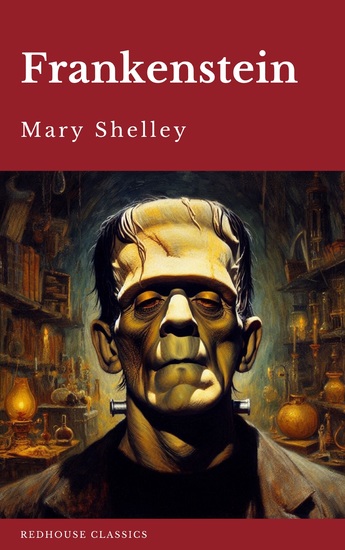
Frankenstein - The Original Gothic Horror Masterpiece - cover

Frankenstein - The Original Gothic Horror Masterpiece

Mary Shelley, Redhouse

Publisher: Redhouse

  • 1
  • 0
  • 0

Summary

Step into the dark world of "Frankenstein by Mary Shelley," where science and horror collide in this timeless tale of ambition and monstrosity.
"Frankenstein by Mary Shelley" takes you on a haunting journey through the life of Victor Frankenstein, a passionate scientist who defies nature by creating life from death. This gothic horror novel explores themes of creation, responsibility, and the human condition, all set against the backdrop of 19th-century Europe.
From the frozen tundras to the dark, shadowy alleys, follow the tragic tale of Frankenstein's creature—an eight-foot-tall being with yellow, translucent skin and a soul tormented by loneliness and rejection. Shelley's masterful storytelling and rich character development will captivate your imagination and leave you pondering the ethical boundaries of scientific discovery.
Celebrated for over two centuries, "Frankenstein" is hailed as one of the greatest literary works of all time. Endorsed by literary scholars and embraced by millions of readers worldwide, it has inspired countless adaptations in film, theater, and art. Critics rave: "A cornerstone of gothic literature," and "A profound reflection on human nature."
Don't miss out on this legendary classic that has influenced generations. Click the "Buy Now" button to add "Frankenstein by Mary Shelley" to your eBook collection and immerse yourself in a world of gothic horror and profound storytelling.
Available since: 06/19/2024.
Print length: 226 pages.

Other books that might interest you

  • Sam Jonah And The Remaking of Ashanti - cover

    Sam Jonah And The Remaking of...

    A.A. Taylor

    • 0
    • 0
    • 0
    Sam Jonah and the remaking of Ashanti recounts the inspirational life of one of Africa's most prominent black businessmen. From working underground as a shovel boy to his appointment as the CEO of the trailblazing African gold mining company, Ashanti Goldfields Corporation, Sam Jonah's determination to surmount every obstacle in a career strewn with hurdles makes for compelling reading. 
    Frenzied deals, boardroom cliffhangers, political scandal and private battles punctuate this unique account of the challenges of conducting 'First World' business in the 'Third World'. Through Jonah's corporate leadership we explore the paradox that a continent so richly endowed with gold and other minerals should find itself in such dire poverty. It is a hopeful story about breaking the confines of one's circumstances, not just for Africans but for individuals the world over.
    Show book
  • On Liberty - cover

    On Liberty

    John Stuart Mill

    • 0
    • 0
    • 0
    Classic book on the subject of liberty and personal rights. The author discusses in detail all the basic concepts and dilemmas related to the notion of 'liberty'.
    Show book
  • The Rise of Rage - Harnessing the Most Misunderstood Emotion - cover

    The Rise of Rage - Harnessing...

    Julie A. Christiansen

    • 0
    • 0
    • 0
    Rage through the centuries has shown that anger can be a catalyst for change; it can also be a tool employed in fear by those resisting reform or trying to quell protests or advancements by other people. Perhaps you too have experienced the rise of rage within yourself. You might be fed up with feeling angry and not having any way to express it. But counselor and psychotherapist Julie Christiansen says that if we take time to examine the belief systems that fuel our anger, we can free ourselves from the bondage that anger puts us in, learning how to make it work for us. 


    When we map out our anger, we can learn to manage it. With a ten-step program full of practical exercises such as defining your anger style, understanding your belief systems, releasing residual anger, and more, The Rise of Rage will help you: identify the ten anger styles; develop tools for resolving anger at work; give effective feedback and criticism; listen more effectively with a view to deepening connection; enhance communication in all manner of relationships; harness the power of forgiveness and acceptance; communicate effectively with angry people. 


    Embrace this journey of self-discovery with The Rise of Rage to learn what real anger is, what real forgiveness looks like, and which safe, effective, and successful anger resolution tools work best for you.
    Show book
  • Holy Roman Empire’s Conflicts with the Vatican The: The History of the Medieval Wars that Fractured Germany and Italy - cover

    Holy Roman Empire’s Conflicts...

    Charles River Editors

    • 0
    • 0
    • 0
    It has been famously pointed out that the Holy Roman Empire was neither holy, nor Roman, but it was also not an empire in the sense people expect when hearing the term. In theory, the emperor was the highest prince in Christendom, and his dominion extended the length and breadth of Western Europe. The empire had been created by the papacy in 801 when Pope Leo the Third famously crowned the supposedly unwitting Charlemagne in Saint Peter’s Basilica, intending to recreate the Western Roman Empire. In truth, the imperial power did not extend beyond central Europe, which by the beginning of the 16th century included Germany, northern Italy, and the Netherlands. Even in these lands, however, the emperor struggled to command obedience. His dominion over northern Italy was theoretical only, the cities of the Netherlands were deeply conscious of their ancient rights and privileges, and Germany had long ceased to be compliant. The latter had become a collection of principalities, dukedoms and bishoprics which vied with each other and pursued their own agendas. They were, however, united in only one sense: denying the emperor power and resisting attempts to centralize the government.  
    	At the same time, the secular sovereigns frequently butted heads with religious authorities back in Rome, and arguably none of the conflicts were as crucial as the War of the Keys and the Investiture Controversy. The tensions between the Holy Roman Empire and Church over the power to invest bishops with authority led to decades of civil war in Germany on the way to establishing the relationship between Church and state, elevating the status of the papacy and weakening the Holy Roman Empire. What is crucial in understanding the conflicts is to not view them with the benefit of hindsight. Most importantly, no nation as people recognize it today yet existed, as England, France, Germany, and Italy were largely geographical expressions, not national identities.
    Show book
  • We Are All Armenian - Voices from the Diaspora - cover

    We Are All Armenian - Voices...

    Aram Mrjoian

    • 0
    • 0
    • 0
    A collection of essays about Armenian identity and belonging in the diaspora. 


    In the century since the Armenian Genocide, Armenian survivors and their descendants have written of a vast range of experiences using storytelling and activism, two important aspects of Armenian culture. Wrestling with questions of home and self, diasporan Armenian writers bear the burden of repeatedly telling their history, as it remains widely erased and obfuscated. Telling this history requires a tangled balance of contextualizing the past and reporting on the present, of respecting a culture even while feeling lost within it. 


    We Are All Armenian brings together established and emerging Armenian authors to reflect on the complications of Armenian ethnic identity today. These personal essays elevate diasporic voices that have been historically silenced inside and outside of their communities, including queer, multiracial, and multiethnic writers. The eighteen contributors to this contemporary anthology explore issues of displacement, assimilation, inheritance, and broader definitions of home. Through engaging creative nonfiction, many of them question what it is to be Armenian enough inside an often unacknowledged community.
    Show book
  • Queering the Runes - Reclaiming Ancestral Wisdom in Rune Magic and Mythology - cover

    Queering the Runes - Reclaiming...

    Siri Vincent Plouff

    • 0
    • 0
    • 0
    Queering the Runes is a contemporary, inclusive, and forward-thinking approach to the runes that focuses on finding queer experience, life, and joy in the Elder Futhark. Siri comes to the runes as a queer, nonbinary reader, and presents a path for reclaiming the ancestral wisdom and mystery of the runes in a way that can provide insight and understanding of their sacred nature for masculine, feminine, and nongendered aspects of self. Written as a love letter to the runes, the gods, and the people who follow the Nordic path, Queering the Runes presents an alternative approach to the runes—one that creates a gentle container for those who want to follow this heathen path. Based on the author’s personal gnosis, as well as deep academic research on runes and Nordic culture, this book explores the root culture of the runes, both in terms of myth and of lived, real folkloric experience, and paves the way for understanding how to work with runes disencumbered from patriarchy and white supremacy.   Siri Vincent Plouff presents the traditional meanings of the runes, then helps the reader to queer the runes in their own way. Included are the lore associated with each rune, exercises to apply them to modern life, activities to engage with the runes (layouts, castings, and galdr), and advice on how to use the runes for divination. Throughout, the author provides journal prompts meant to help the reader channel the energy of specific runes, to get to know their energy, as well as to use the runes to help them move forward in a journey of self-discovery.  Queering the Runes seeks to blow open perceptions of the runes, exploring them as active, living symbols available to all, as well as the inherent connection with ancestral magic that comes with rune work.
    Show book