Join us on a literary world trip!
Add this book to bookshelf
Grey
Write a new comment Default profile 50px
Grey
Subscribe to read the full book or read the first pages for free!
All characters reduced
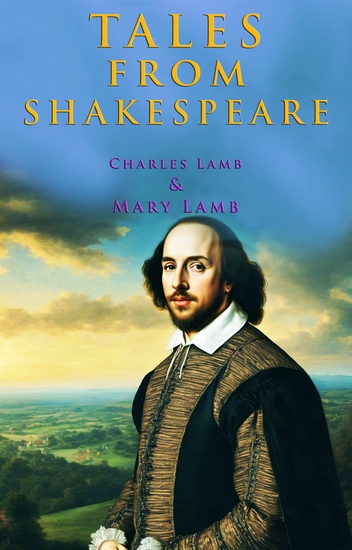
Tales from Shakespeare - cover

Tales from Shakespeare

Mary Lamb, Charles Lamb

Publisher: E-Kitap Projesi & Cheapest Books

  • 0
  • 0
  • 0

Summary

The following Tales in the Book are meant to be submitted to the young reader as an introduction to the study of Shakespeare, for which purpose his words are used whenever it seemed possible to bring them in; and in whatever has been added to give them the regular form of a connected story, diligent are has been taken to select such words as might least interrupt the effect of the beautiful English tongue in which he wrote: therefore, words introduced into our language since his time have been as far as possible avoided.

- THE TEMPEST
- A MIDSUMMER NIGHT'S DREAM
- THE WINTER'S TALE
- MUCH ADO ABOUT NOTHING
- AS YOU LIKE IT
- THE TWO GENTLEMEN OF VERONA
- THE MERCHANT OF VENICE
- CYMBELINE
- KING LEAR
- MACBETH
- ALL'S WELL THAT ENDS WELL
- THE TAMING OF THE SHREW
- THE COMEDY OF ERRORS
- MEASURE FOR MEASURE
- TWELFTH NIGHT; OR, WHAT YOU WILL
- TIMON OF ATHENS
- ROMEO AND JULIET
- HAMLET, PRINCE OF DENMARK
- OTHELLO
- PERICLES, PRINCE OF TYRE.

In those tales which have been taken from the Tragedies, the young readers will perceive, when they come to see the source from which these stories are derived, that Shakespeare's own words, with little alteration, recur very frequently in the narrative as well as in the dialogue; but in those made from the Comedies the writers found themselves scarcely ever able to turn his words into the narrative form: therefore it is feared that, in them, dialogue has been made use of too frequently for young people not accustomed to the dramatic form of writing. But this fault, if it be a fault, has been caused by an earnest wish to give as much of Shakespeare's own words as possible: and if the 'He said,' and 'She said,' the question and the reply, should sometimes seem tedious to their young ears, they must pardon it, because it was the only way in which could be given to them a few hints and little foretastes of the great pleasure which awaits them in their elder years, when they come to the rich treasures from which these small and valueless coins are extracted; pretending to no other merit than as faint and imperfect stamps of Shakespeare's matchless image. Faint and imperfect images they must be called, because the beauty of his language is too frequently destroyed by the necessity of changing many of his excellent words into words far less expressive of his true sense, to make it read something like prose; and even in some few places, where his blank verse is given unaltered, as hoping from its simple plainness to cheat the young reader into the belief that they are reading prose, yet still his language being transplanted from its own natural soil and wild poetic garden, it must want much of its native beauty.
It has been wished to make these Tales easy reading for very young children. To the utmost of their ability the writers have constantly kept this in mind; but the subjects of most of them made this a very difficult task. It was no easy matter to give the histories of men and women in terms familiar to the apprehension of a very young mind. For young ladies too, it has been the intention chiefly to write; because boys being generally permitted the use of their fathers' libraries at a much earlier age than girls are, they frequently have the best scenes of Shakespeare by heart, before their sisters are permitted to look into this manly book; and, therefore, instead of recommending these Tales to the perusal of young gentlemen who can read them so much better in the originals, their kind assistance is rather requested in explaining to their sisters such parts as are hardest for them to understand: and when they have helped them to get over the difficulties, then perhaps they will read to them (carefully selecting what is proper for a young sister's ear) some passage which has pleased them in one of these stories, in the very words of the scene from which it is taken; and it is hoped they will find that the beautiful extracts, the select passages..
Available since: 01/25/2024.
Print length: 400 pages.

Other books that might interest you

  • War And Peace - The Original Manuscript - cover

    War And Peace - The Original...

    Leo Tolstoy

    • 0
    • 0
    • 0
    Arguably the greatest literary masterpiece, War and Peace is an amazing blend of philosophy, history, spirituality, and love told through two families, the Rostovs and the Bolkonskys. The Rostovs personify the Russian spirit. Count Rostov, a generous, kind spendthrift, can deny his family nothing. His countess is a warm, loving, overindulged woman. These characteristics are reflected in their children, while the austere Bolkonskys are duty-bound. As normal human beings do, the three main characters grow, expand, and change over the course of fifteen years (1805-1820) beginning when Natasha Rostov is a young girl. It is a joy to watch her evolve into a beautiful, mature woman who loves two men: Prince Andrey Bolkonsky, an elegant, aristocratic army officer, and his friend, Count Pierre Bezukhov, a bear of a man who seeks answers to life in Freemasonry, mysticism, and superstition, and finally finding them in the philosophy of Platon Karatayev, an illiterate peasant soldier. Andrey and Pierre argue the plight of the peasants, the rights of the aristocracy, and the merits of war, mirroring Tolstoy’s own reflections. The main focus is Napoleon’s invasion of Russia and his ignominious retreat.
    Show book
  • The Odes of Anacreon - cover

    The Odes of Anacreon

    Anacreon

    • 0
    • 0
    • 0
    Anacreon (582 BCE–485 BCE) was a Greek lyric poet born in Teos, an Ionian city on the coast of Asia Minor. He likely moved to Thrace in 545 BCE with others from his city when it was attacked by Persians. He then moved to Samos, to Athens, and possibly again to Thessaly, seeking a safe place to write his poems as his patrons (including Polycrates, tyrant of Samos, and Hipparchus, brother of Athenian tyrant Hippias) kept being murdered. It is unknown where Anacreon died, though he lived to the unusually advanced age of 85. 
    Few of Anacreon's works survive, but those that do focus on wine, love (homosexual and heterosexual), and the overall pleasures of the legendary Roman symposium. Anacreon used various techniques in his writings, including self-deprecation and irony. The collection of miscellaneous Greek poems from the Hellenistic Age and beyond known as the Anacreontea was "mistakenly labeled" with Anacreon's name. Despite later appreciation for Anacreon's true poems, his works were not appreciated during his lifetime.
    This work is a collection of the Odes of Anacreon, translated into English by Thomas Moore.
    Show book
  • Uncle Vanya - cover

    Uncle Vanya

    Anton Chekhov

    • 0
    • 0
    • 0
    Uncle Vanya  is a play by the Russian playwright Anton Chekhov. It was first published in 1897.
    The play portrays the visit of an elderly professor and his glamorous, much younger second wife, Yelena, to the rural estate that supports their urban lifestyle. Two friends—Vanya, brother of the professor's late first wife, who has long managed the estate, and Astrov, the local doctor—both fall under Yelena's spell while bemoaning the ennui of their provincial existence. Sonya, the professor's daughter by his first wife, who has worked with Vanya to keep the estate going, suffers from her unrequited feelings for Astrov. Matters are brought to a crisis when the professor announces his intention to sell the estate, Vanya and Sonya's home, with a view to investing the proceeds to achieve a higher income for himself and his wife.
    Show book
  • Tin Woodman of Oz The [The Wizard of Oz series #12] - cover

    Tin Woodman of Oz The [The...

    L. Frank Baum

    • 0
    • 0
    • 0
    Join the Tin Woodman and the Scarecrow as they journey across the fantastic magical Land of Oz in search of the Tin Woodman's long-lost sweetheart. In a series of adventures sure to thrill Oz fans both old and new, these beloved friends face such challenges as a selfish giantess and a group of quarrelsome dragons--all to fulfill a promise made long ago to a beautiful Munchkin girl.
    Show book
  • Dracula - cover

    Dracula

    Bram Stoker

    • 0
    • 0
    • 0
    “Welcome to my house! Enter freely and of your own will!” - and with these words, the English lawyer Johnathan Harker is drawn into a world of infamous and legendary horror... A genre defining gothic horror classic, of the fight between modern and learned civilisation and ancient and terrible superstition. 
    Narrated by Michael Ward.
    Show book
  • Ancient Egyptian Legends - cover

    Ancient Egyptian Legends

    Margaret Alice Murray

    • 0
    • 0
    • 0
    Brought to you by Altrusian Grace Media and narrated by Matthew Schmitz. 
    "Ancient Egyptian Legends" by Margaret Alice Murray is a collection of mythological tales written in the early 20th century. The book recounts the rich legends of ancient Egyptian gods and their exploits, offering readers an accessible retelling of stories that have captivated scholars and enthusiasts alike. Aimed at a general audience, it presents narratives of legendary figures such as King Rameses, Osiris, and Horus, highlighting their adventures and relationships within a vibrant mythological context. The opening of the work introduces the premise and intentions behind the narratives presented. The author explains her approach to retelling these legends, maintaining the essence of the Egyptian stories while adapting them for English readers. The first story, "The Princess and the Demon," features King Rameses, who is beset with challenges surrounding his newfound love, Queen Neferu-Ra, and her family. As the tale unfolds, it explores themes of love, duty, and supernatural intervention, setting the stage for the epic conflicts and divine interactions that characterize the subsequent stories in the collection. Overall, this introduction promises a rich exploration of Egyptian mythology, inviting the reader into a fascinating world of gods, kings, and enchanted beings.  
    Eleven tales of mythology concerning the Ancient Egyptian gods and goddesses. Stories such as The Princess And The Demon, The King's Dream, The Book Of Thoth, The Scorpians Of Isis, The Battles Of Horus, The Name Of Ra and The Regions Of Night And Darkness.
    Show book