Begleiten Sie uns auf eine literarische Weltreise!
Buch zum Bücherregal hinzufügen
Grey
Einen neuen Kommentar schreiben Default profile 50px
Grey
Jetzt das ganze Buch im Abo oder die ersten Seiten gratis lesen!
All characters reduced
Bessie's Fortune - A Novel - cover

Bessie's Fortune - A Novel

Mary Jane Holmes

Verlag: DigiCat

  • 0
  • 0
  • 0

Beschreibung

In "Bessie's Fortune," Mary Jane Holmes intertwines themes of love, ambition, and social class against the backdrop of 19th-century America. Through the lens of the titular character, Bessie, Holmes crafts a narrative that explores the tension between societal expectations and personal desires. The novel is characterized by its vivid characterizations and rich descriptions, reflecting the sentimental literary style of the time while also offering critical insights into the role of women in a rapidly modernizing society. Holmes skillfully navigates the emotional landscape of her characters, inviting readers to discover the complexities of hope and fortune amidst both affluence and adversity. Mary Jane Holmes, a prominent author of the 19th century, was known for her keen observations of social dynamics, informed by her own experiences and the challenges faced by women of her era. Growing up in a small town in Massachusetts, Holmes's early life was steeped in the very struggles she encapsulated in her novels. Her deep empathy for her characters and commitment to portraying their inner conflicts are reflective of the societal transitions she witnessed, further enhancing the authenticity of Bessie's journey. "Bessie's Fortune" merits reading for those who appreciate character-driven narratives that delve into the intricacies of human motivations and societal pressures. Holmes's exploration of resilience and the quest for self-identity amidst external constraints resonates with contemporary readers, making it an essential addition to any literary collection.
Verfügbar seit: 16.09.2022.
Drucklänge: 408 Seiten.

Weitere Bücher, die Sie mögen werden

  • Hard Times - Full Cast Drama - cover

    Hard Times - Full Cast Drama

    Charles Dickens

    • 0
    • 0
    • 0
    In Charles Dickens' "Hard Times," the industrial landscape of Coketown serves as a bleak backdrop to a tale that explores the harsh realities of the 19th-century British society, a world driven by utilitarianism and the dehumanizing effects of industrialization. The novel is a powerful narrative that delves into the lives of the characters living in this grim, factory-dominated town. 
     
    The story is centered around two contrasting characters: Thomas Gradgrind, a strict and utilitarian-minded schoolmaster, and Josiah Bounderby, a wealthy factory owner. Gradgrind's rigid belief in facts and statistics and Bounderby's promotion of the idea that anyone can rise from poverty through hard work represent the heart of the utilitarian philosophy that permeates the town. However, as the narrative unfolds, it becomes clear that these ideals come at a great cost. Children are educated to suppress their imagination and emotions, while the workers in Bounderby's factories endure miserable conditions and are denied any sense of dignity. 
     
    Amid this grim setting, Dickens introduces characters like Stephen Blackpool, an honest and hardworking millhand, and Sissy Jupe, the daughter of a circus performer. These characters bring a sense of humanity and compassion to the story, challenging the utilitarian principles that have stripped Coketown of its soul. As the narrative progresses, the lives of the characters intersect in a series of hardships and trials, ultimately leading to moments of redemption and transformation. 
     
    "Hard Times" is a narrative that critiques the dehumanizing effects of an overly rational, industrial society while emphasizing the importance of compassion, imagination, and the recognition of the complexities of human nature.
    Zum Buch
  • The Stars in Their Courses - From their pens to your ears genius in every story - cover

    The Stars in Their Courses -...

    Mary Cholmondeley

    • 0
    • 0
    • 0
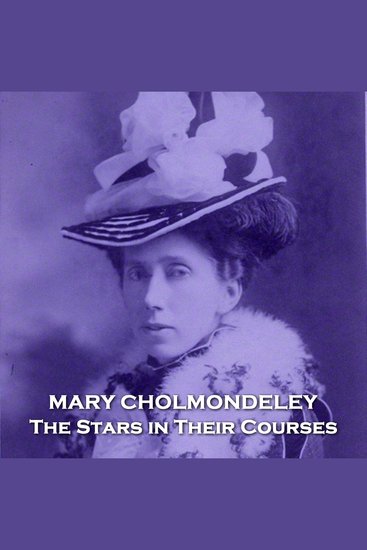
    Mary Cholmondeley was born in Hodnet near Market Drayton in Shropshire on June 8th 1859, the third of eight children. Her father was appointed rector in 1874 in succession to his father. Much of the first 30 years of her life was taken up with helping her sickly mother run the household and her father with parish work, and she herself suffered with asthma. 
    Mary began writing with in her teens. She wrote in her journal in 1877, "What a pleasure and interest it would be to me in life to write books. I must strike out a line of some kind, and if I do not marry (for at best that is hardly likely, as I possess neither beauty nor charms) I should want some definite occupation, besides the home duties." 
    Mary began by publishing some stories in The Graphic and her first novel ‘The Danvers Jewels’ a detective story followed in 1887. It was followed by Sir Charles Danvers (1889), Diana Tempest (1893). 
    After her father retired in 1896, she moved with him and her sister Diana to Condover Hall before selling it to move to Albert Gate Mansions in Knightsbridge, London. 
    Mary wrote the best seller ‘Red Pottage’ in 1899. It satirised religious hypocrisy and the conceit of country life. It was denounced as immoral. It also explored female sexuality. 
    During the war she did clerical work in the Carlton House Terrace Hospital. The sisters moved in 1919 to 4 Argyll Road, Kensington, where Mary died, unmarried, on 15th July 1925.
    Zum Buch
  • The Mystery of Edwin Drood - cover

    The Mystery of Edwin Drood

    Charles Dickens

    • 0
    • 0
    • 0
    The Mystery of Edwin Drood is the final novel by Charles Dickens, originally published in 1870.
    Though the novel is named after the character Edwin Drood, it focuses more on Drood's uncle, John Jasper, a precentor, choirmaster and opium addict, who is lusting after his pupil, Rosa Bud. Miss Bud, Edwin Drood's fiancée, has also caught the eye of the high-spirited and hot-tempered Neville Landless. Landless and Edwin Drood take an instant dislike to each other. Later Drood disappears under mysterious circumstances. The story is set in Cloisterham, a lightly disguised Rochester.
    Upon the death of Dickens on 9 June 1870, the novel was left unfinished, only six of a planned twelve instalments having been written. He left no detailed plan for the remaining instalments or solution to the novel's mystery, and many later adaptations and continuations by other writers have attempted to complete the story.
    Zum Buch
  • That Christ Is One - cover

    That Christ Is One

    Cyril of Alexandria

    • 0
    • 0
    • 0
    Cyril of Alexandria was the leading voice of Nicene orthodoxy in the Christological controversies between Constantinople (381) and Chalcedon (451). Assuming the mantle of the Cappadotian fathers, he answered the auguments of Nestorius who had changed the liturgy of Constantinople by altering the prayer which referred to Mary as the Mother of God. Although he died seven years before the Council of Chalcedon, his writings and formulations heavily influenced not only Chalcedon, but the entire trajectory of orthodox christological thought. (Summary by Jonathan Lange)
    Zum Buch
  • Fireside Reading of The Call of the Wild - cover

    Fireside Reading of The Call of...

    Jack London

    • 0
    • 0
    • 0
    Experiencing a story read out loud is one of the oldest forms of entertainment there is. Fireside Reading is a way to slow down, reconnect with the timeless wisdom of great books and rediscover the simple pleasure of being read to. Join Gildart Jackson in front of a cozy fire as he reads The Call of the Wild by Jack London to you and your family from beginning to end.
    Zum Buch
  • The Yellow Wallpaper - cover

    The Yellow Wallpaper

    Charlotte Perkins Gilman

    • 0
    • 0
    • 0
    Charlotte Perkins Gilman's powerful and unsettling story of a young woman descending into psychosis. Confined to her attic bedroom by her husband to ensure rest and recuperation after having her baby, and with nothing else to occupy her mind, the woman slowly becomes obsessed with the old yellow wallpaper covering the walls until she looses her grip on reality, imagining herself and others imprisoned behind the wallpaper. 
    An Almost Tangible production, read by Rebecca LaChance.
    Zum Buch