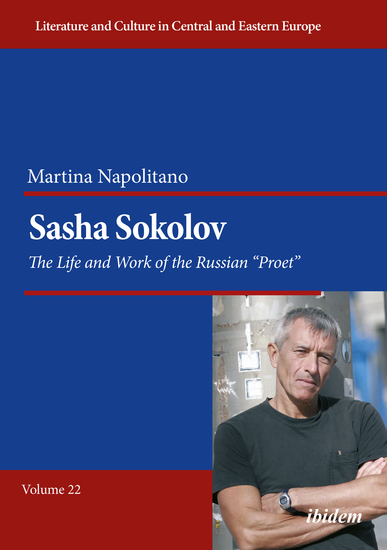
Sasha Sokolov: The Life and Work of the Russian “Proet”
Martina Napolitano
Editora: ibidem
Sinopse
Martina Napolitano explores the poetics of one of the most significant Russian authors of the 20th century: Sasha Sokolov.
Editora: ibidem
Martina Napolitano explores the poetics of one of the most significant Russian authors of the 20th century: Sasha Sokolov.
Popularizing the Past tells the stories of five postwar historians who changed the way ordinary Americans thought about their nation’s history. What’s the matter with history? For decades, critics of the discipline have argued that the historical profession is dominated by scholars unable, or perhaps even unwilling, to write for the public. In Popularizing the Past, Nick Witham challenges this interpretation by telling the stories of five historians—Richard Hofstadter, Daniel Boorstin, John Hope Franklin, Howard Zinn, and Gerda Lerner—who, in the decades after World War II, published widely read books of national history. Witham compellingly argues that we should understand historians’ efforts to engage with the reading public as a vital part of their postwar identity and mission. He shows how the lives and writings of these five authors were fundamentally shaped by their desire to write histories that captivated both scholars and the elusive general reader. He also reveals how these authors’ efforts could not have succeeded without a publishing industry and a reading public hungry to engage with the cutting-edge ideas then emerging from American universities. As Witham’s book makes clear, before we can properly understand the heated controversies about American history so prominent in today’s political culture, we must first understand the postwar effort to popularize the past.Ver livro
Why has the racial wealth gap between the median white households and median Black households remained stagnant over the past century, never narrowing below six to one? Leading expert on race and financial equality Mehrsa Baradaran attempts to answer this question in this sweeping yet accessible history. She shows how decades of the laws rooted in white supremacy have restricted Black access to capital, credit, homeownership, and other mechanisms of wealth creation while subsidizing the rising economic fortunes of white families. In The Racial Wealth Gap, Baradaran outlines two tectonic forces that have driven apart the economic fortunes of white and Black families: wealth creation for white Americans, who have been systematically receiving financial subsidies in the century and a half since emancipation, and wealth destruction for Black Americans—either by vigilante violence or by official means, such as allowing Black banks to collapse or building highways through segregated Black communities. These forces, combined with the racist notion that Black communities fail to rise because of their own moral, intellectual, or economic shortcomings, have kept Black families behind their white counterparts, despite decades of civil rights activism and national economic growth—a deep injustice that can only be achieved through reparations.Ver livro
These three United States presidents will be discussed in this book combo: 1 - From 1861 till his assassination in 1865, Abraham Lincoln was an American legal representative and statesman who functioned as the 16th president of the United States. Lincoln led the nation through the American Civil War, preserving the Union, eliminating slavery, enhancing the federal government, and helping the economy of the United States. Lincoln grew up on the frontier, mainly in Indiana, and was born into poverty in a log cabin. He was self-taught and went on to end up being a legal representative, Whig Party leader, Illinois state lawmaker, and member of the U.S.A. Congress for Illinois. 2 - George Washington was an American soldier, statesman, and Founding Father who worked as the nation's first president from 1789 to 1797. Washington was called leader of the Continental Army by the Continental Congress, and he led the Patriot forces to triumph in the American Revolutionary War. He also commanded the Constitutional Convention of 1787, which developed the USA Constitution and a federal government. For his different management throughout the nation's developmental years, Washington has been called the "Father of the Nation." 3 - Andrew Jackson was an American attorney, soldier, and statesman who acted as the seventh president of the U.S. from 1829 to 1837. Jackson rose to prominence as a basic in the US Army and served in both homes of Congress before being chosen to the presidency. Jackson, an expansionist president, defended the rights of the "commoner" and the Union against a "corrupt upper class."Ver livro
Inflation is back, and its impact can be felt everywhere, from the grocery store to the mortgage market to the results of elections around the world. Yet the conventional wisdom about inflation is stuck in the past. Since the 1970s, there has only really been one playbook for fighting inflation: raise interest rates, thereby creating unemployment and a recession, which will lower prices. But this simple story hides a multitude of beliefs about why prices go up and how policymakers can wrestle them back down, beliefs that are often wrong, damaging, and have little empirical basis. Leading political economists Mark Blyth and Nicolò Fraccaroli reveal why inflation really happens, challenge how we think about it, and argue for fresh approaches to combat it. With accessible and engaging commentary, and a good dose of humor, Blyth and Fraccaroli bring the complexities of economic policy and inflation indices down to earth. Climate shocks, demographic change, geopolitical tensions, and politicians promising to upend the global order are all combining to create a more inflationary future, making a new paradigm for understanding inflation urgently necessary. Astute, timely, and engaging, Inflation is a must-listen for anyone seeking to understand the forces shaping our economy and politics.Ver livro
The war in Ukraine did not start on 24 February 2022 - Jakob Hauter investigates the escalation of violence in the spring and summer of 2014.Ver livro
Meditations by Marcus Aurelius – Annotated Edition A modern version with a new translation and step-by-step explanations of each meditation, designed for today’s reader. What if one of the most powerful tools for inner strength and clarity was written nearly 2,000 years ago—and finally made truly accessible? This isn’t the usual edition of Meditations. It’s a complete and modern reworking of Marcus Aurelius’s timeless wisdom, adapted for real life—here and now. Inside, you’ll find a clear, direct, and human new translation. Each meditation is followed by a short explanation that helps you grasp its meaning and apply it in practice. No more confusion. No background in philosophy needed. Includes a historical introduction revealing the real Marcus Aurelius: not just a Roman emperor, but a man facing stress, grief, war, duty, and doubt—just like us. At the end of each of the 12 original Books, you’ll also find chapter-by-chapter commentary, offering deeper insight into key Stoic themes—helping you pause, connect the dots, and reflect more deeply. Why readers love this edition:It’s practical: every meditation becomes a usable toolIt’s clear: no outdated or obscure languageIt’s complete: no cuts, no missing contentIt’s accessible: perfect even for first-time readersIt’s transformative: not just informative, but truly impactful Ideal for anyone seeking:A modern approach to Stoic philosophyTools to strengthen the mind and regulate emotionsA practical guide to personal growthA genuine connection with Marcus Aurelius’s thoughtA deep, thoughtful, and transformative reading or listening experience Don’t just read Marcus Aurelius. Understand him. Learn from him. And become unshakable.Ver livro