Begleiten Sie uns auf eine literarische Weltreise!
Buch zum Bücherregal hinzufügen
Grey
Einen neuen Kommentar schreiben Default profile 50px
Grey
Jetzt das ganze Buch im Abo oder die ersten Seiten gratis lesen!
All characters reduced
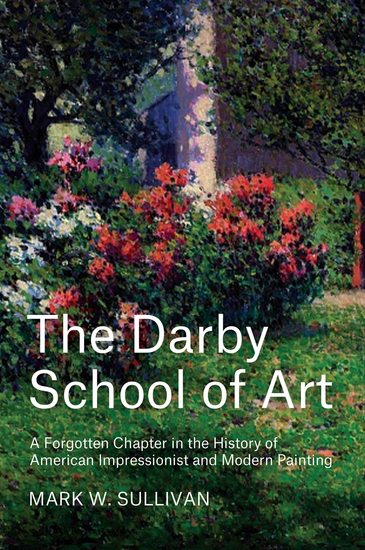
The Darby School of Art - A Forgotten Chapter in the History of American Impressionist and Modern Painting - cover

The Darby School of Art - A Forgotten Chapter in the History of American Impressionist and Modern Painting

Mark W. Sullivan

Verlag: Brookline Books

  • 0
  • 0
  • 0

Beschreibung

This first full-length account of the Darby School of Art overturns Philadelphia’s long-held unwarranted reputation and demonstrates that Philadelphia was a hub of avant-garde painting in the early twentieth century.

This first full-length account of the Darby School of Art overturns Philadelphia’s long-held unwarranted reputation as artistically stodgy—unwilling and unable to embrace Impressionism, post-Impressionist, and abstract art—and demonstrates that Philadelphia was more avant-garde in the early twentieth century than previously thought.

This is the story of an almost completely forgotten summer art school that flourished first in Darby, PA, and then in Fort Washington, PA, between 1898 and 1918. The Darby School of Art was founded and operated by Thomas Anshutz and Hugh Breckenridge, two artists who taught during the academic year at the Pennsylvania Academy of the Fine Arts. Anshutz and Breckenridge brought a lot of new ideas about painting back to Philadelphia after their European sojourns, and introduced those ideas to a public that was initially not very responsive to Impressionism, Post-Impressionism, and semi-abstract art. But an appreciation for modern styles of painting began to slowly grow among Philadelphia artists and collectors, and Anshutz and Breckenridge were in the forefront of this development. They also sympathized with what some have called the "New Woman" movement, which backed women who wanted to pursue careers outside of the home.

In this new history, expert Mark Sullivan argues that the Philadelphia area was a genuine hub of avant-garde painting in the early twentieth century, even though it has earned the reputation of lagging far behind New York City in its openness to new styles of painting. It also discusses how the Darby School should be recognized as an institution that got behind the idea of women as professional artists at a time when that concept was quite radical.
Verfügbar seit: 15.11.2023.
Drucklänge: 200 Seiten.


Weitere Bücher, die Sie mögen werden

  • Ancient America - Fifty Archaeological Sites to See for Yourself - cover

    Ancient America - Fifty...

    Kenneth L. Feder

    • 0
    • 0
    • 0
    Visit fifty amazing places highlighting indigenous peoples’ art, engineering, and more in “a thoroughly enjoyable guide to America’s prehistory.” ―American Archaeology   Well-traveled anthropologist Kenneth Feder invites readers to explore the stunning technological, architectural, engineering, and artistic achievements of America’s first peoples. Part travel guide, part friendly reference, Ancient America showcases fifty iconic and publicly accessible sites located across the contiguous United States, most in state and national parks—including monumental pyramids of earth, “castles” ensconced in cliff niches, and vast rock art galleries. Among the places profiled are:     Four World Heritage Sites (Chaco Canyon, NM; Mesa Verde, CO; Cahokia, IL; Poverty Point, LA)  Numerous Historic Landmarks and National Monuments (including Crystal River, FL; Town Creek Mound, NC; Casa Grande, AZ; and Hovenweep, UT)  Stunningly diverse sites ranging from Serpent Mound (OH) and Horsethief Lake (WA) to Canyon de Chelly (AZ) and Nine Mile Canyon (UT)    In addition to practical visitor information, Feder tells the fascinating stories of each site as revealed by archaeological research. Introductory chapters delve into the deep past of Native America; historical and cultural details as well as original photography round out the site entries.    “Sites are . . . ranked on a number of factors useful for visitors, including ‘Ease of Road Access,’ ‘Natural Beauty,’ ‘Kid Friendliness,’ and the overall ‘Wow Factor.’ . . . will inspire readers to visit places that will connect them to the early peoples of North America.” ―Booklist
    Zum Buch
  • The War in the Air - How Aerial Combat Changed Warfare Forever - cover

    The War in the Air - How Aerial...

    Sage Winters

    • 0
    • 0
    • 0
    The early 20th century marked a transformative period in military history, where the introduction of flight reshaped the very nature of warfare. Prior to this, battles were fought on the ground and at sea, with strategy revolving around infantry, artillery, and naval power. However, as aviation technology advanced rapidly, it presented military commanders with new opportunities and challenges that would forever alter how conflicts were conducted. 
      
    At the outset of World War I, the concept of aerial combat was in its infancy. Airplanes were initially seen as reconnaissance tools, providing vital intelligence for ground forces. Yet, it didn’t take long for the potential of aircraft to be realized in more aggressive terms. Pioneers such as the Wright brothers had already demonstrated the possibilities of flight, but the practical application of aircraft in combat was a game-changer. The skies above the battlefield soon became a new front, and aviation quickly proved indispensable in both strategic and tactical operations. 
      
    The early airmen of World War I were explorers of a new domain, and their role would evolve from mere observers to active participants in combat. The introduction of fighter aircraft, along with advancements in technology like the machine gun, turned the skies into a dangerous and dynamic environment. Aerial dogfights became iconic moments of the war, and the stakes of air superiority were made clear. As aircraft became faster, more maneuverable, and capable of carrying greater payloads, they not only impacted the outcome of individual battles but also began to influence the strategic decisions of entire nations.
    Zum Buch
  • The Hidden History of American Democracy - Rediscovering Humanity’s Ancient Way of Living - cover

    The Hidden History of American...

    Thom Hartmann

    • 0
    • 0
    • 0
    America's most popular progressive radio host and New York Times bestselling author Thom Hartmann paves the way to saving our democracy. 
     
    In this powerful, sweeping history and analysis of American democracy, Thom Hartmann shows how democracy is the one form of governance most likely to produce peace and happiness among people. 
     
    With the violent exception of the Civil War, American democracy resisted the pressure to disintegrate into factionalism for nearly two centuries, and now our very system of democratic elections is at stake. So how do we save our democracy? 
     
    Hartmann's newest book in the celebrated Hidden History Series offers a clear call to action and a set of solutions with road maps for individuals and communities to follow to create a safer, more just society and a more equitable and prosperous economy.
    Zum Buch
  • Combing Through the White House - Hair and Its Shocking Impact on the Politics Private Lives and Legacies of the Presidents - cover

    Combing Through the White House...

    Theodore Pappas

    • 0
    • 0
    • 0
    Read by the author. 
    Discover a fascinating and novel look at the U.S. presidents, the first families, and American history—all through the lens of hair. With meticulous detail and engaging storytelling, encyclopedia editor Theodore Pappas combs through American history, teasing out long-forgotten and little-known ways that hair has influenced the presidency and the public and private lives, personal scandals, and tragedies of the men and women who have occupied the White House. 
    Go deep into the history of such topics as:Abraham Lincoln's famously ridiculed appearance and the surprising role hair played in both his presidency and assassinationJohn F. Kennedy's connection to James Bond and how hair factored into his vast image-making and infidelitiesThe lush tradition of collecting hair as a way of honoring leaders, remembering our loved ones, and preserving their memoriesScientific hair analysis and how DNA has been used to solve long-standing presidential mysteriesThe connection of hair to the lives, loves, scandals, and tragedies that shaped presidents, first ladies, and the nation at large 
      
    This unique window into the past shines entertaining new light on the decisions, relationships, and tragedies that have shaped the role of the president and the place of the U.S. in the world. Whether you're interested in presidential trivia or historical mysteries, Combing Through the White House personalizes the past through an element of life we can all relate to—hair—giving us new glimpses into our country and even ourselves. 
    The images can be found in the audiobook companion PDF download.
    Zum Buch
  • Dakota War of 1862 The: The History and Legacy of the Sioux Uprising during the American Civil War - cover

    Dakota War of 1862 The: The...

    Editors Charles River

    • 0
    • 0
    • 0
    Despite being one of the most erstwhile foes the U.S. government faced during the Indian Wars, the Sioux and their most famous leaders were grudgingly admired and eventually immortalized by the very people they fought. Sitting Bull and Crazy Horse remain household names due to their leadership of the Sioux at the fateful Battle of the Little Bighorn, where the native warriors wiped out much of George Custer’s 7th Cavalry and inflicted the worst defeat of the Indian Wars upon the U.S. Army. Red Cloud remains a symbol of both defiance and conciliation, resisting the Americans during Red Cloud’s War but also transitioning into a more peaceful life for decades on reservation.  
    	However, one of the more overlooked conflicts the U.S. Army had with the Sioux took place during the American Civil War. It is known by various names, including the Dakota War, the US-Dakota War, the Dakota Uprising, the Sioux Outbreak, and Little Crow’s War (after the principal Dakota leader), but the current most commonly used name for the war is the “Dakota War.” Two of the four Dakota tribes in the state unleashed their anger and frustration on largely immigrant communities that were heavily German or Norwegian, and the massacres took a heavy toll. In the process, the conflict featured the largest Indian siege of an Army fort in American history, and the end of the conflict brought the largest mass execution in American history.  
    	Indeed, the total loss of life during the Dakota War was perhaps the second largest of all the Indian Wars in North America, second only to the bloody King Philip’s War in colonial New England in the late 17th century, during which more than 1,000 settlers were killed. Throughout the Dakota War, as many as 800 whites were killed, although no one knows the total, and many of the victims were buried in anonymous mass graves.
    Zum Buch
  • Creative Imagination - cover

    Creative Imagination

    Warren Hilton

    • 0
    • 0
    • 0
    "Creative Imagination" by Warren Hilton explores the power of the human mind in generating innovative ideas and solutions. Hilton delves into the process of harnessing one's imagination to enhance problem-solving skills and boost personal and professional creativity. Through practical insights and exercises, the book aims to inspire readers to unlock their creative potential and apply it to various aspects of life. Read in English, unabridged.
    Zum Buch