Begleiten Sie uns auf eine literarische Weltreise!
Buch zum Bücherregal hinzufügen
Grey
Einen neuen Kommentar schreiben Default profile 50px
Grey
Jetzt das ganze Buch im Abo oder die ersten Seiten gratis lesen!
All characters reduced
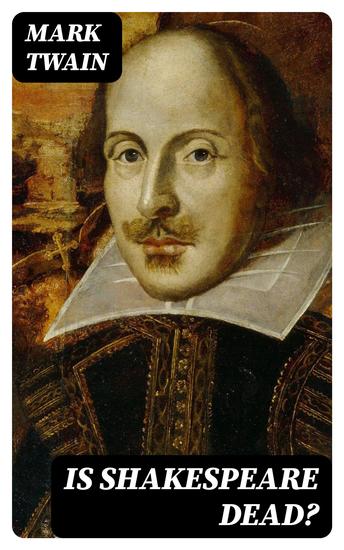
Is Shakespeare Dead? - From My Autobiography - cover

Is Shakespeare Dead? - From My Autobiography

Mark Twain

Verlag: DigiCat

  • 0
  • 0
  • 0

Beschreibung

In "Is Shakespeare Dead?", Mark Twain crafts a provocative and acerbic examination of the legacy and identity of William Shakespeare, blending sharp wit with incisive commentary. The book is structured as a series of essays that challenge the conventional views surrounding Shakespeare's authorship, drawing on Twain's characteristic humor and keen observational skills. Published in 1909, the work navigates the intersections of literary criticism and cultural folklore, reflecting the burgeoning debates of Twain's time about authorship and authenticity in literature. Mark Twain, born Samuel Langhorne Clemens, was a seminal American writer whose works often critiqued societal norms and human folly. His own experiences as a traveler and commentator on American culture likely informed his skeptical take on Shakespearean canon. Twain's engagement with Shakespeare transcends mere critique; he sought to engage the reader in a larger dialogue about literary traditions, authority, and the nature of creativity. This book is a compelling read for scholars, students, and literary enthusiasts alike, as it invites readers to question the accepted narratives of literary history. Twain's incisive arguments not only entertain but also provoke deeper contemplation about the origins and ownership of great literary works, making it an essential addition to any literary collection.
Verfügbar seit: 16.09.2022.
Drucklänge: 54 Seiten.

Weitere Bücher, die Sie mögen werden

  • A Rare Recording of President Theodore Roosevelt - cover

    A Rare Recording of President...

    President Theodore Roosevelt

    • 0
    • 0
    • 0
    Theodore Roosevelt Jr. (October 27, 1858 - January 6, 1919) was an American politician, statesman, soldier, conservationist, naturalist, historian, and writer who served as the 26th president of the United States from 1901 to 1909. He previously served as the 25th vice president under President William McKinley from March to September 1901 and as the 33rd governor of New York from 1899 to 1900. Assuming the presidency after McKinley's assassination, Roosevelt emerged as a leader of the Republican Party and became a driving force for anti-trust and Progressive policies. When running as the third-party Progressive (Bull Moose) candidate for president of the United States in 1912, Theodore Roosevelt recorded a number of campaign speeches made in August of 1912, including "The 'Abyssinian Treatment' Administered to Standard Oil" and "Why the Trusts and Bosses Oppose the Progressive Party," a criticism of 1912 presidential election opponent, Woodrow Wilson, and a greeting to the American Boy's Progressive League on March 4, 1913.
    Zum Buch
  • Summary of Michael Newton's Destiny of Souls - cover

    Summary of Michael Newton's...

    Falcon Press

    • 0
    • 0
    • 0
    Buy now to get the main key ideas from Michael Newton's Destiny of Souls 
      
    In Destiny of Souls (2009), hypnotherapist Michael Newton presents his vision of the spirit world and how it works. Based on case studies of his patients, Newton answers pressing questions about the life of a soul in the spirit world: its birth, incarnation, reincarnation, and development both on Earth and beyond. After death on Earth, the soul travels back to the spirit world where it joins its soul group and there evolves, learns, socializes, and prepares for its next incarnation. But the activity of souls is not limited to the spirit world. They also take part in life on Earth as visitors or helpers and assist humans in their spiritual journeys.
    Zum Buch
  • Swing Hard in Case You Hit It - My Escape from Addiction and Shot at Redemption on the Trump Campaign - cover

    Swing Hard in Case You Hit It -...

    Tim Murtaugh

    • 0
    • 0
    • 0
    When he woke up in jail in Fairfax County, Virginia, in 2015, Tim Murtaugh had no way of knowing he'd be a senior leader on the reelection campaign for the president of the United States less than four years later. 


    What began as a form of high school amusement quickly became an addiction, which over decades would lead Murtaugh to the edge of ruin. Able to beat the disease of alcoholism only under the threat of losing everything, and with the support of a loving wife and family, Murtaugh managed to recover, revive his career, and make it to the top of the political world. 


    Travel along on the 2020 Trump campaign as Murtaugh shares stories—never published before—from his two years as communications director, navigating a hostile media, the COVID-19 pandemic, highly anticipated debates, Election Day 2020, January 6, and life on the most-watched political campaign in world history. 


    Swing Hard in Case You Hit It is a redemption story unlike any other—from being on the verge of complete self-destruction to flying on Air Force One with President Donald J. Trump—that doesn't come with a happy Hollywood ending.
    Zum Buch
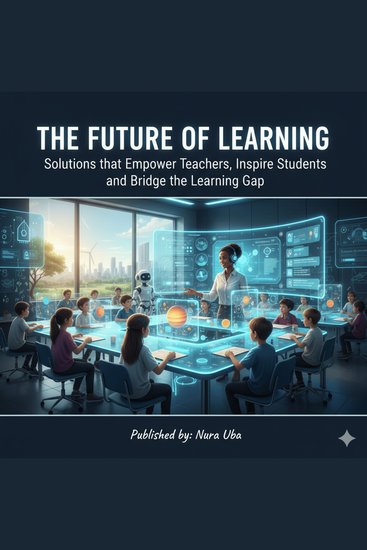
  • The Future of Learning - Solutions That Empower Teachers Inspire Students and Bridge the Learning Gap - cover

    The Future of Learning -...

    Nura Uba

    • 0
    • 0
    • 0
    Education is changing but not fast enough. Around the world, schools are struggling with outdated curricula, rigid testing, teacher burnout, and a widening gap in access and opportunity. The Future of Learning: Solutions That Empower Teachers, Inspire Students, and Bridge the Learning Gap offers a powerful blueprint for reimagining how we teach and learn in the 21st century. 
    This Audiobook exposes the deep flaws in today’s education system from disengaged students and overworked teachers to the misuse of technology and presents practical, real-world solutions drawn from inspiring global examples. It explores how empowering teachers, redesigning curricula, integrating meaningful technology, and supporting mental health can create classrooms where every student thrives. 
    At its heart, The Future of Learning is about restoring purpose and passion to education. It highlights the shift from rote memorization to critical thinking, creativity, and real-world problem-solving. Through stories from Finland, Singapore, India, and beyond, listeners discover how innovation, equity, and community collaboration can build a learning system that works for everyone. 
    Whether you’re an Educator, Parent, Policymaker, or Lifelong Learner, this audiobook will challenge and inspire you to see education not as a broken institution but as humanity’s greatest opportunity to shape a brighter, fairer, and more connected future. 
    Zum Buch
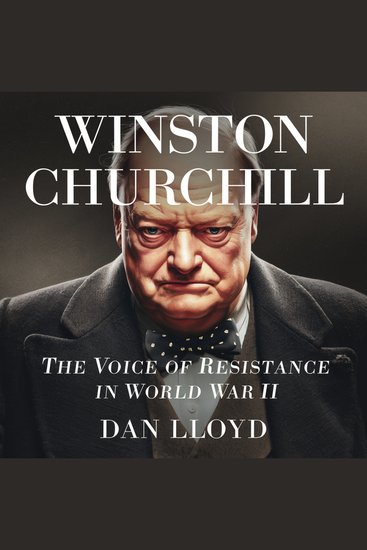
  • Winston Churchill – The Voice of Resistance in World War II - The Story of Churchill’s Leadership Wartime Speeches and His Fight Against Nazi Germany - cover

    Winston Churchill – The Voice of...

    Dan Lloyd

    • 0
    • 0
    • 0
    Winston Churchill was more than just a politician—he was the voice of defiance when Britain stood alone against Nazi Germany. As Prime Minister during World War II, his powerful speeches, strategic leadership, and unwavering resolve inspired a nation to fight for freedom. 
    This audiobook takes you through Churchill’s rise to power, his most famous speeches, and his key decisions in the war. From the Battle of Britain to D-Day, discover how his leadership shaped the course of history. 
    Winston Churchill – The Voice of Resistance in World War II is a gripping account of one of the most influential figures of the 20th century. Perfect for history lovers, political enthusiasts, and anyone inspired by strong leadership in times of crisis.
    Zum Buch
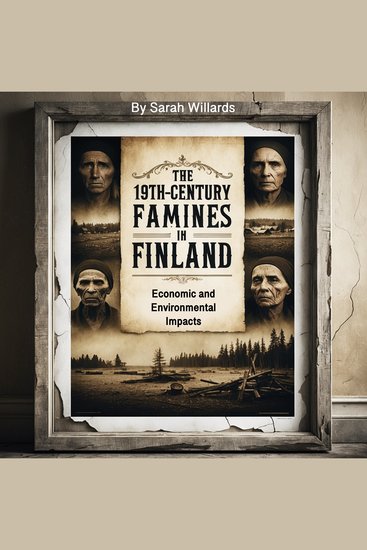
  • The 19th-Century Famines in Finland - Economic and Environmental Impacts - cover

    The 19th-Century Famines in...

    Sarah Willards

    • 0
    • 0
    • 0
    In the 19th century, Finland was a region undergoing profound political, social, and economic transformation. Following centuries of Swedish rule, Finland was ceded to the Russian Empire in 1809, becoming an autonomous Grand Duchy under the Russian crown. This shift in governance marked a significant turning point in the nation's development, as it introduced new administrative structures and a degree of self-rule, yet still tied Finland’s fate closely to the broader political currents of imperial Russia. Despite this autonomy, many rural communities remained deeply influenced by traditional practices rooted in earlier Swedish governance and local customs. 
    Agriculture formed the backbone of the Finnish economy during this period, with the vast majority of the population engaged in farming or forestry. The rural landscape was dominated by small farms and tenant holdings, where subsistence farming was the norm. Crops such as rye, barley, and oats were staples, but yields were highly susceptible to environmental fluctuations. There was limited access to modern tools, techniques, or fertilizers, and storage methods were often inadequate, leaving communities vulnerable to failed harvests. The lack of agricultural diversity and technological stagnation only exacerbated the risks, particularly during years of poor weather or early frosts. 
    Economically, Finland was still in the early stages of development, with only a few urban centers and a limited industrial base. Trade remained modest, and most commerce was localized. The transportation infrastructure, particularly in the countryside, was underdeveloped, which made the movement of goods—especially food—slow and unreliable. The country’s dependence on its immediate environment for food and income meant that any disruption, whether climatic or political, could have devastating consequences. This fragility was compounded by population growth, which put increasing pressure on available land and resources.
    Zum Buch