Begleiten Sie uns auf eine literarische Weltreise!
Buch zum Bücherregal hinzufügen
Grey
Einen neuen Kommentar schreiben Default profile 50px
Grey
Jetzt das ganze Buch im Abo oder die ersten Seiten gratis lesen!
All characters reduced
Adventures of Huckleberry Finn - cover

Adventures of Huckleberry Finn

Mark Twain

Verlag: Librorium Editions

  • 0
  • 0
  • 0

Beschreibung

You don’t know about me without you have read a book by the name of The Adventures of Tom Sawyer; but that ain’t no matter. That book was made by Mr. Mark Twain, and he told the truth, mainly. There was things which he stretched, but mainly he told the truth. That is nothing. I never seen anybody but lied one time or another, without it was Aunt Polly, or the widow, or maybe Mary. Aunt Polly—Tom’s Aunt Polly, she is—and Mary, and the Widow Douglas is all told about in that book, which is mostly a true book, with some stretchers, as I said before.
Verfügbar seit: 01.06.2023.

Weitere Bücher, die Sie mögen werden

  • Son Nobel Prize 1933 - cover

    Son Nobel Prize 1933

    Ivan Bunin

    • 0
    • 0
    • 0
    Ivan Bunin received the 1933 Nobel Prize in Literature "for the strict artistry with which he has carried on the classical Russian traditions in prose writing." Aristocrat to the core, Bunin somehow remained connected to the land and people and keenly felt their pulse of life. His acute observations resulted in the accurate and unforgettable characters who populated his writing. His love for punctuation and punctilious choice of words is legendary. Reading Bunin's stories is one of the best ways to understand the mysterious Russian soul and begin to understand one of Russia's greatest periods of literature.
    Zum Buch
  • The Cat That Walked by Himself - The First Jungle Book - cover

    The Cat That Walked by Himself -...

    Rudyard Kipling

    • 0
    • 0
    • 0
    'The Cat that Walked by Himself' is one of the most well-loved of Kipling's Just So Stories.
    This is a story about a cat who liked to walk wherever he wanted. Everything happened at those times when the animals were wild. They lived separately from people. The man was also wild. But he met the woman. She found a nice dry cave and made it their house. They were happy there. One evening the wild dog came to the cave. The woman promised the dog tasty bones for guarding her cave. Later the wild cow and the wild horse also came. She promised fresh grass to the cow and the horse for fresh milk and help with the housework. The cat watched it. He also wanted to be near fire and drink warm milk. Still the cat wanted to walk by himself as usual. The woman did not need such an animal. She needed useful animals. So she made a bargain with the cat.
    Zum Buch
  • To the Lighthouse - cover

    To the Lighthouse

    Virginia Woolf

    • 0
    • 0
    • 0
    Set on an island off the Scottish coast, To the Lighthouse minutely examines the fleeting impressions of a large cast of family, friends, lovers, and hangers-on. Who can we be, Virginia Woolf invites us to ask, if no one can ever know our hearts - if they're unknowable even to ourselves? To the Lighthouse remains one of the most important Modernist novels, exquisitely composed by one of the most gifted writers of the Modernist movement.
    The opening section follows the passage of a day with a thwarted objective: to go to the nearby lighthouse. The concluding section revisits this expedition a decade later, when so much is irrevocably changed, as a chance to glimpse interpersonal understandings and connections. The novel provides a brilliant example of stream-of-consciousness writing, and raises questions that provoke us still: questions about whether children are the fullest realization of one's posterity, how women artists are regarded socially, and how money and status enable - or close off - networks, relationships, and the dreams we hold most dear.
    As masterful as its technique is, however, the lasting value of this novel for twenty-first-century readers may be its sharp representation of the emotional labor that people - particularly women - perform in order to manage the needs and expectations of others. Woolf wrote in an age when women's participation in society was tightly restricted by class norms and stultifying domesticity. Nearly a century later, scholars still have a great deal to say about Mrs. Ramsay, Lily Briscoe, and the tension between Mr. Ramsay and his son James.
    Woolf's fifth novel, and one of her most successful books both critically and commercially, To the Lighthouse was originally published in 1927, simultaneously in England and the United States. Due to a quirk in the management and correction of the proofs, according to scholar Hans Walter Gabler, the two editions were "not identical, since in a significant number of instances Virginia Woolf marked up the first proofs differently" for her two publishers.
    Zum Buch
  • Hunchback of Notre-Dame The (Book 10) - cover

    Hunchback of Notre-Dame The...

    Victor Hugo

    • 0
    • 0
    • 0
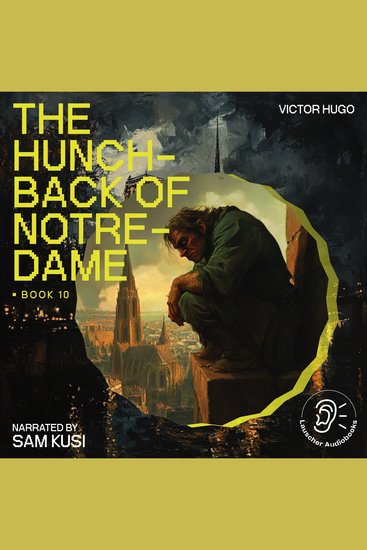
    Book 10: The Hunchback of Notre-Dame or Notre-Dame de Paris is a French Gothic novel by Victor Hugo, published in 1831. - The story is set in Paris in 1482 during the reign of Louis XI. The gypsy Esmeralda (born as Agnes) captures the hearts of many men, including those of Captain Phoebus and Pierre Gringoire, but especially Quasimodo and his guardian Archdeacon Claude Frollo. Frollo is torn between his obsessive lust for Esmeralda and the rules of Notre Dame Cathedral. He orders Quasimodo to kidnap her, but Quasimodo is captured by Phoebus and his guards, who save Esmeralda. Gringoire, who attempted to help Esmeralda but was knocked out by Quasimodo, is about to be hanged by beggars when Esmeralda saves him by agreeing to marry him for four years.
    Zum Buch
  • Les Misérables: Volume 4: The Idyll in the Rue Plumet and the Epic in the Rue St Denis - Book 10 The 5th of June 1832 (Unabridged) - cover

    Les Misérables: Volume 4: The...

    Victor Hugo

    • 0
    • 0
    • 0
    Victor-Marie Hugo (26 February 1802 - 22 May 1885) was a French poet, novelist, essayist, playwright, and dramatist of the Romantic movement. During a literary career that spanned more than sixty years, he wrote abundantly in an exceptional variety of genres: lyrics, satires, epics, philosophical poems, epigrams, novels, history, critical essays, political speeches, funeral orations, diaries, and letters public and private, as well as dramas in verse and prose.
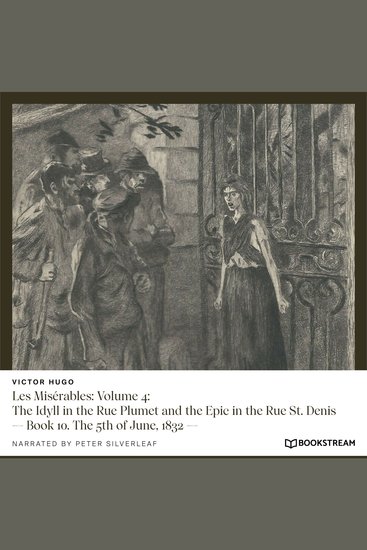
    BOOK 10. THE 5TH OF JUNE, 1832: Of what is revolt composed? Of nothing and of everything. Of an electricity disengaged, little by little, of a flame suddenly darting forth, of a wandering force, of a passing breath. This breath encounters heads which speak, brains which dream, souls which suffer, passions which burn, wretchedness which howls, and bears them away.
    Zum Buch
  • Three Men in a Boat - cover

    Three Men in a Boat

    Jerome K. Jerome

    • 0
    • 0
    • 0
    Three friends. One dog. A "relaxing" boat trip that goes wrong in every possible way.
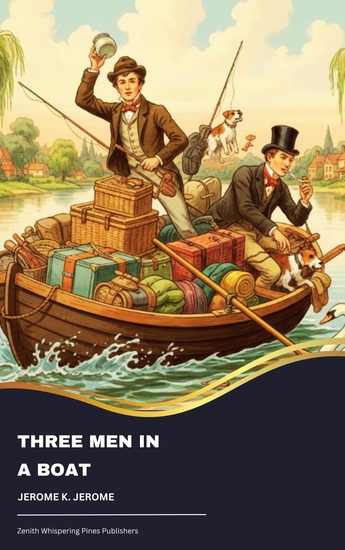
    What begins as a peaceful holiday on the Thames quickly unravels into a riot of comic disasters—burnt meals, collapsing tents, impossible navigation, and endless bickering. Through it all, Jerome's witty storytelling turns trivial mishaps into laugh-out-loud moments, capturing the quirks of friendship and the absurdity of everyday life.
    
    Praised as "one of the funniest books ever written," this timeless classic blends sharp humor, travelogue charm, and irresistible lightheartedness. It remains a favorite for readers seeking joy, escape, and pure comedic delight.
    
    If you love clever humor, warm companionship, and stories that brighten your day, this novel is guaranteed to make you smile.
    
    Open the book—and set sail on a journey where every mistake becomes unforgettable fun.
    Zum Buch