




ÉCOUTER EXTRAIT

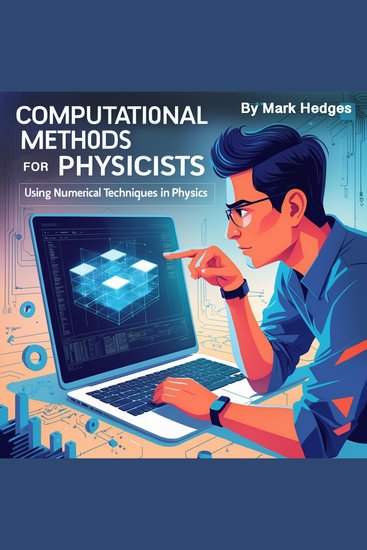
Computational Methods for Physicists - Using Numerical Techniques in Physics
Mark Hedges
Narrateur Aria Montgomery
Maison d'édition: Daphne Haydens LLC
Synopsis
Computational physics is a crucial branch of modern physics that utilizes numerical techniques and algorithms to solve complex physical problems. With the increasing complexity of theoretical models and the limitations of analytical solutions, computational methods have become an indispensable tool for physicists. From simulating quantum systems to modeling astrophysical phenomena, computation allows researchers to explore scenarios that are otherwise impractical or impossible to study experimentally.
One of the primary motivations for using computational techniques in physics is the ability to handle problems involving nonlinear equations, chaotic systems, or large datasets. Many physical equations, such as the Navier-Stokes equations in fluid dynamics or Schrödinger’s equation in quantum mechanics, lack closed-form analytical solutions. In such cases, numerical methods provide approximate but highly accurate solutions. Computational techniques also play a crucial role in experimental physics, where data analysis and simulations help interpret results and refine theoretical models.
Historically, computational physics emerged as a distinct discipline in the mid-20th century, with the advent of digital computers. Early physicists used numerical methods for simple problems, such as solving ordinary differential equations, but as computing power increased, so did the scope of applications. Today, computational physics is integrated with other scientific disciplines, including materials science, climate modeling, and biophysics, demonstrating its wide-ranging impact.
Durée: environ 2 heures (02:01:53)
Date de publication: 13/03/2025; Unabridged; Copyright Year: — Copyright Statment: —




