Join us on a literary world trip!
Add this book to bookshelf
Grey
Write a new comment Default profile 50px
Grey
Subscribe to read the full book or read the first pages for free!
All characters reduced
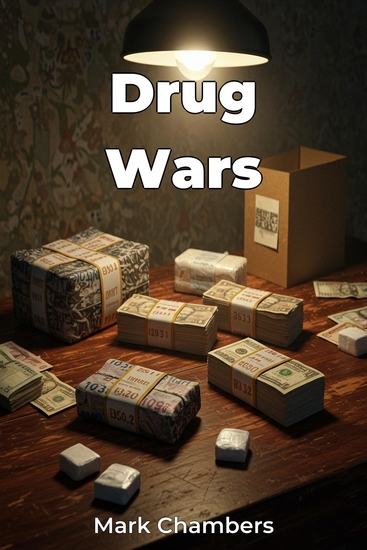
Drug Wars - cover

Drug Wars

Mark Chambers

Translator A AI

Publisher: Publifye

  • 0
  • 0
  • 0

Summary

"Drug Wars" explores the intricate history of drug policy in the United States, revealing how the pursuit of drug control has profoundly shaped American society, its laws, and its global relationships. The book examines the evolution of the "war on drugs," from early narcotics regulation in the 20th century to its intensification under presidents Nixon and Reagan, and highlights the unintended consequences that have disproportionately affected marginalized communities.

 
One intriguing insight is how policies intended to combat drug use often exacerbated the problem, creating a cycle of challenges for law enforcement and the criminal justice system. The book delves into the intertwined roles of law enforcement, the rise of organized crime syndicates involved in drug trafficking, and the social and economic impacts of these phenomena.

 
It also analyzes alternative approaches to drug policy, such as harm reduction and decriminalization, and considers their potential for a more just and effective system. By drawing on government documents, law enforcement records, and academic studies, "Drug Wars" offers a comprehensive understanding of the drug landscape in America, providing a critical analysis of the historical assumptions that have shaped drug policy debates.
Available since: 03/21/2025.
Print length: 69 pages.
Other books that might interest you

  • More Than Our Pain - Affect and Emotion in the Era of Black Lives Matter - cover

    More Than Our Pain - Affect and...

    Beth Hinderliter, Steve Peraza

    • 0
    • 0
    • 0
    Confronted by a crisis in black American leadership, state-sanctioned violence against black communities, and colorblind laws that trap black Americans in a racial caste system, Black Lives Matter activists and the artists inspired by them have devised new forms of political and cultural resistance. More Than Our Pain explores how affect and emotion can drive collective political and cultural action in the face of a new nadir in race relations in the United States. This foregrounding of affect and emotion marks a clear break from civil rights–era activists, who were often trained to counter false narratives about protesters as thugs and criminals by presenting themselves as impeccably groomed and disciplined young black Americans. In contrast, the Black Lives Matter movement in the early twenty-first-century makes no qualms about rejecting the politics of respectability. Affect and emotion has moved from the margin to the center of this new human rights movement, and by examining righteous rage, black joy, as well as grief and fatigue, among other emotions, the contributors celebrate the vitality of black life while documenting those who have harmed it. 


    Contains mature themes.
    Show book
  • Emotional and Moral Manipulations - How Feelings Shape Our Judgments (2 in 1) - cover

    Emotional and Moral...

    William Rands

    • 0
    • 0
    • 0
    This book contains the following two titles: 
    - The Appeal to Emotion Fallacy: Logical fallacies are errors in reasoning that undermine the validity of an argument. They are often used unintentionally, but in many cases, they are deliberately employed to manipulate or persuade others. A logical fallacy may seem convincing on the surface, yet it lacks a sound basis when scrutinized more closely. Understanding logical fallacies is crucial because they can mislead audiences, derail thoughtful discussion, and obstruct the pursuit of truth. 
    - The Just-World Hypothesis: The Just-World Hypothesis is a psychological concept that suggests people have a deep-seated belief that the world is inherently fair, where individuals get what they deserve. This belief leads people to assume that good things happen to good people, and bad things happen to bad people. It is a cognitive bias that serves as a mechanism for reducing feelings of anxiety or uncertainty about the randomness and chaos of the world. This belief in a just world helps individuals to feel more in control of their lives and less vulnerable to the uncertainties of the world around them.
    Show book
  • Small Habits Create Big Change - Strategies to Avoid Burnout and Thrive in Your Education Career - cover

    Small Habits Create Big Change -...

    Rebecca Branstetter

    • 0
    • 0
    • 0
    Small Habits Create Big Change is a collection of micro-habits that educators can use to reclaim their mental health and love for their jobs. This book helps you identify your unique personality type, so you can find the hacks and tweaks that will actually work as you strive to manage stress and reignite your passion for working with students. Many educators feel overwhelmed, frustrated, and on the verge of burnout, but it's never too late to turn things around. Psychologist Rebecca Branstetter gives you solutions that you can use while you work, so you don't have to sacrifice your scarce downtime. 


    Large-scale approaches to preventing educator burnout often fail to consider an important fact—educators are individuals, and no one-size-fits-all solution will fit everyone. People's innate strengths and weaknesses play a big part in determining whether the changes we make are likely to work for us. This book accounts for what makes you who you are, giving you options, ideas, and proven strategies that set you up for success. 


    This book isn't just about understanding who you are. It's about preventing burnout by aligning your work with your core strengths, values, and habits. All K-12 educators will benefit from this balanced approach to work, fostering self-compassion, mindfulness, and resilience.
    Show book
  • Nicolaus Copernicus: A short biography - 5 Minutes: Short on time - long on info! - cover

    Nicolaus Copernicus: A short...

    5 Minutes, 5 Minute Biographies,...

    • 0
    • 0
    • 0
    Nicolaus Copernicus, universal scholar and astronomer: Life and work in a short biography! Everything you need to know, brief and concise. Infotainment, education and entertainment at its best!
    Show book
  • Let's save democracy! - Or do you really like to live differently? - cover

    Let's save democracy! - Or do...

    Bernd Thomsen

    • 0
    • 0
    • 0
    But our way of life is in danger of dying. The author tackles this weighty subject with astonishing ease. A non-fiction book that is fun to read. Because it tells the story as vividly as a
    
    novel or a podcast. An extraordinary rescue mission from Hamburg to New York. Including: Joe Biden, Sanna Marin, Robert Habeck, Justin Trudeau... After five years of research,
    
    future expert Professor Bernd Thomsen now provides you with hundreds of learnings from 39 countries, futurology, exciting facts. And inspiring optimism. And above all:
    
    The formula for how to save our democracy.
    For everyone who loves our way of life.
    
    Even if politics is not your business.
    Do you love your freedom?
    
    Then read this book!
    Show book
  • The American Operations in WW2: Po Valley - cover

    The American Operations in WW2:...

    U.S. Army Center of Military...

    • 0
    • 0
    • 0
    World War II was the largest and most violent armed conflict in the history of mankind. Highly relevant today, World War II has much to teach us, not only about the profession of arms, but also about military preparedness, global strategy, and combined operations in the coalition war against fascism. This book follows military operations in Italy from 5 April to 8 May 1945. 
    The Allies had begun their invasion of the Italian mainland in early September 1943 with the promise of a quick drive north, up the "soft underbelly" of Europe and into the German heartland. Yet nineteen months later, after hard fighting up the rugged mountainous spine of the narrow Italian peninsula, such goals still eluded the Anglo-American military leaders of the Mediterranean Theater. To be sure, long before April 1945 Rome had fallen to Allied arms and fascist Italy had been knocked almost completely out of the war. But in the interval France had also been liberated, and the Soviet Union had reclaimed almost all of its territory previously conquered by the once invincible German war machine.
    Italy had in fact become a sideshow, a secondary theater, since the spring of 1944 when the western Allies had shifted their military resources north to support the buildup and execution of Operation OVERLORD, the invasion of Normandy. After that, there had been no turning back on the Anglo-American side, with its main effort directed east through the northern European plains. Thus, by April Germany was besieged on three sides, although the Allied forces in the south, those strung out along the northern Apennines overlooking the Po Valley, were now the farthest away from the tottering Third Reich. British Prime Minister Winston Churchill continued to strongly support an advance from northern Italy into the Balkans and southern Germany. However, the ability of the Italian-based Allied armies to sustain such an effort with minimal support in men and materiel seemed problematic…
    Show book