Begleiten Sie uns auf eine literarische Weltreise!
Buch zum Bücherregal hinzufügen
Grey
Einen neuen Kommentar schreiben Default profile 50px
Grey
Jetzt das ganze Buch im Abo oder die ersten Seiten gratis lesen!
All characters reduced
Angels' Shoes and Other Stories - cover

Angels' Shoes and Other Stories

Marjorie L. C. Pickthall

Verlag: DigiCat

  • 0
  • 0
  • 0

Beschreibung

In "Angels' Shoes, and Other Stories," Marjorie L. C. Pickthall delivers a collection of tales that intertwine elements of fantasy and realism, illustrating her mastery of lyrical prose. Each story delves into the human experience, exploring themes of innocence, love, and the supernatural, while drawing on rich imagery and evocative language that captivates the reader. Published during the early 20th century, this work reflects the period's literary fascination with the ethereal and the psychological, positioning Pickthall as a significant voice in Canadian literature and the broader context of modernist narrative. Marjorie L. C. Pickthall, an accomplished poet and novelist, emerges from a lineage of literary culture in Canada. Her deep appreciation for nature and the mystical inspired her to create narratives that often blur the lines between the tangible world and the realm of spirit. As a female writer navigating a predominantly male literary landscape, Pickthall's unique perspective on gender, nature, and spirituality informs the depth of the stories she tells, showcasing her as a pivotal figure in Canadian literary history. This collection is highly recommended for readers who appreciate stories that resonate with emotional complexity and imaginative depth. "Angels' Shoes" invites introspection while celebrating the beauty and intricacies of life, making it an essential addition to the shelves of those who seek literature that illuminates both the ordinary and the extraordinary.
Verfügbar seit: 16.08.2022.
Drucklänge: 213 Seiten.
Weitere Bücher, die Sie mögen werden

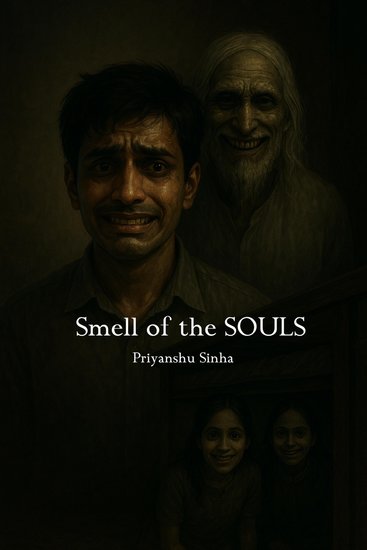
  • Smell of the SOULS - cover

    Smell of the SOULS

    Priyanshu Sinha

    • 0
    • 0
    • 0
    Some scents linger far beyond the body… straight into the soul. 
    In the narrow bylanes of an old town, the air carries an unusual fragrance—sweet, musky, ancient. It comes from a small, forgotten shop, where an old man sells attar that no one remembers buying... but everyone who smells it, changes. 
    When Prashant, a mild-mannered government employee, follows the strange scent one evening, he disappears without a trace—only to return five days later, strangely quiet, eyes hollow, and mind blank. What begins as a curious case of memory loss turns into a slow spiral into terror as his family notices the subtle shifts: the way mirrors fog around him, how dogs growl in his presence, and how the scent of attar never leaves his skin. 
    As dreams bleed into waking life and whispers echo in locked rooms, one question hangs in the air like perfume: 
    What did Prashant inhale that night… and what part of him never came back? 
    A haunting blend of psychological dread and supernatural mystery, Smell of Souls will make you question what's real, what's remembered, and what's left behind.
    Zum Buch
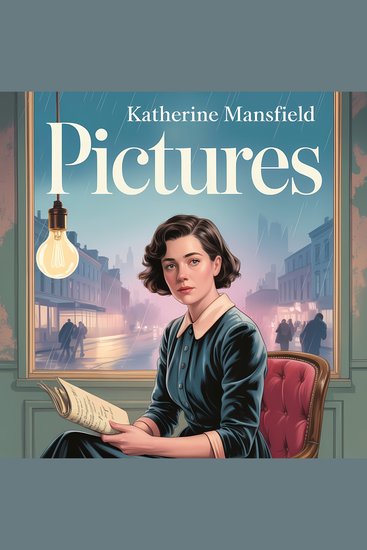
  • Pictures - A Classic Literary Short Story of Loss Identity and Quiet Desperation - cover

    Pictures - A Classic Literary...

    Katherine Mansfield

    • 0
    • 0
    • 0
    What if the images we present to the world slowly began to betray us? In “Pictures” by Katherine Mansfield, you step into the fragile inner life of Ada Moss, a woman clinging to dignity, memory, and fading hopes as her world quietly closes in around her. Once surrounded by admiration and applause, Ada now drifts through a city that feels increasingly cold and indifferent, where familiar faces blur and kindness becomes uncertain. As she moves from place to place, moments of pride, desperation, and self-deception flicker like scenes in a fading film. Mansfield masterfully exposes the quiet cruelty of social judgment and the painful gap between who we were, who we pretend to be, and who we have become. With her unmatched sensitivity, she transforms ordinary encounters into a haunting portrait of vulnerability and survival. Press play and experience one of Mansfield’s most poignant stories - where every remembered image carries the weight of loss and every silence speaks louder than words.
    Zum Buch
  • A Thousand Deaths - From their pens to your ears genius in every story - cover

    A Thousand Deaths - From their...

    Jack London

    • 0
    • 0
    • 0
    John Griffith Chaney was born on January 12th, 1876 in San Francisco.   
    His father, William Chaney, was living with Flora Wellman when she became pregnant.  Chaney insisted she have an abortion.  Flora's response was to turn a gun on herself.  Although her wounds were not severe the trauma made her temporarily deranged. 
    In late 1876 his mother married John London and the young child was brought to live with them as they moved around the Bay area, eventually settling in Oakland where now, calling himself Jack, he completed grade school. 
    Jack worked hard at several jobs, sometimes 12-18 hours a day, but his dream was university.  He studied hard and borrowed the money to enrol in the summer of 1896 at the University of California in Berkeley. 
    In 1897, at 21, Jack searched out newspaper accounts of his mother's suicide attempt and for the name of his biological father. He wrote to Chaney, then living in Chicago, who claimed he could not be Jack’s father because he was impotent and casually asserted that London's mother had relations with other men.  Jack, devastated by the response, quit Berkeley and went to the Klondike. Other accounts suggest that his dire finances presented Jack with the excuse he needed to leave. 
    In the Klondike Jack began to gather material for his writing but also accumulated many health problems, including scurvy, which together with hip and leg problems he would carry for the rest of his life. 
    During the late 1890's Jack was regularly publishing short stories and by the turn of the century full blown novels. 
    By 1904 Jack had married, fathered two children and was now in the process of divorcing.  A stint as a reporter on the Russo-Japanese war of 1904 was equal amounts trouble and experience. But that experience was always put to good use in a continuing and remarkable output of work. 
    In 1905 he married Charmian Kittredge who at last was a soul and companion who brought him some semblance of peace despite his advancing alcoholism and his incurable wanderlust. 
    Twelve years later Jack had amassed both wealth and a literary reputation through such classics as ‘The Call of the Wild’, ‘White Fang’ and many others. He had a reputation as a social activist and was a tireless friend of the workers.   
    Jack London died suffering from dysentery, late-stage alcoholism and uremia, aged only 40, on November 22nd 1916 at his property in Glen Elen in California.
    Zum Buch
  • A Message From The Deep Sea - cover

    A Message From The Deep Sea

    R. Austin Freeman

    • 0
    • 0
    • 0
    R. Austin Freeman's famous forensic investigator, Dr. John Thorndyke, is asked by a former student to help on his first murder case. A prostitute has been murdered and it seems a woman has done the heinous deed. Dr. Thorndyke helps find the actual murderer with the evidence available.
    Zum Buch
  • Top 10 Short Stories The - The 1860's - The Men - The top ten short stories written in the 1860s by male authors - cover

    Top 10 Short Stories The - The...

    Fyodor Dostoyevsky, Charles...

    • 0
    • 0
    • 0
    Short stories have always been a sort of instant access into an author’s brain, their soul and heart.  A few pages can lift our lives into locations, people and experiences with a sweep of landscape, narration, feelings and emotions that is difficult to achieve elsewhere. 
     
    In this series we try to offer up tried and trusted ‘Top Tens’ across many different themes and authors. But any anthology will immediately throw up the questions – Why that story? Why that author?  
     
    The theme itself will form the boundaries for our stories which range from well-known classics, newly told, to stories that modern times have overlooked but perfectly exemplify the theme.  Throughout the volume our authors whether of instant recognition or new to you are all leviathans of literature. 
     
    Some you may disagree with but they will get you thinking; about our choices and about those you would have made.  If this volume takes you on a path to discover more of these miniature masterpieces then we have all gained something. 
     
    This mid-century decade reveals a journey traversing continents and genres as authors explore and revel in the telling of tumultuous times of social upheaval as nations are divided by Civil War or expand with the brute force of Imperial Dreams.  Our writers are here to document and narrate more about this fascinating decade. 
     
    01 - The Top 10 - The 1860's - The Men - An Introduction 
    02 - The Crocodile. An Extraordinary Incident - Part 1 by Fyodor Dostoyevsky 
    03 - The Crocodile. An Extraordinary Incident - Part 2 by Fyodor Dostoyevsky 
    04 - The Signalman by Charles Dickens 
    05 - The Generous Gambler by Charles Baudelaire 
    06 - The Romance of Certain Old Clothes by Henry James 
    07 - Malachi's Cove by Anthony Trollope 
    08 - The Outcasts of Poker Flat by Bret Harte 
    05 - The Astounding Adventure of Wheeler J Calamity, Related by Himslef by W S Gilbert 
    10 - The Spectre Bridegroom by William Hunt 
    11 - The 9.30 Up-Train by Sabine Baring-Gould 
    12 - The Man Without a Country by Edward Everett Hale
    Zum Buch
  • A Wicked Woman - From their pens to your ears genius in every story - cover

    A Wicked Woman - From their pens...

    Jack London

    • 0
    • 0
    • 0
    John Griffith Chaney was born on January 12th, 1876 in San Francisco.   
    His father, William Chaney, was living with Flora Wellman when she became pregnant.  Chaney insisted she have an abortion.  Flora's response was to turn a gun on herself.  Although her wounds were not severe the trauma made her temporarily deranged. 
    In late 1876 his mother married John London and the young child was brought to live with them as they moved around the Bay area, eventually settling in Oakland where now, calling himself Jack, he completed grade school. 
    Jack worked hard at several jobs, sometimes 12-18 hours a day, but his dream was university.  He studied hard and borrowed the money to enrol in the summer of 1896 at the University of California in Berkeley. 
    In 1897, at 21, Jack searched out newspaper accounts of his mother's suicide attempt and for the name of his biological father. He wrote to Chaney, then living in Chicago, who claimed he could not be Jack’s father because he was impotent and casually asserted that London's mother had relations with other men.  Jack, devastated by the response, quit Berkeley and went to the Klondike. Other accounts suggest that his dire finances presented Jack with the excuse he needed to leave. 
    In the Klondike Jack began to gather material for his writing but also accumulated many health problems, including scurvy, which together with hip and leg problems he would carry for the rest of his life. 
    During the late 1890's Jack was regularly publishing short stories and by the turn of the century full blown novels. 
    By 1904 Jack had married, fathered two children and was now in the process of divorcing.  A stint as a reporter on the Russo-Japanese war of 1904 was equal amounts trouble and experience. But that experience was always put to good use in a continuing and remarkable output of work. 
    In 1905 he married Charmian Kittredge who at last was a soul and companion who brought him some semblance of peace despite his advancing alcoholism and his incurable wanderlust. 
    Twelve years later Jack had amassed both wealth and a literary reputation through such classics as ‘The Call of the Wild’, ‘White Fang’ and many others. He had a reputation as a social activist and was a tireless friend of the workers.   
    Jack London died suffering from dysentery, late-stage alcoholism and uremia, aged only 40, on November 22nd 1916 at his property in Glen Elen in California.
    Zum Buch