Begleiten Sie uns auf eine literarische Weltreise!
Buch zum Bücherregal hinzufügen
Grey
Einen neuen Kommentar schreiben Default profile 50px
Grey
Jetzt das ganze Buch im Abo oder die ersten Seiten gratis lesen!
All characters reduced
Castle Rackrent - cover

Castle Rackrent

Maria Edgeworth

Verlag: Phoemixx Classics Ebooks

  • 0
  • 0
  • 0

Beschreibung

Castle Rackrent Maria Edgeworth - "Castle Rackrent" is a classic novel written by British writer Maria Edgeworth. Published in 1800, "Castle Rackrent" is thought to be both the first historical novel and the first novel to feature an unreliable narrator.Set in Ireland prior to its achieving legislative independence from Britain in 1782, "Castle Rackrent" follows the fortunes of the last four heirs to the Rackrent estate of three as told in the voiceof their longtime devoted servant, Thady Quirk. Over the course of several years (the Rackrent men die off in a timely manner), the Rackrents manage to run the estate into the ground, despite exploiting their Irish labourers. Is Thadys dewey-eyed devotion to the Rackrents sarcasm or is he truly one of the gratefully oppressed?The work satirises the Irish landlords of the late 18th and early 19th centuries. Noted for its insight into Irish regional life, the book was the model on which Sir Walter Scott based his historical novels."Castle Rackrent" is a remarkably short novel, rendering a historical situation in order to expose the exploitative system beneath.
Verfügbar seit: 09.12.2021.
Drucklänge: 222 Seiten.
Weitere Bücher, die Sie mögen werden

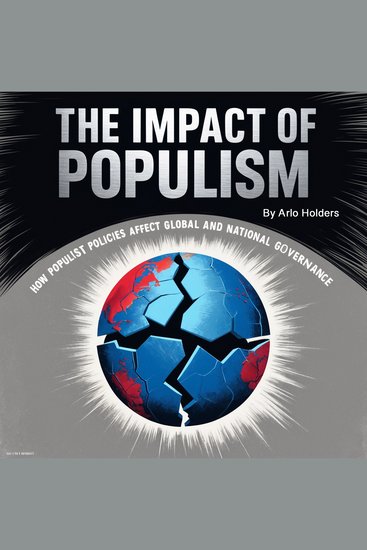
  • The Impact of Populism - How Populist Policies Affect Global and National Governance - cover

    The Impact of Populism - How...

    Arlo Holders

    • 0
    • 0
    • 0
    Populism has become one of the most significant political phenomena of the 21st century, influencing governance on a global scale. The term "populism" has been used to describe a wide range of political movements, parties, and ideologies, but its meaning often remains fluid and context-dependent. At its core, populism is a political approach that seeks to represent the interests of "the people" against a perceived elite or establishment that is seen as corrupt, self-serving, and out of touch with the common citizen. While this core idea is consistent, the ways in which populism is expressed and implemented vary dramatically depending on the political, cultural, and economic context. 
    The roots of populism stretch back to the 19th century, with early movements advocating for the empowerment of ordinary citizens, particularly in agricultural societies. However, the modern manifestation of populism began to take shape in the mid-20th century and accelerated in the 21st century, fueled by growing disillusionment with traditional political elites. The rise of social media, economic inequality, and a globalized world have all contributed to populism's recent resurgence, particularly in Western democracies. 
    Contemporary populism is often characterized by a charismatic leader who claims to speak directly for the people, bypassing traditional political institutions and sometimes challenging the rule of law. These leaders often portray themselves as outsiders, positioned against the political establishment, and frequently use simple, direct rhetoric that resonates with disaffected voters. The populist narrative, which pits the common people against the elite, is one of the most powerful tools in shaping public opinion and driving political discourse.
    Zum Buch
  • Zen Buddhism And Its Relation To Art - cover

    Zen Buddhism And Its Relation To...

    Arthur Waley

    • 0
    • 0
    • 0
    A great primer on the history of Japanese art as it evolved under the Buddhist (and later Zen) movements embedding in Japan's culture. Written by the first great populariser of Chinese and Japanese cultural artefacts, including translating a great number of Chinese poems and literary works.
    Zum Buch
  • Open Secret An - The Family Story of Robert and John Gregg Allerton - cover

    Open Secret An - The Family...

    Nicholas L. Syrett

    • 0
    • 0
    • 0
    In 1922 Robert Allerton—described by the Chicago Tribune as the “richest bachelor in Chicago”—met a twenty-two-year-old University of Illinois architecture student named John Gregg, who was twenty-six years his junior. Virtually inseparable from then on, they began publicly referring to one another as father and son within a couple years of meeting. In 1960, after nearly four decades together, and with Robert Allerton nearing ninety, they embarked on a daringly nonconformist move: Allerton legally adopted the sixty-year-old Gregg as his son, the first such adoption of an adult in Illinois history. 
     
    An Open Secret tells the striking story of these two iconoclasts, locating them among their queer contemporaries and exploring why becoming father and son made a surprising kind of sense for a twentieth-century couple who had every monetary advantage but one glaring problem: they wanted to be together publicly in a society that did not tolerate their love. Deftly exploring the nature of their design, domestic, and philanthropic projects, Nicholas L. Syrett illuminates how viewing the Allertons as both a same-sex couple and an adopted family is crucial to understanding their relationship’s profound queerness. By digging deep into the lives of two men who operated largely as ciphers in their own time, he opens up provocative new lanes to consider the diversity of kinship ties in modern US history.
    Zum Buch
  • The Civic Bargain - How Democracy Survives - cover

    The Civic Bargain - How...

    Josiah Ober, Brook Manville

    • 0
    • 0
    • 0
    A powerful case for democracy and how it can adapt and survive—if we want it to 


    Is democracy in trouble, perhaps even dying? Pundits say so, and polls show that most Americans believe that their country's system of governance is being "tested" or is "under attack." But is the future of democracy necessarily so dire? In The Civic Bargain, Brook Manville and Josiah Ober push back against the prevailing pessimism about the fate of democracy around the world. Instead of an epitaph for democracy, they offer a guide for democratic renewal, calling on citizens to recommit to a "civic bargain" with one another to guarantee civic rights of freedom, equality, and dignity. That bargain also requires them to fulfill the duties of democratic citizenship: governing themselves with no "boss" except one another, embracing compromise, treating each other as civic friends, and investing in civic education for each rising generation. 


    Manville and Ober trace the long progression toward self-government through four key moments in democracy's history: Classical Athens, Republican Rome, Great Britain's constitutional monarchy, and America's founding. Comparing what worked and what failed in each case, they draw out lessons for how modern democracies can survive and thrive.
    Zum Buch
  • Bearing Witness While Black - African Americans Smartphones and the New Protest #Journalism - cover

    Bearing Witness While Black -...

    Allissa V. Richardson

    • 0
    • 0
    • 0
    Bearing Witness While Black tells the story of this century's most powerful Black social movement through the eyes of fifteen activists who documented it. At the height of the Black Lives Matter uprisings, African Americans filmed and tweeted evidence of fatal police encounters in dozens of US cities—using little more than the device in their pockets. Their urgent dispatches from the frontlines spurred a global debate on excessive police force, which claimed the lives of African American men, women, and children at disproportionate rates. 


    This groundbreaking book reveals how the perfect storm of smartphones, social media, and social justice empowered Black activists to create their own news outlets, which continued a centuries-long, African American tradition of using the news to challenge racism. Bearing Witness While Black is the first book of its kind to identify three overlapping eras of domestic terror against African American people—slavery, lynching, and police brutality—and explain how storytellers during each period documented its atrocities through journalism. What results is a stunning genealogy—of how the slave narratives of the 1700s inspired the Abolitionist movement; how the black newspapers of the 1800s galvanized the anti-lynching and Civil Rights movements; and how the smartphones of today have powered the anti-police brutality movement.
    Zum Buch
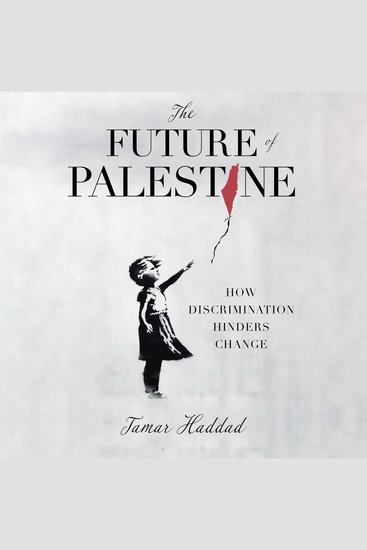
  • The Future of Palestine - How Discrimination Hinders Change - cover

    The Future of Palestine - How...

    Tamar Haddad

    • 0
    • 0
    • 0
    The Future of Palestine: How Discrimination Hinders Change was inspired by the shocking "honor killing" of the author's classmate and friend, Israa Ghrayeb. Her alleged crime? The simple act of going out, in broad daylight, with her fiancé and his sister-an act Ghrayeb's cousin maintained was unacceptable in a conservative society. While Ghrayeb's killers may be free, their manner of thinking is anything but.In The Future of Palestine, author Tamar Haddad seeks to open minds to diverse perspectives and to give voice to those who are commonly marginalized in conservative Palestinian society.In a world where prejudice is all too familiar, The Future of Palestine suggests that change can occur through:- Engaging in theoretical readings such as post colonialism, Orientalism, psychoanalysis, nationalism, race theory, queer theory, feminism, and marxism- Sharing stories of marginalized Palestinians- Providing non-Palestinians with a background about the Palestinian-Israeli conflictThis book is for those who reject discrimination against the marginalized and wish to make a difference. Coming together and discussing Palestinian history, identity, trauma, the notion of religion, women, race, sexual orientation, and class should change us all for the better.
    Zum Buch