Begleiten Sie uns auf eine literarische Weltreise!
Buch zum Bücherregal hinzufügen
Grey
Einen neuen Kommentar schreiben Default profile 50px
Grey
Jetzt das ganze Buch im Abo oder die ersten Seiten gratis lesen!
All characters reduced
Uganda The Country - cover

Uganda The Country

Marcus Blackwell

Übersetzer A AI

Verlag: Publifye

  • 0
  • 0
  • 0

Beschreibung

Uganda The Country offers a compelling journey through the heart of East Africa, expertly weaving together the story of a nation balanced between its rich historical legacy and contemporary aspirations. The book masterfully explores Uganda's evolution from the 14th-century emergence of the Buganda Kingdom through its colonial period and into its present-day status as a dynamic modern state, illuminating how ancient traditions continue to influence current governance and social structures.

 
Through meticulous research and diverse perspectives, the text presents three interconnected themes: Uganda's political transformation, its extraordinary natural heritage, and its current socio-economic landscape. From the source of the Nile to the majestic Rwenzori Mountains, readers discover a country blessed with remarkable biodiversity and cultural wealth.

 
The book's balanced approach combines academic rigor with accessible storytelling, utilizing case studies and expert interviews to provide authentic insights into Uganda's development challenges and achievements. The narrative progresses chronologically while weaving together environmental, cultural, and economic threads, offering practical insights for various audiences - from scholars to business professionals.

 
Particularly noteworthy is its examination of Uganda's conservation efforts and the delicate balance between traditional kingdoms and modern governance structures. The book stands out for its comprehensive analysis of how historical forces continue to shape contemporary developments, making it an invaluable resource for understanding East Africa's "Pearl."
Verfügbar seit: 24.01.2025.
Drucklänge: 102 Seiten.
Weitere Bücher, die Sie mögen werden

  • William Faulkner: A short biography - 5 Minutes: Short on time - long on info! - cover

    William Faulkner: A short...

    5 Minutes, 5 Minute Biographies,...

    • 0
    • 0
    • 0
    William Faulkner, novelist and nobel prize laureate: Life and works in a short biography! Everything you need to know, brief and concise. Infotainment, education and entertainment at its best!
    Zum Buch
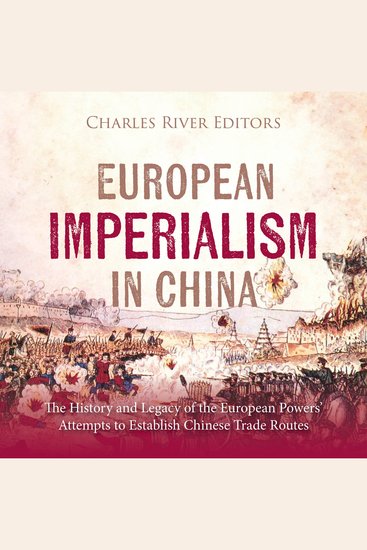
  • European Imperialism in China: The History and Legacy of the European Powers’ Attempts to Establish Chinese Trade Routes - cover

    European Imperialism in China:...

    Editors Charles River

    • 0
    • 0
    • 0
    During the 15th century, China had become economically and technologically advanced compared to civilizations in Europe at the time, and its fleet, which had reached a total of 3,500 ships, was unmatched by any other world power. Nevertheless, after conducting several trade expeditions with the massive fleet, the Chinese ships were either burned in the docks or left to rot. With that, China began to revert to the xenophobic policies of its past and reduce its presence in other lands. By 1525, the largest naval fleet in the world had essentially been destroyed or dismantled by China itself.  
    While China was in the process of isolating itself from the rest of the world, the European explorers were beginning to discover new lands, such as North America and South America. Among the countries doing the most exploring during this time were the Portuguese. The Portuguese had reached India in 1498, and by 1509 they had established part of their empire in India. This allowed the Portuguese to have a base of operations to further expand east into Asia. In 1511, the Portuguese captured the large spice trading center of Malacca in Malaysia, and like their base in India, Malacca allowed the Portuguese to have a foothold, thereby providing access to China and Southeast Asia. 
    The location of Macau was beneficial and strategically chosen by the Portuguese, as it was in close communication with Guangzhou and connected via a river system. In contrast to their earlier dealings with the Chinese, the Portuguese attempted to appear more humble and comply with the wishes of the Chinese rather than with force. As it turned out, the policy, in conjunction with increased European activities in the region, would help the Portuguese Empire hold on to Macau even as its fortunes dwindled everywhere else across the world.
    Zum Buch
  • The Biography of Gavin Newsom - cover

    The Biography of Gavin Newsom

    Jordan Blake

    • 0
    • 0
    • 0
    Gain an in-depth understanding of one of California's most influential leaders with The Biography of Gavin Newsom by Jordan Blake. This engaging audiobook provides a thorough exploration of Gavin Newsom’s life, tracing his journey from his beginnings in San Francisco to his role as the Governor of California. 
    Through detailed narration, you will discover the milestones and challenges that have defined Newsom’s career. From his early entrepreneurial ventures and his transformative tenure as Mayor of San Francisco to his groundbreaking policies and leadership as Governor, this biography paints a comprehensive picture of his impact on California's political and social landscape. 
    The audiobook delves into Newsom’s innovative approaches to pressing issues such as affordable housing, climate change, and public health, offering listeners a nuanced view of his vision and governance. Jordan Blake’s meticulous research and compelling storytelling provide an insightful look at how Newsom’s experiences and decisions have shaped the trajectory of California. 
    Whether you are interested in modern political figures, California history, or the complexities of state governance, The Biography of Gavin Newsom offers a thought-provoking and informative perspective on one of America’s key political players. This audiobook is a must-listen for anyone seeking to understand the dynamics of contemporary leadership and the challenges of governing one of the most populous states in the nation.
    Zum Buch
  • Why AI Undermines Democracy and What to Do About It - cover

    Why AI Undermines Democracy and...

    Mark Coeckelbergh

    • 0
    • 0
    • 0
    Across the world, AI is used as a tool for political manipulation and totalitarian repression. Stories about AI are often stories of polarization, discrimination, surveillance, and oppression. Is democracy in danger? And can we do anything about it? 


    In this compelling and balanced book, Mark Coeckelbergh reveals the key risks posed by AI for democracy. He argues that AI, as currently used and developed, undermines fundamental principles on which liberal democracies are founded, such as freedom and equality. How can we make democracy more resilient in the face of AI? And, more positively, what can AI do for democracy? Coeckelbergh advocates not only for more democratic technologies, but also for new political institutions and a renewal of education to ensure that AI promotes, rather than hinders, the common good for the twenty-first century. 


    Why AI Undermines Democracy and What to Do About It is a must-listen for anyone who is concerned about the fate of democracy.
    Zum Buch
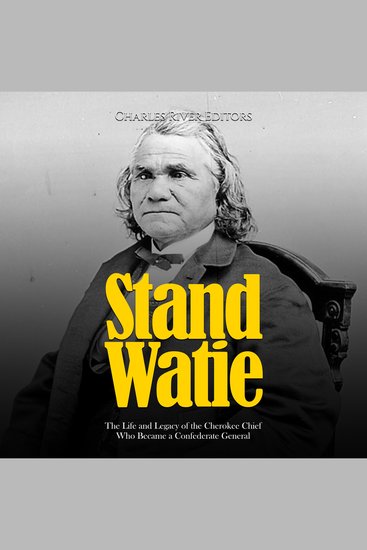
  • Stand Watie: The Life and Legacy of the Cherokee Chief Who Became a Confederate General - cover

    Stand Watie: The Life and Legacy...

    Editors Charles River

    • 0
    • 0
    • 0
    Stand Watie’s life connects the traditional Cherokee homeland in Tennessee and Georgia, the fight within the tribe over leaving for the West or staying on their homeland and trying to resist, and the Trail of Tears. At the same time, his life also includes the ongoing split between mixed-blood and full-blood Cherokee in the Cherokee Nation, and the chaos of Indian Territory during the Civil War.  
    	On the surface, Indian Territory was peaceful and fairly prosperous, but old resentments simmered under the surface. The most dangerous of these was in the Cherokee Nation. Following the Cherokee removal, the leaders of the faction of the tribe that had actually signed the Treaty of New Echota suffered violence. There had been a law that giving away Cherokee land was punishable by death, and several of the leaders who signed the treaty were murdered. Stand Watie was one of the signers, and he barely escaped, but one of his brothers was executed. 
    	The Principal Chief was John Ross. He and his faction managed to retain political control of the Cherokee tribe, but there was lasting enmity between the Watie and Ross factions of the tribe. In a broad sense, the signers of the hated treaty were mixed-blood Cherokee, and the resistance had been led by full-bloods. Stand Watie headed the mixed-blood faction and John Ross the full-blood faction. Ironically, John Ross himself was mixed-blood and Watie was a full-blood, but regardless, this tribal split had important ramifications for the Cherokee in the coming war. 
    	Like the country as a whole, the Cherokee Nation was split over the question of slavery, and with an estimated 100 slaves owned, Watie was the biggest native slaveholder in the region. At the start of the war, Watie was commissioned as a colonel in Confederate service and later as a brigadier general. His 1st Cherokee Mounted Rifles Regiment fought more engagements than any other Confederate unit west of the Mississippi River.
    Zum Buch
  • Impossible Victory - How Iraq Defeated ISIS - cover

    Impossible Victory - How Iraq...

    Haider al-Abadi

    • 0
    • 0
    • 0
    "A remarkable inside story of the war from the perspective of the Iraqi Commander-in-Chief. Fascinating, very readable, and recommended." – Jeremy Bowen, BBC Middle East editor
    "Impossible Victory is the definitive memoir of Iraq's effort to save its people and many other would-be victims from the most destructive terrorist organisation in history." – Lieutenant General H. R. McMaster, former US national security advisor and author of Battlegrounds: The Fight to Defend the Free World
    "This book … casts a historical light on a decisive era." – Jean-Yves Le Drian, French minister for Europe and foreign affairs
    ***
    By 2014, the world had grown weary of Iraq and its troubles. The Americans had all but gone and the media had turned its gaze towards Syria, but Iraq's problems were far from over. That same year, ISIS put Iraq back on the map as they crossed the border from Syria and rampaged through the country, kidnapping, raping and killing, all in the name of enforcing their murderous interpretation of Sharia law.
    Terror had arrived and was taking the region in its grip. Saddam Hussein, the occupation, sectarian war, corruption and political instability had collectively laid the groundwork for further violence, and Iraqis were about to see the worst of it.
    It was against this backdrop that Haider al-Abadi became Prime Minister. What would likely be the most formidable task of his life lay ahead of him: to help unify his homeland's fractured military and politics and, slowly, to turn the tide on ISIS, ultimately achieving what once seemed an impossible victory.
    This is the definitive and fascinating true story of how the people of Iraq took on and eventually defeated ISIS, told by the country's former Prime Minister, Haider al-Abadi.
    Zum Buch