Begleiten Sie uns auf eine literarische Weltreise!
Buch zum Bücherregal hinzufügen
Grey
Einen neuen Kommentar schreiben Default profile 50px
Grey
Jetzt das ganze Buch im Abo oder die ersten Seiten gratis lesen!
All characters reduced
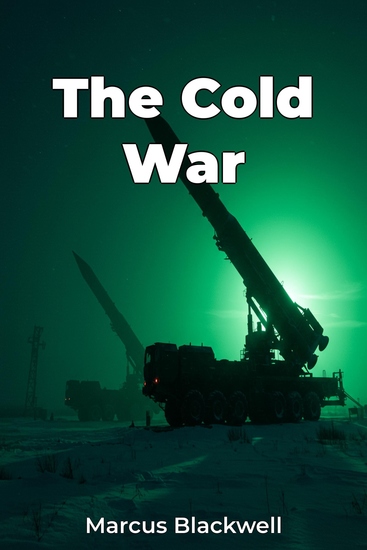
The Cold War - cover

The Cold War

Marcus Blackwell

Übersetzer A AI

Verlag: Publifye

  • 0
  • 0
  • 0

Beschreibung

"The Cold War" explores the intense ideological and geopolitical standoff between the United States and the Soviet Union, a conflict that profoundly shaped the late 20th century. Delving into the nuclear arms race, the book reveals how close the world came to potential annihilation, highlighting the pervasive fear and intricate espionage battles that defined the era. Understanding this period is crucial for grasping contemporary international relations and the ongoing challenges of nuclear proliferation, offering insights into how proxy wars reshaped global power dynamics. 

 
The book examines the Cold War's origins in the aftermath of World War II, tracing the escalating tensions through key events like the Berlin Blockade and the Cuban Missile Crisis. Structured chronologically and thematically, it progresses from the ideological roots of the conflict to major confrontations and the eventual collapse of the Soviet Union. Drawing upon declassified documents and scholarly analyses, the book provides a balanced account, avoiding simplistic narratives and acknowledging the complexities of this pivotal period in military history and world history.
Verfügbar seit: 17.02.2025.
Drucklänge: 61 Seiten.

Weitere Bücher, die Sie mögen werden

  • Wired for Connection - The counterintuitive lessons a therapist learned from her clients - cover

    Wired for Connection - The...

    Carolyn Klassen

    • 0
    • 0
    • 0
    Wired for Connection are the lessons clients taught a therapist over a career about love, courage, vulnerability, shame and authenticity 
    Therapists learn and grow from therapy with clients--and now you can too!  
    Carolyn graduated from counselling school with a ton of head knowledge. Carolyn read 1000’s of pages and written hundreds more and learned the models and the approaches in the books. Did this therapist know enough to actually help people? 
    Turns out she didn’t. 
    That’s where her clients come in. They taught her about life, about therapy, and about relationships. 
    So much of what clients taught her was paradoxical. Actually, they didn’t teach her—the most important lessons in life are better caught than taught. The lessons were counterintuitive to conventional relationship wisdom. 
    Together they learned the way to real relationships was messiness, mistakes and discomfort. They noticed the route to acceptance was authenticity, that tears make life better, and that raw courage is often about tender things like saying, “I’m sorry” and “I love you”. And so much more. 
    Relationships are hard—but we are wired for them. We are wired for struggle and growth. Watching people struggle with their own lives has inspired her to struggle and grow in hers. 
    Relationships are hard for us all. But if we show up to connect, and we do it anything like right, we learn from each other. We learn from each other in ways that surprise and delight us. 
    We are wired for connection.
    Zum Buch
  • Literature and the New Culture Wars - Triggers Cancel Culture and the Teacher's Dilemma - cover

    Literature and the New Culture...

    Deborah Appleman

    • 0
    • 0
    • 0
    Can educators continue to teach troubling but worthwhile texts? 


    Our current "culture wars" have reshaped the politics of secondary literature instruction. Due to a variety of challenges from both the left and the right—to language or subject matter, to potentially triggering content, or to authors who have been canceled—school reading lists are rapidly shrinking. For many teachers, choosing which books to include in their curriculum has become an agonizing task with political, professional, and ethical dimensions. 


    In Literature and the New Culture Wars, Deborah Appleman calls for a reacknowledgment of the intellectual and affective work that literature can do, and offers ways to continue to teach troubling texts without doing harm. Rather than banishing challenged texts from our classrooms, she writes, we should be confronting and teaching the controversies they invoke. Her book is a timely and eloquent argument for a reasoned approach to determining what literature still deserves to be read and taught and discussed.
    Zum Buch
  • Complete Stoicism Collection The - A Modern Translation of Their Philosophy - Meditations by Marcus Aurelius Letters From a Stoic by Seneca The Discourses by Epictetus and All Other Stoic Works - cover

    Complete Stoicism Collection The...

    Marcus Aurelius, Lucius Seneca,...

    • 0
    • 0
    • 0
    Are you ready to transform your life through the wisdom of the greatest Stoic philosophers? This collection offers you the pathway to personal mastery, resilience, and inner peace, featuring the teachings of Marcus Aurelius, Seneca, and Epictetus.For over two millennia, their insights have shaped the thoughts of leaders, scholars, and individuals seeking meaning in life. Now, The Complete Stoicism Collection brings together their most impactful lessons, carefully translated and adapted for modern readers. Whether you’re looking for practical guidance on how to navigate life’s difficulties or want to deepen your understanding of Stoic principles, this collection provides all the tools you need.This thoughtfully curated anthology includes:Meditations by Marcus Aurelius – The profound reflections of a Roman emperor on how to live a virtuous life despite adversity.Letters From a Stoic by Seneca – Powerful letters that offer wisdom on overcoming grief, anger, and daily challenges.The Discourses and Enchiridion by Epictetus – Practical lessons on achieving personal freedom and tranquility by mastering your own mind.Plus, other timeless Stoic works that promote a balanced and fulfilling life, each translated and modernized for contemporary readers.Envision having philosophical tools that help you tackle any challenge, maintain control of your emotions, and focus on what truly matters. Imagine embracing obstacles with grace, gaining insight, and mastering your mind.This modern adaptation of Stoicism’s greatest works provides actionable advice on living a life of virtue, mindfulness, and strength—ultimately leading to lasting happiness and peace.Why wait? Discover the power of Stoic philosophy today. Whether you're new to Stoicism or looking to deepen your practice, this collection is a valuable resource for personal growth and self-improvement.Click ‘Buy Now’ to get your audiobook and start your journey toward a more purposeful and resilient life!
    Zum Buch
  • Summary: Never Enough - When Achievement Culture Becomes Toxic-and What We Can Do About It by Jennifer Breheny Wallace: Key Takeaways Summary & Analysis - cover

    Summary: Never Enough - When...

    Brooks Bryant

    • 0
    • 0
    • 0
    DISCLAIMER: THIS IS NOT THE OFFICIAL BOOK. 
    This is a summary & it does not accompany the official. 
    "Never Enough" by Jennifer Breheny Wallace delves into the high-pressure world of today's students, who strive relentlessly for success and often find themselves overwhelmed. This book explores the pervasive culture of toxic achievement, where students pack their schedules with activities and face intense competition, leading to rising rates of anxiety and depression. 
    Wallace investigates the origins of this culture and its deep-seated roots in society, driven by income inequality and limited opportunities. Through interviews and research, the book highlights how children are absorbing the message that their worth is solely tied to their accomplishments. 
    However, "Never Enough" offers a different perspective, emphasizing the importance of children feeling like they matter intrinsically, regardless of their external achievements. It advocates for parents and educators to adopt a mindset that values a child's sense of self-worth and contribution to a larger community. By doing so, the book argues, children can develop resilience, self-confidence, and psychological security. 
    With insightful stories and practical guidance, "Never Enough" provides an urgent and humane perspective on the challenges facing today's teenagers and offers a framework for positive change in how we nurture and support them.
    Zum Buch
  • A Rare Recording of Hunter S Thompson - cover

    A Rare Recording of Hunter S...

    Hunter S. Thompson

    • 0
    • 0
    • 0
    Hunter Stockton Thompson (July 18, 1937 - February 20, 2005) was an American journalist and author who founded the gonzo journalism movement, a style in which the writer becomes a central figure and participant in the events of the narrative. He rose to prominence with the publication of Hell's Angels (1967) and Fear and Loathing in Las Vegas (1972). The following is from a 1975 interview on gonzo journalism.
    Zum Buch
  • The Holodomor - The Brutal Terror-Famine Inflicted on Millions of Ukrainians by the Soviet Union - cover

    The Holodomor - The Brutal...

    Kelly Mass

    • 0
    • 0
    • 0
    The Holodomor, also known as the Terror-Famine (meaning 'to kill through starving' in Ukrainian) or The Great Famine, was a devastating man-made disaster that struck Soviet Ukraine between 1932 and 1933. It resulted in the deaths of millions of Ukrainians, with the word "Holodomor" specifically highlighting the purposeful nature of the famine. The term reflects the severity of the event, suggesting not only a catastrophic food shortage but also a deliberate attempt to destroy the Ukrainian population through starvation. Various factors contributed to the famine's man-made characteristics, including the refusal of Soviet authorities to allow outside aid, the forced confiscation of family food supplies, and the imposition of severe restrictions on population movement. 
    The Holodomor was part of a larger Soviet famine that affected other grain-producing regions of the USSR in the same period, but Ukraine, as one of the Soviet Union's most important agricultural producers, bore the brunt of the crisis. The famine was not a result of natural disasters but of Stalinist policies, such as forced collectivization, that wreaked havoc on Ukraine's agricultural systems. The Ukrainian people, most of whom were ethnic Ukrainians, faced the unimaginable toll of starvation in what remains one of the most catastrophic peacetime events in Ukrainian history. 
    Ukraine, along with 15 other countries, officially recognized the Holodomor as a genocide perpetrated by the Soviet regime against the Ukrainian people, a stance that has been supported since 2006. The question of how many people perished remains a subject of debate. A joint declaration made to the United Nations in 2003 suggested that between 7 and 10 million Ukrainians died during the famine. However, current estimates by scholars tend to range from 3.5 to 5 million deaths.
    Zum Buch