Begleiten Sie uns auf eine literarische Weltreise!
Buch zum Bücherregal hinzufügen
Grey
Einen neuen Kommentar schreiben Default profile 50px
Grey
Jetzt das ganze Buch im Abo oder die ersten Seiten gratis lesen!
All characters reduced
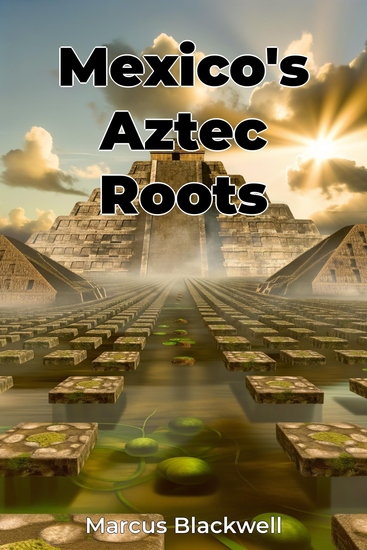
Mexico's Aztec Roots - cover

Mexico's Aztec Roots

Marcus Blackwell

Verlag: Publifye

  • 0
  • 0
  • 0

Beschreibung

"Mexico's Aztec Roots" explores the fascinating transformation of Mexican society from the height of the Aztec Empire through the colonial period, revealing how the collision of two distinct worlds created modern Mexico's unique cultural identity. The book masterfully weaves together archaeological evidence, colonial documents, and indigenous records to present a comprehensive view of this crucial historical period.

 
Through careful examination of recent discoveries at the Templo Mayor site, readers gain unprecedented insights into daily life in Tenochtitlan, from its sophisticated urban planning to its complex market systems and religious ceremonies. The narrative progresses through three major phases, beginning with a detailed examination of pre-Columbian Aztec civilization, challenging simplified historical accounts with evidence of their advanced diplomatic and educational systems.

 
Moving beyond traditional conquest narratives, the book explores the nuanced role of indigenous allies and political dynamics in the Spanish conquest, before delving into the emergence of mestizo culture. Throughout each section, the author draws upon multidisciplinary sources, including linguistics, anthropology, and archaeology, to provide a well-rounded understanding of Mexico's cultural evolution.

 
What sets this work apart is its balanced approach to examining cultural transformation, using regional case studies to demonstrate how indigenous communities maintained their identity while adapting to new systems. The book's accessible academic style makes complex historical processes understandable for both scholars and general readers, while its integration of recent archaeological findings and revised interpretations of historical documents offers fresh perspectives on Mexico's rich cultural heritage.
Verfügbar seit: 08.01.2025.
Drucklänge: 96 Seiten.

Weitere Bücher, die Sie mögen werden

  • Alexander the Great - cover

    Alexander the Great

    Jacob Abbott

    • 0
    • 0
    • 0
    A complete biography of the ancient Macedonian king and one of history’s greatest military leaders.Alexander the Great, son of King Philip II of Macedonia, and his fourth wife, Olympias, seemed destined for success. He had Aristotle for a tutor until he was sixteen. He took interest in his father’s military efforts abroad, and worried there would be nothing left to conquer when he became king. When ambassadors from Persia arrived in Macedonia, they tried to entertain young Alexander with colorful stories of their home, but the future leader was more interested in their armies and war tactics. It should be no surprise that Alexander became one of ancient history’s greatest and most successful military leaders.In this biography, author Jacob Abbott recounts the life and times of Alexander the Great. He takes readers through the king’s early years, including his youth and education, as well as his relationship with his parents. The history continues with Alexander’s ascension to the throne at the age of twenty and details all the drama and military victories over the next ten years of the monarch’s reign as he expanded his empire from Macedonia and Egypt to northwest India. Unfortunately, Alexander’s demise soon followed, but not before he left his mark on the world. Nineteenth-century American author Jacob Abbott wrote many books over the course of his own life from juvenile fiction to history. He wrote numerous biographies on such monumental individuals as Alfred the Great, Queen Elizabeth I, Genghis Khan, Julius Caesar, and Peter the Great.
    Zum Buch
  • Dopamine Reset - Reclaim Your Focus Motivation and Joy in the Digital Age - cover

    Dopamine Reset - Reclaim Your...

    Claire Donnelly

    • 0
    • 0
    • 0
    Are you tired of feeling constantly distracted, drained by digital overload, and struggling to focus or feel joy? 
    In today’s fast-paced, tech-driven world, our brains are under siege—hijacked by dopamine spikes from endless notifications, social media, and digital distractions. Dopamine Reset is your science-backed guide to reclaiming your brain’s natural balance and restoring true focus, motivation, and lasting happiness. 
    Inside, you’ll discover:The neuroscience behind dopamine and how it drives habits, motivation, and pleasure.Signs and symptoms of digital overload—and how to break free.Proven techniques to reset your brain’s reward system without deprivation or rigid digital detoxes.The Dopamine Diet: nutrition and lifestyle habits to nourish your mind and body.Mindfulness, movement, and meditation practices to restore calm, build resilience, and spark creativity.Step-by-step templates and checklists to create your personal reset plan—and track real results.Strategies for overcoming setbacks, handling cravings, and maintaining lasting change. 
    Imagine waking up focused and energized, completing deep work with ease, and finding satisfaction in both small moments and big wins—at work, at home, and in your relationships. Dopamine Reset blends cutting-edge research, real-world case studies, and practical tools for anyone ready to thrive in the digital age. 
    Stop chasing fleeting digital highs. Start living with focus, motivation, and joy. Your reset starts now!
    Zum Buch
  • The Will to Believe - cover

    The Will to Believe

    William James

    • 0
    • 0
    • 0
    "The Will to Believe" is a philosophical essay written by William James in 1896. The essay is a defense of the concept of religious faith and argues that belief can be justified even in the absence of objective evidence. 
    James argues that there are some beliefs, such as religious beliefs, that cannot be proven or disproven by empirical evidence. He contends that in cases where there is insufficient evidence to support a belief, individuals are justified in using their will to believe in order to hold on to what they consider to be important or valuable beliefs. 
    James also argues that the act of believing itself can have positive effects on an individual's life. Belief can provide a sense of meaning and purpose, as well as a framework for understanding the world. Furthermore, James contends that individuals who possess a strong will to believe are more likely to succeed in achieving their goals, as they are more motivated and focused. 
    "The Will to Believe" was a controversial work in its time, and it continues to be debated by philosophers and scholars today. While some have criticized James's arguments for promoting irrationality and dogmatism, others have praised his defense of personal autonomy and individual freedom of thought. Overall, "The Will to Believe" is an important contribution to the ongoing philosophical discourse on the nature of belief and faith.
    Zum Buch
  • Summary: The Course in Miracles Experiment - A Starter Kit for Rewiring Your Mind (and Therefore the World) by Pam Grout: Key Takeaways Summary & Analysis Included - cover

    Summary: The Course in Miracles...

    Brooks Bryant

    • 0
    • 0
    • 0
    Disclaimer: This is not the official book, but a summary & it does not accompany the official. 
    Ever felt like you're running on a mental treadmill, caught in endless loops of negative thinking? Get off the mental hamster wheel with our enlightening summary of Pam Grout's 'A Starter Kit for Rewiring Your Mind (and Therefore the World).' Discover powerful, bite-sized insights that guide you through a transformative process to recalibrate your mindset for success and happiness. 
    Grout offers you a roadmap to shift from a fear-based existence to a life energized by love, abundance, and positivity. Our summary boils down her wisdom into actionable steps that are easy to incorporate into your daily routine. 
    Why settle for a life influenced by limiting beliefs? With this concise guide, learn how to tap into the power of your mind to bring about change not just in your life, but also in the world around you. Decode the science and spirituality behind 'mind rewiring' and equip yourself with tools that lead you to a life you'll love. 
    Ready to flip the switch? Embrace your innate power to rewrite your story and reshape the world with this essential summary guide!
    Zum Buch
  • The Roman Empire Uncovered - Secrets of a Superpower - cover

    The Roman Empire Uncovered -...

    Rogan Fish

    • 0
    • 0
    • 0
    The Roman Empire, one of history's most influential superpowers, traces its origins to a blend of myth, legend, and historical reality. Understanding the foundations of Rome requires examining the myths surrounding its birth, its early expansion as a republic, and the eventual transformation into a dominant empire. These formative stages laid the groundwork for centuries of imperial dominance, establishing Rome as a cultural and political epicenter. 
    The story of Rome's foundation begins with the legendary tale of Romulus and Remus. According to Roman mythology, the twin brothers were abandoned by the river Tiber, only to be rescued and nurtured by a she-wolf. Eventually, Romulus would go on to establish the city on Palatine Hill in 753 BCE, becoming its first king after a violent dispute with Remus. Though historians debate the factual accuracy of this tale, it symbolizes Rome’s resilience and its origins rooted in struggle and survival. This myth, coupled with archaeological evidence from early settlements on the hills of Rome, provides insight into how Romans viewed their beginnings as both divine and destined for greatness. 
    Following its legendary foundation, Rome gradually transformed from a small settlement into a robust city-state. Initially, it was ruled by a series of kings who laid the foundations of Roman society, including political and religious institutions. However, the overthrow of the monarchy in 509 BCE marked the beginning of the Roman Republic, a period characterized by shared power between elected officials and a complex system of checks and balances. The Republic's political structure, with the Senate as a central governing body, reflected a commitment to preventing any single ruler from holding excessive power. This early model of governance would profoundly influence later empires and modern political systems.
    Zum Buch
  • Carthage - Its Carnage Its History and Its Resistance to the Romans - cover

    Carthage - Its Carnage Its...

    Kelly Mass

    • 0
    • 0
    • 0
    Carthage was an ancient city-state located in what is now modern-day Tunisia. Founded by Phoenician settlers in the ninth century BC, Carthage would rise to become one of the most influential and powerful empires of the ancient Mediterranean world, only to be destroyed by the Romans in 146 BC. Despite its destruction, the Romans later lavishly rebuilt it, cementing its place in history. During its peak in the fourth century BC, Carthage was the capital of the Carthaginian Empire, a force that dominated the western Mediterranean with unmatched power and influence. 
    The origins of Carthage can be traced back to around 814 BC, when settlers from Tyre, a prosperous Phoenician city-state in modern Lebanon, arrived on the northern coast of Africa. Following the fall of Phoenicia to the Neo-Assyrian Empire in the seventh century BC, Carthage emerged as an independent entity. Over time, it expanded its influence, securing political and economic control over vast territories across the western Mediterranean. By 300 BC, Carthage controlled a sprawling empire that included the coastal regions of northwest Africa, southern Iberia (modern-day Spain, Portugal, and Gibraltar), and a series of key islands such as Sicily, Sardinia, Corsica, Malta, and the Balearic Islands. This expansion was achieved through a complex network of colonies, vassal states, and satellite territories. 
    Carthage’s strategic location played a significant role in its success. Its access to fertile agricultural lands and critical maritime trade routes allowed the city to thrive economically and become one of the wealthiest and most powerful centers of commerce in the ancient world. Carthage’s trade network extended across the Mediterranean and beyond, reaching as far as West Asia, West Africa, and northern Europe.
    Zum Buch