Begleiten Sie uns auf eine literarische Weltreise!
Buch zum Bücherregal hinzufügen
Grey
Einen neuen Kommentar schreiben Default profile 50px
Grey
Jetzt das ganze Buch im Abo oder die ersten Seiten gratis lesen!
All characters reduced
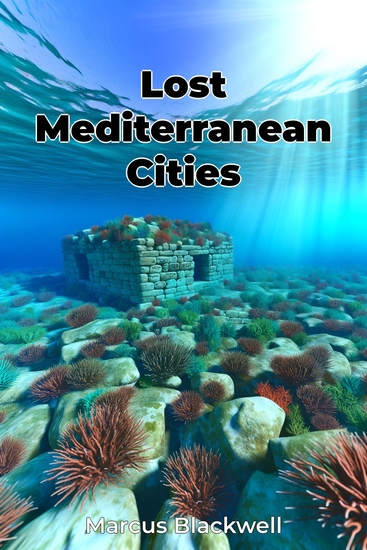
Lost Mediterranean Cities - cover

Lost Mediterranean Cities

Marcus Blackwell

Übersetzer A AI

Verlag: Publifye

  • 0
  • 0
  • 0

Beschreibung

Lost Mediterranean Cities explores submerged urban landscapes in the Mediterranean, offering unique insights into history, Earth sciences, and geography. It reveals how geological events, such as sea-level changes and seismic activity, caused cities to sink, impacting human settlements. Marine archaeology uncovers architectural remains and artifacts, shedding light on daily life and cultural practices. These submerged sites provide critical lessons about resilience, adaptation, and environmental change, challenging traditional historical narratives.

 
The book examines specific case studies like Pavlopetri, Atlit-Yam, and Baia, detailing their histories, submersion causes, and archaeological discoveries. Advanced technologies, including sonar and 3D modeling, aid exploration and documentation efforts to preserve underwater cultural heritage. By combining archaeological data with geological analyses, Lost Mediterranean Cities uncovers the interplay between human societies and their environment.
Verfügbar seit: 12.02.2025.
Drucklänge: 67 Seiten.

Weitere Bücher, die Sie mögen werden

  • Counting: Humans History and the Infinite Lives of Numbers - cover

    Counting: Humans History and the...

    Benjamin Wardhaugh

    • 0
    • 0
    • 0
    SHORTLISTED FOR THE BRITISH SOCIETY FOR THE HISTORY OF SCIENCE PRIZE 2025 
    SHORTLISTED FOR THE NEUMANN PRIZE 2025 
    WHAT DOES IT MEAN TO COUNT? WHY ARE HUMANS THE ONLY SPECIES ON EARTH THAT CAN DO IT? WHERE DID COUNTING COME FROM? HOW HAS IT SHAPED SOCIETIES ALONG THE WAY? AND WHY DOES IT MATTER? 
    Counting is an innovative, erudite, world-wrapping journey through humanity’s marvellous ability to impose numbers on things. Acclaimed historian and mathematician Benjamin Wardhaugh draws on stories from the Stone Age to cyberspace in pursuit of the elusive, fascinating, endlessly diverse history of human counting. 
    Starting with the roots of counting in human brains, bodies and environments, Wardhaugh tours us around the world and through time while exploring the different flavours of counting that have developed over millennia. We meet the makers of bead necklaces in ancient South Africa, the inventors of writing in the world ’ s first metropolis, and the ‘counter culture’ of classical Athens. We see counting used – and changed – by Indian scholars, Chinese peasants and Papuan shopkeepers; we meet the distinctive numerate agendas of Mayan kings, US governments and Korean vloggers. 
    Weaving these stories together, Wardhaugh shows how cultures have shaped counting, and how counting has shaped culture, in a rich tapestry spanning thousands of years. This is the vast story of human attempts to find some order in an unruly world; or, perhaps, to impose on a reluctant world the order that humans find within themselves. It is a history as wide, deep and tangled as that of humanity itself 
    In Counting, Benjamin Wardhaugh masterfully intertwines philosophy, science, and anthropology to further delve into the intricacies of our numerical world. The book not only explores the mathematical aspects of counting but also its social and cultural implications, making it a must-read for anyone interested in the evolution of civilisation. 
    For fans of David Spiegelhalter (The Art of Uncertainty), Cat Bohannon (Eve), Rory Stewart (The Marches), Anne Applebaum (Autocracy, Inc), and Peter Frankopan (The New Silk Roads). 
    HarperCollins 2024
    Zum Buch
  • A Life Everlasting - The Extraordinary Story of One Boy's Gift to Medical Science - cover

    A Life Everlasting - The...

    Sarah Gray

    • 0
    • 0
    • 0
    A donor mother’s powerful memoir of grief and rebirth that is also a fascinating medical science whodunit, taking us inside the world of organ, eye, tissue, and blood donation and cutting-edge scientific research. 
    When Sarah Gray received the devastating news that her unborn son Thomas was diagnosed with anencephaly, a terminal condition, she decided she wanted his death—and life—to have meaning. In the weeks before she gave birth to her twin sons in 2010, she arranged to donate Thomas’s organs. Due to his low birth weight, they would go to research rather than transplant. As transplant donors have the opportunity to meet recipients, Sarah wanted to know how Thomas's donation would be used. 
    That curiosity fueled a scientific odyssey that leads Sarah to some of the most prestigious scientific facilities in the country, including Harvard, Duke, and the University of Pennsylvania. Pulling back the curtain of protocol and confidentiality, she introduces the researchers who received Thomas’s donations, held his liver in their hands, studied his cells under the microscope.  
    Sarah’s journey to find solace and understanding takes her beyond her son’s donations—offering a breathtaking overview of the world of medical research and the valiant scientists on the horizon of discovery. She goes behind the scenes at organ procurement organizations, introducing skilled technicians for whom death means saving lives, empathetic counselors, and the brilliant minds who are finding surprising and inventive ways to treat and cure disease through these donations. She also shares the moving stories of other donor families. 
    A Life Everlasting is an unforgettable testament to hope, a tribute to life and discovery, and a portrait of unsung heroes pushing the boundaries of medical science for the benefit of all humanity.
    Zum Buch
  • Useless Facts About Life That Will Put You to Sleep - Better Than White Noise - cover

    Useless Facts About Life That...

    Meditative Sleep

    • 0
    • 0
    • 0
    Do you have trouble falling asleep at night? Does your mind refuse to shut off, replaying the day’s events or worrying about tomorrow? Useless Facts About Life That Will Put You to Sleep is here to rescue your restless nights! 
    This audiobook is packed with random, quirky, and utterly useless facts about life that are so boringly fascinating, they’ll gently guide your racing thoughts into a calm, snoozy haze. Did you know that the average person spends six months of their life waiting at red lights? Or that bananas are technically berries? These are the kind of wonderfully mundane tidbits you’ll find in this audiobook—designed to entertain just enough to help you relax, but not so much that you stay awake. 
    Perfect for anyone looking to unwind, Useless Facts About Life That Will Put You to Sleep is a humorous and soothing companion for bedtime. With its slow-paced delivery and oddly comforting content, you’ll be nodding off in no time. Press play, relax, and let the random, irrelevant wonders of life send you drifting into a peaceful night’s sleep. 
    Because sometimes, the secret to sleeping better is knowing something you’ll never need to know again.
    Zum Buch
  • Setting Boundaries That Stick - How Neurobiology Can Help You Rewire Your Brain to Feel Safe Connected and Empowered - cover

    Setting Boundaries That Stick -...

    LMFT Juliane Taylor Shore

    • 0
    • 0
    • 0
    Do you struggle to set boundaries with others in your life? Has your past conditioned you to expect pushback when setting boundaries, or caused you to give up on trying to set boundaries altogether? The prospect of setting boundaries can be scary and intimidating and can put you in a very vulnerable place where your mental health and wellbeing may even be at risk. There is a science to creating boundaries—one that will empower you, deepen your connection with others, and improve your self-esteem. 


    Setting Boundaries That Stick offers a scientific, neurobiological approach to boundary work. This unique guide will teach you to set healthy boundaries from the inside out by cultivating an "integrated brain," which allows you to respond to others with intention, rather than simply reacting based on instinct. Also included are exercises and activities to help you understand and create both physical and psychological boundaries, thereby building a solid, holistic framework for a more authentic sense of connection with others. 


    It's time to set boundaries in a way that empowers you to protect yourself, while also improving your relationships. By working from the inside out, this book will help you set healthy boundaries that actually stick.
    Zum Buch
  • Uncertain Climes - Debating Climate Change in Gilded Age America - cover

    Uncertain Climes - Debating...

    Joseph Giacomelli

    • 0
    • 0
    • 0
    Uncertain Climes looks to the late nineteenth century to reveal how climate anxiety was a crucial element in the emergence of American modernity. 
     
    Even people who still refuse to accept the reality of human-induced climate change would have to agree that the topic has become inescapable in the United States in recent decades. But as Joseph Giacomelli shows in Uncertain Climes, this is actually nothing new: as far back as Gilded Age America, climate uncertainty has infused major debates on economic growth and national development. 
      
    In this ambitious examination of late-nineteenth-century understandings of climate, Giacomelli draws on the work of scientists, foresters, surveyors, and settlers to demonstrate how central the subject was to the emergence of American modernity. Amid constant concerns about volatile weather patterns and the use of natural resources, nineteenth-century Americans developed a multilayered discourse on climate and what it might mean for the nation’s future. Although climate science was still in its nascent stages during the Gilded Age, fears and hopes about climate change animated the overarching political struggles of the time, including expansion into the American West. Giacomelli makes clear that uncertainty was the common theme linking concerns about human-induced climate change with cultural worries about the sustainability of capitalist expansionism in an era remarkably similar to the United States’ unsettled present.
    Zum Buch
  • The Wild Side Volume 2 - cover

    The Wild Side Volume 2

    Scott Shalaway

    • 0
    • 0
    • 0
    The Wildside Volume 2 highlights seventy five of the best of Scott Shalaway's syndicated nature columns. Let Scott introduce you to the natural history of creatures you see and enjoy every day--birds, bats, butterflies, and many other animals and plants. Compare personal perspectives on nature. Tag along as he describes his outdoor adventures, from the wilds of West Virginia to the Galapagos Islands. And learn how to attract more wildlife to your backyard with food, nest boxes, and wildflowers. 
    Scott Shalaway (1952-2025) earned his PhD in wildlife ecology at Michigan State. After working first at the Michigan Department of Natural Resources and then as a zoology professor at Oklahoma State University, he moved to West Virginia to fulfill his dream of becoming a freelance nature writer. Scott’s life “on the wild side” encompassed 33 years writing more than 2,000 columns, seven books, and several hundred magazine articles--many of which won writing awards. For 22 of those years, he also hosted live weekly radio shows in Pittsburgh and Wheeling, West Virginia. Scott led 13 birding tours to Mexico and 11 more to Ecuador, the Galapagos, Maine, the Everglades, southern Arizona, Hawk Mountain and Cape May. 
    This audiobook is brought to life by Scott's eldest daughter, author and voice actor Nora Shalaway Carpenter.
    Zum Buch