Begleiten Sie uns auf eine literarische Weltreise!
Buch zum Bücherregal hinzufügen
Grey
Einen neuen Kommentar schreiben Default profile 50px
Grey
Jetzt das ganze Buch im Abo oder die ersten Seiten gratis lesen!
All characters reduced
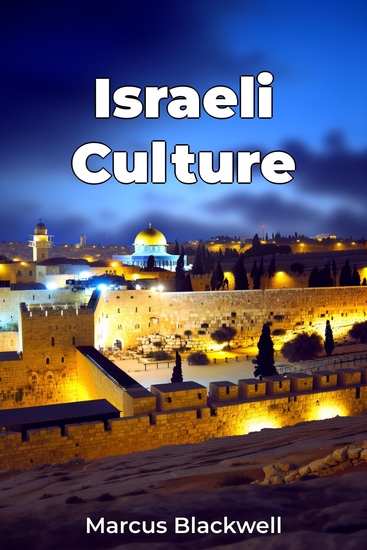
Israeli Culture - cover

Israeli Culture

Marcus Blackwell

Übersetzer A AI

Verlag: Publifye

  • 0
  • 0
  • 0

Beschreibung

"Israeli Culture" presents a comprehensive exploration of the intricate relationship between Israel and the United States since 1948, revealing how this unique partnership has shaped global geopolitics, cultural exchange, and international security.

 
The book delves into three fundamental aspects: diplomatic relations, military cooperation, and cultural influences, offering readers a multifaceted understanding of this crucial alliance that extends far beyond traditional diplomatic ties.

 
Drawing from declassified government documents, diplomatic archives, and firsthand accounts, the book traces the evolution of US-Israel relations from Truman's immediate recognition of the newly established state to contemporary challenges in Middle Eastern politics. Particularly fascinating is how this relationship has influenced technological innovation and regional stability, with both nations developing deep connections in military strategy, intelligence sharing, and economic development.

 
The book's structure progresses logically through historical developments, military partnerships, and cultural exchanges, providing readers with a balanced perspective from both American and Israeli sources. What sets this work apart is its accessible approach to complex topics, combining academic rigor with clear explanations that serve both policy professionals and general readers interested in international relations.

 
By examining both official policy and cultural dynamics, it offers valuable insights into one of the most significant international partnerships in modern history.
Verfügbar seit: 05.01.2025.
Drucklänge: 107 Seiten.

Weitere Bücher, die Sie mögen werden

  • Raided by the Gladiators (Gay Historical Erotica) - cover

    Raided by the Gladiators (Gay...

    Archer Vale

    • 0
    • 0
    • 0
    In the Colosseum, there’s a weapon more powerful than a sword or a spear. It’s brought me to my knees. 
    I let a strange man into my home. He claims to be a physician from Alexandria. He claims to know the secret to godlike sexual performance. 
    But the treatment he prescribed…it’s shocking. 
    If I follow his instructions, I’ll lose everything. My status…my wealth…my dignity…I’ll be trading it away for this sexual blessing. 
    And he says there are risks involved. 
    I might get addicted. 
    --- 
    CONTAINS EXPLICIT GAY SEXUAL CONTENT. 
    For exclusive stories, visit www.ArcherVale.com.
    Zum Buch
  • Blockchain technology explained: a simple guide for investors - cover

    Blockchain technology explained:...

    AHMED MUSA

    • 0
    • 0
    • 0
    Blockchain Technology Explained: A Simple Guide for Investors 
    Unlock the potential of blockchain technology with this comprehensive yet accessible guide designed specifically for investors. "Blockchain Technology Explained: A Simple Guide for Investors" demystifies one of the most transformative innovations of our time. Whether you're new to blockchain or looking to deepen your understanding, this book offers a clear and concise exploration of blockchain's core concepts, its evolution, and its far-reaching impact across industries. 
    From its foundational features like decentralization, transparency, and security, to its groundbreaking applications in sectors like finance, healthcare, supply chain, and real estate, this book covers it all. With easy-to-understand explanations, real-world examples, and practical insights, it provides investors with the knowledge they need to navigate the blockchain space confidently. 
    Whether you're interested in cryptocurrency, looking for innovative investment opportunities, or seeking to understand how blockchain can disrupt traditional industries, this guide will equip you with the essential knowledge to make informed decisions in an ever-evolving digital landscape
    Zum Buch
  • The Book of the Dead - An Egyptian Guide to the Afterlife - cover

    The Book of the Dead - An...

    Omar Khalil

    • 0
    • 0
    • 0
    To the ancient Egyptians, death was not the end—it was merely a transition to a new phase of existence. The afterlife was not a vague, distant concept but a vivid and essential part of their spiritual understanding. They believed in a continuation of life, one where the soul would live on in a realm filled with beauty, light, and eternal peace, provided certain conditions were met. This vision shaped much of their culture, from their art and architecture to their religious practices and personal values. 
    Central to this belief was the idea of the soul, which they saw as comprising multiple parts. The Ka was the life force, the vital essence that departed the body at death but still needed sustenance. The Ba represented personality and mobility—it was the part of the soul that could travel between the living world and the afterlife. The Akh, achieved through a successful transition and judgment, was the transformed spirit that lived among the gods. Each of these aspects had its own role to play in the journey beyond death, and maintaining their harmony was crucial. 
    Immortality was not automatic. It had to be earned through righteous living and proper burial. For the Egyptians, morality and order, guided by the principle of Ma’at—truth, balance, and justice—were essential. One had to live in accordance with Ma’at to hope for a favorable judgment in the afterlife. This belief extended into the funerary rituals, where the dead would be judged in the Hall of Two Truths, their heart weighed against the Feather of Ma’at to determine their fate.
    Zum Buch
  • Operation Northwoods: The History of the Controversial Government Plan to Stage False Flag Attacks on Americans and Blame Cuba - cover

    Operation Northwoods: The...

    Editors Charles River

    • 0
    • 0
    • 0
    Throughout the history of warfare, the practice of placing blame on innocent parties in order to justify attacking them has been a constant feature. In the 20th century, this practice began to be commonly referred to as a “false flag” operation. The essence of a false flag scenario is that it is conducted by one party or government and “made to appear as though another party sponsored it.”[1] In informal legal terminology, the practice is commonly referred to as a “stitch up”[2] or “setup.”[3] The modern use of this action based on deceit originated in the 16th century, typically when ships displayed the flags of a neutral or enemy country to hide their identities. 
    	The severity of false flag operations moves in tandem with the perceived danger. In the late 20th century, the Soviet Union constituted an ongoing threat to the United States, ideologically and militarily. When Fidel Castro, a Soviet sympathizer, came to power in Cuba in 1959, the presence of a communist extension of Soviet influence so near American shores caused great discomfort to the U.S. government. 
    	Some of the Cold War’s tensest moments involved Cuba, including the Bay of Pigs invasion and the Cuban Missile Crisis, amply demonstrating that throughout the early 1960s, alarmed individuals within the American government believed that the only way to handle Castro was by immediate elimination and a takeover of Cuba. They were pitted against more nuanced points of view held by others within the Kennedy administration. The Pentagon was of the general mind that in such a perilous environment, military decision-making should come to the front and civilians should withdraw, even the White House. Diplomacy was seen as being of little use by the Joint Chiefs of Staff against an encroaching Soviet superpower led by a political street fighter and his puppet situated just off the coast of Florida. 	This charged atmosphere would lead to one of the most controversial proposals in history.
    Zum Buch
  • California Real Estate - Master the California Real Estate Exam with engaging audio lessons crafted for your success! - cover

    California Real Estate - Master...

    Samuel Thornbrook

    • 0
    • 0
    • 0
    - California Real Estate - 
    ⭐⭐ Essential Guide with Simplified Explanations ⭐⭐ 
    Are you seeking to advance your career and enhance your knowledge to successfully pass the California Real Estate Exam 2024-2025? 
    Looking for a thorough guide that includes everything necessary to ace the California Real Estate Exam 2024-2025? 
    Look no further! 
    This guide is your ultimate companion for deepening your understanding, honing your skills, and engaging in practical exercises. With this resource, you're set for success. 
    Updated for the California Real Estate Exam 2024-2025 Structure. 
    Key features of this enriched guide: 
    - Profound insights about the California Real Estate Exam 2024-2025 Certification 
    - Detailed explanation of the California real estate industry 
    - Effective strategies for exam preparation and tackling 
    Our guide stands out with its extensive coverage, which is crucial for your exam success. Concepts are not merely skimmed; they are explored thoroughly and with precision. 
    Please note that this guide is independent and not affiliated with any official California Real Estate entity. It is purely a resource for your benefit. 
    Designed with a clear structure and easy-to-understand language, our California Real Estate Exam Guide 2024-2025 ensures smooth transitions between topics. Say goodbye to dense jargon and welcome clear, precise, and technically accurate content. 
    So, why wait? Click the BUY NOW button, secure your guide, and start your journey to California Real Estate Exam 2024-2025 success!
    Zum Buch
  • Vedic Philosophy of the Kali Yuga - Through the Lens of Gnostic Wisdom - cover

    Vedic Philosophy of the Kali...

    HENRY ROMANO

    • 0
    • 0
    • 0
    According to Vedic philosophy, there are four eras in every world cycle. They represent a gradual decline from enlightenment (Satya Yuga) to chaos and ignorance (Kali Yuga) before it starts again. Each of these eras lasts roughly 2160 years. 
    You're probably familiar with the four ages of Hindu philosophy: Satya Yuga, Treta Yuga, Dwapara Yuga, and Kali Yuga. The golden age is when pure knowledge is widespread, and people live in harmony. The dark age is when everything goes wrong—the World falls into chaos, and humanity descends into ignorance. But what happens next? 
    What is the meaning of "the end of the world"?
    Zum Buch