Begleiten Sie uns auf eine literarische Weltreise!
Buch zum Bücherregal hinzufügen
Grey
Einen neuen Kommentar schreiben Default profile 50px
Grey
Jetzt das ganze Buch im Abo oder die ersten Seiten gratis lesen!
All characters reduced
Chocolate And Culture - cover

Chocolate And Culture

Marcus Blackwell

Verlag: Publifye

  • 0
  • 0
  • 0

Beschreibung

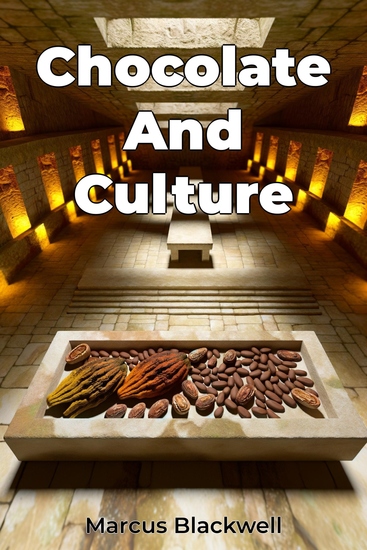
"Chocolate And Culture" presents a fascinating exploration of how chocolate transformed from a sacred Mesoamerican drink to a global commodity, weaving together economic, scientific, and cultural perspectives.

 
The book traces this remarkable journey through five centuries of documented history, examining how chocolate has profoundly influenced human civilization across four continents. Through careful analysis of trade records, scientific studies, and cultural documents, the narrative reveals how this single commodity shaped economies, social structures, and culinary traditions worldwide.

 
The book masterfully combines historical research with modern scientific understanding, explaining how chocolate's unique chemical properties made it valuable across different societies. From its origins as currency and sacred offering in Mayan and Aztec civilizations to its evolution through Spanish colonization, the narrative follows chocolate's transformation through detailed trade records and colonial archives.

 
The scientific analysis delves into chocolate's complex chemistry while balancing technical information with historical accounts of its perceived medicinal properties. At its core, the work examines chocolate's cultural impact through anthropological studies and social documents, demonstrating how consumption patterns reflected social status and influenced gender dynamics.

 
The author maintains an academic yet accessible approach, using primary sources, laboratory findings, and archaeological data to create a comprehensive study that connects multiple disciplines. This meticulous examination extends to modern concerns, including fair trade practices and debates over traditional preparation methods, making it valuable for scholars, food historians, and general readers interested in cultural history.
Verfügbar seit: 12.01.2025.
Drucklänge: 90 Seiten.


Weitere Bücher, die Sie mögen werden

  • And Goliath - The Littlest Navy SEAL's Inspirational Story About Living Your Biggest Life - cover

    And Goliath - The Littlest Navy...

    David Brown, Robert Gettlin

    • 0
    • 0
    • 0
    Former US Navy SEAL David Brown was the unlikeliest of candidates for the world's most grueling military selection process. Standing just 5' 3" and weighing 110 pounds, he was unlike any of the others around him who aspired to be SEALs. But through dogged determination and an iron will, he overcame every obstacle that life put in front of him to achieve his dream of becoming a SEAL. 


    David Brown's life has been one of perseverance, tenacity, and achievement—from childhood adventures, to love lost and found, to BUD/S, the Teams, an exciting career at NCIS, and then a steady climb to the top echelons of federal law enforcement. And Goliath is his story through military life and what comes after—the good and the bad. 


    Told with raw honesty and unwavering courage, And Goliath is more than just a memoir—it's a testament to the power of perseverance. David's inspirational tale reveals how facing your own Goliaths can lead you to live your biggest life possible.
    Zum Buch
  • Jimi Hendrix: A short biography - 5 Minutes: Short on time - long on info! - cover

    Jimi Hendrix: A short biography...

    5 Minutes, 5 Minute Biographies,...

    • 0
    • 0
    • 0
    Jimi Hendrix, guitar legend: Life and works in a short biography! Everything you need to know, brief and concise. Infotainment, education and entertainment at its best!
    Zum Buch
  • Inspirational lessons from Trees (Trees In Myths & Folklore) - cover

    Inspirational lessons from Trees...

    Niina Niskanen

    • 0
    • 0
    • 0
    A long time ago Finns, Finno-Ugric tribes and Baltic tribes practised animistic nature-based belief, where everything in nature had its own place and spirit. Trees were widely worshipped. Some trees, holier than others were called spirit trees. In this course, you will learn about ancient tree worship and mythologies and stories told about different tree species and gods, goddesses and magical creatures related to them. How these trees were used in folk magic and how people saw them. Sacred groves were very common. These special places were thought to harbour gods and goddesses, so they were also worshipped and given sacrificial gifts of food, drink and treasures.Altars were built in these groves for the purpose of worship. An altar was usually a large stone or a wooden table holding a statue or an image of a particular deity.Sacred groves were communally owned by an entire village and were generally located in the woods near the village. People could visit a grove alone or in groups to show reverence to the gods. It was believed that trees understood humans, especially women. People told their troubles to trees and felt certain that the trees kept their secrets.In the old days, people relied more on the forest than they do today. The entire forest ecosystem offered almost all of the materials needed for life: shelter and abundant food like berries, plants, mushrooms and animals.Learn about the Christmas tree tradition and how it arrived in Finland and the tree emuu's, these were spirits that created the different tree species. This course also includes tips for those of you who are interested in grounding and building better spiritual connections with nature and your surroundings.  
    Niina Pekantytär aka Fairychamber is known for her passion and knowledge of Finnish mythology and folklore. Born in northern Finland, Niina grew up listening to these stories from a very young age.
    Zum Buch
  • Cognitive Behavioral Therapy workbook - Practical Exercises and Strategies to Overcome Anxiety Depression and Negative Thinking for a Happier Life - cover

    Cognitive Behavioral Therapy...

    Forrest Rhodes

    • 0
    • 0
    • 0
    Take control of your thoughts, emotions, and behaviors with the power of Cognitive Behavioral Therapy (CBT)! The "Cognitive Behavioral Therapy Workbook" is your go-to resource for managing mental health challenges and building lasting emotional resilience. With step-by-step exercises and actionable techniques, this workbook helps you break free from anxiety, depression, and negative thought patterns. 
    ✨ Inside This Workbook, You’ll Find: 
    •	Easy-to-follow exercises to reframe negative thinking. 
    •	Proven techniques for managing anxiety, stress, and depression. 
    •	Strategies to improve relationships, self-esteem, and decision-making. 
    •	Tools to identify and challenge unhelpful cognitive distortions. 
    •	Personalized worksheets to track progress and build healthy habits. 
    🌟 Why This Workbook is Your Essential Mental Health Companion: 
    •	Gain clarity and confidence by understanding the root of your emotions. 
    •	Learn practical coping strategies to handle life’s challenges effectively. 
    •	Build a toolbox of skills for lasting emotional well-being. 
    •	Start feeling better—one step at a time! 
    💡 Take the First Step Toward Mental Wellness Today! 
    Whether you’re navigating personal challenges or looking to support a loved one, the "Cognitive Behavioral Therapy Workbook" is an empowering guide for creating positive change in your life.
    Zum Buch
  • Archaeology - Unearthing the Past to Reveal Ancient Civilizations - cover

    Archaeology - Unearthing the...

    Mike Crawford

    • 0
    • 0
    • 0
    Archaeology is the scientific study of past human cultures through material remains. It offers invaluable insights into ancient civilizations, their ways of life, and the development of human society over millennia. By examining artifacts, structures, and other remnants of the past, archaeologists reconstruct histories that might otherwise remain unknown. This discipline bridges the gap between history and anthropology, providing a tangible connection to cultures that predate written records. 
    The scope of archaeology is vast, encompassing prehistoric societies, ancient empires, and even more recent historical periods. Archaeologists investigate a wide range of sites, from early human settlements and burial mounds to grand cities and monumental structures. The study of these remains allows researchers to piece together how societies evolved, adapted to their environments, and interacted with one another. Archaeology is not limited to famous civilizations such as the Egyptians, Romans, or Mayans—it also sheds light on lesser-known cultures that played significant roles in shaping human history. 
    One of the core reasons for studying archaeology is to understand the complexities of past human behavior. By analyzing tools, pottery, inscriptions, and architectural remains, scholars can infer how people lived, what they believed, and how they organized their communities. For instance, burial practices provide insights into religious beliefs, while trade artifacts reveal connections between distant societies. Archaeology helps challenge assumptions and correct misconceptions about the past, ensuring a more accurate historical record.
    Zum Buch
  • Economic History of Colombia - From Independence to Modern Times - cover

    Economic History of Colombia -...

    Anya Solace

    • 0
    • 0
    • 0
    The economic history of Colombia is a rich and complex narrative shaped by its colonial past, its struggle for independence, and its evolution into a modern, globalized economy. Colombia’s economic trajectory is marked by cycles of growth, stagnation, and reform, heavily influenced by both internal and external forces. To understand Colombia’s present-day economic standing, it is essential to first explore the historical context that laid the foundation for its economic structure. 
    The history of Colombia’s economy begins with its pre-Colombian civilizations, which thrived through agriculture and trade. The Spanish colonization in the 16th century drastically altered the region's economic systems. Colombia became a key part of the Spanish Empire’s colonial economy, centered on the extraction of gold, silver, and agricultural products. During the colonial era, the economic structure was based on a system of encomiendas, which exploited Indigenous labor, and the export of valuable resources to Spain. This period was foundational in creating the early foundations of the Colombian economy, particularly its dependence on mineral wealth. 
    The struggle for independence from Spain in the early 19th century, which culminated in 1810 with the declaration of independence and a protracted series of wars, significantly disrupted the economy. The wars of independence led to the fragmentation of the region into several separate entities, each facing economic challenges as they sought to stabilize and develop. Upon achieving independence in 1819, Colombia faced a host of problems, including political fragmentation, lack of infrastructure, and limited industrial capacity. These challenges hindered the country's economic development for much of the 19th century.
    Zum Buch