Begleiten Sie uns auf eine literarische Weltreise!
Buch zum Bücherregal hinzufügen
Grey
Einen neuen Kommentar schreiben Default profile 50px
Grey
Jetzt das ganze Buch im Abo oder die ersten Seiten gratis lesen!
All characters reduced
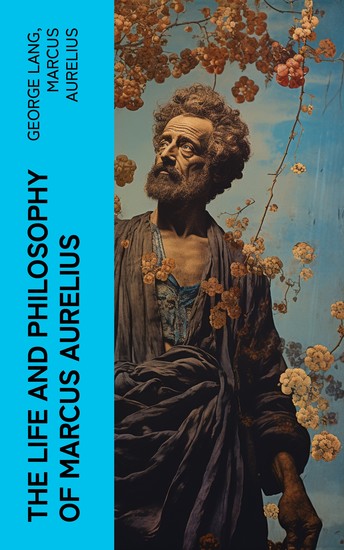
The Life and Philosophy of Marcus Aurelius - Biography of Roman Emperor Marcus Aurelius; Study of His Philosophy & Meditations by Marcus Aurelius - cover

The Life and Philosophy of Marcus Aurelius - Biography of Roman Emperor Marcus Aurelius; Study of His Philosophy & Meditations by Marcus Aurelius

Marcus Aurelius, George Lang

Verlag: e-artnow

  • 0
  • 0
  • 0

Beschreibung

This meticulously edited and carefully compiled edition contains not only the biography of the famous Roman emperor, but also the collection of his thoughts and philosophical views on Stoicism in his "Meditations". Marcus Aurelius wrote this work originally in Greek and as a source for his own guidance and self-improvement. The original title of this work is unknown but even without the original title it is still considers as a literary monument to a government of service and duty.
Verfügbar seit: 05.12.2023.
Drucklänge: 191 Seiten.
Weitere Bücher, die Sie mögen werden

  • Byzantium and Constantinople: The History of the Ancient Greek City that Became the Byzantine Empire’s Capital - cover

    Byzantium and Constantinople:...

    Editors Charles River

    • 0
    • 0
    • 0
    Due to the importance of the Roman Empire and the offshoot Byzantine Empire, it’s often forgotten that Constantinople wasn’t chosen at random; in fact, the city already existed, and it lent its name to the empire that was subsequently centered there. Byzantium, known originally as Byzantion, was an ancient Greek city centuries before it became known as Constantinople, and the etymology of Byzantion/Byzantium is still unknown. It has been suggested that Byzantion is of Thracian origin and may be derived from the Thracian personal name Byzas, which means “he-goat.” Ancient Greek legend refers to King Byzas as the leader of the Megaran colonists and the founder of the city, but the earliest name for a city on the site is “Lygos,” which likely corresponds to an earlier Thracian settlement described by Pliny the Elder in his seminal work, Natural History: “On leaving the Dardanelles we come to the Bay of Casthenes, ...and the promontory of the Golden Horn, on which is the town of Byzantium, a free state, formerly called Lygos; it is 711 miles from Durazzo.” 
    Pliny went on to explain that Lygos was a Thracian settlement founded between the 13th and 11th centuries BCE. The site, however, was probably abandoned well before Megara founded Byzantion around 657 BCE across from Chalcedon on the Asiatic side of the Bosphorus. The city was briefly renamed Augusta Antonina in the early 3rd century CE by the Emperor Septimius Severus, who razed the city to the ground in 196 CE for supporting a rival contender in the civil war and had it rebuilt in honor of his son and successor, Marcus Aurelius Antoninus, known as Caracalla. This new name appears to have been quickly forgotten and abandoned, with the city reverting to Byzantium after the assassination of Caracalla in 217 CE, and that’s how it would be known when Constantine fatefully moved the seat of power there over a century later.
    Zum Buch
  • Mythology and Religion in Ancient Babylon: The History of Babylonian Legends and Religious Practices - cover

    Mythology and Religion in...

    Editors Charles River

    • 0
    • 0
    • 0
    The ancient world was full of many fantastic cities and places, and like today’s major cities, the great ancient cities were hubs of trade, religion, and science. Writing was first invented in ancient cities, and many important scientific discoveries were also made in them, some of which are still used in the modern world. Among the many cities of the ancient world, Rome and Athens may come to mind first, but the city of Babylon in the land of Mesopotamia was already an ancient, venerated city when the others were still inconsequential settlements.  
    	Today, Babylon has become a byword for greed, excess, and licentiousness, mostly due to its mention in the Bible, but a closer examination reveals that Babylon was so much more, and even perhaps the most important city in the ancient world. Ancient Babylon was home to great dynasties that produced some of the world’s most influential leaders, most notably Hammurabi and Nebuchadnezzar, and these rulers invoked their wills on the entire ancient Near East and have been remembered as both progressive and cruel all at the same time. Babylon was also the seat of culture in ancient Mesopotamia and the place where scholars made amazing scientific advances that would not be eclipsed for several centuries. An examination of ancient Babylon demonstrates that it was truly the first great city in the ancient world. 
    	Babylon was also instrumental in the development of the region’s religions, and the religions continue to captivate people for many of the same reasons today’s best known religions and their histories fascinate people. The religion practiced by the ancient Mesopotamians provides a certain mix between the mundane and the surreal, and at the same time aspects of it are both familiar and bizarre to people today. Some find themselves drawn to it based on its preeminent position in religious history as the oldest documented religion in the world.
    Zum Buch
  • The Third British Empire - cover

    The Third British Empire

    Alfred Eckhard Zimmern

    • 0
    • 0
    • 0
    The Third British Empire. Sir Alfred Eckhard Zimmern (1879–1957) was an English classical scholar, historian, and political scientist writing on international relations. His book, The Third British Empire, was among the first to apply the expression "British Commonwealth" to the British Empire. He is also credited with the phrase "welfare state", which was made popular a few years later by William Temple.
    Zum Buch
  • Reality and the Arts - cover

    Reality and the Arts

    Albert A. Anderson

    • 0
    • 0
    • 0
    Art is the creative manifestation of essences. In order to understand the relation between art and reality, we need a philosophical guide. The best way to comprehend how the creative act of imagining enables the mind to seek reality is to employ the kind of dialectical thinking that Plato used in his dialogues. Beginning with the shadows on the wall of the cave in which each person dwells, that process gradually enables us to grasp the essences that are manifested in individual works of art.
     
    Without a philosophical guide, we are likely to encounter only a blur of images in the visual arts, a cacophony of sounds in music, a whirl of activity in the theater, and chaos in the building of cities. It is too much to expect a set of final answers to any serious question about what is true, good, or beautiful. If we abandon the quest for reality we settle for too little. Plato’s dialectical approach offers a path between Scylla and Charybdis.
    Zum Buch
  • It's Time to Talk (and Listen) - How to Have Constructive Conversations About Race Class Sexuality Ability & Gender in a Polarized World - cover

    It's Time to Talk (and Listen) -...

    PhD Alicia Del Prado, PhD...

    • 0
    • 0
    • 0
    We talk every day—and we often do it without thinking. But, as you well know, there are some things that are harder to talk about—especially issues pertaining to politics, culture, lifestyle, and diversity. If you've ever struggled in a conversation about a "controversial" topic with a loved one, work colleague, or even a stranger, you know exactly how uncomfortable and heated the discussion can become. And even if you are one of the lucky few that expresses themselves eloquently, how do you move beyond mere "lip service" and turn words into actionable change? 


    This groundbreaking book will show you how to get to that important next level in difficult conversations, to talk in an authentic and straightforward way about culture and diversity, and to speak from the heart with tools from the head. Using a simple eight-step approach, you'll learn communication strategies that are supported by research and have been practiced in classrooms, work meetings, therapy sessions, and more. 


    With this book as your guide, you'll learn to navigate these difficult conversations, and take what you've learned beyond the conversation and out into the world—whether it's through politics, social justice movements, or simply expanding the minds of those around you.
    Zum Buch
  • Effective Communication - Easy Guide For Understanding Body Language Having Social Intelligence And Being More Charismatic - cover

    Effective Communication - Easy...

    Mick Black

    • 0
    • 0
    • 0
    Discover the secrets to becoming an effective communicator in every aspect of your life. 
    Communication is the foundation on which all human connection is built. 
    According to one recent study, 86% of employees and executives listed poor communication skills as being the number one reason for workplace failure. And communication isn’t only important when it comes to your career. Nearly 68% of marriages end due to poor communication. 
    You don’t have to be part of these harrowing statistics. By honing your communication skills, you can improve all your relationships, whether personal or professional in nature. 
    In this book you will discover:A look at early childhood, brain development, language acquisition, and how these crucial years set the stage for our entire livesA deep dive into what communication is, including common barriers to communication and how to overcome themThe importance of self-awareness in communication and how to develop this much-needed skillThe 7 Cs of communication and how to make sure you are using each in your interactions with othersWhy listening is the cornerstone of good communication – plus, the three important types of listening and how to do eachHow to read nonverbal communication cues to understand all of the silent ways others are communicating with youThe secrets of charismatic storytellers and how to leverage them to build your own skills as a master oratorHow to deal with difficult people by managing your own expectations and emotionsExercises at the end of each chapter 
    Are you ready to make sure your voice never goes unheard again by building the essential skills needed to become an effective communicator? 
    Improve your relationships, career prospects, and daily interactions with effective communication!
    Zum Buch