Begleiten Sie uns auf eine literarische Weltreise!
Buch zum Bücherregal hinzufügen
Grey
Einen neuen Kommentar schreiben Default profile 50px
Grey
Jetzt das ganze Buch im Abo oder die ersten Seiten gratis lesen!
All characters reduced
Iambic - cover

Iambic

Marco Di Chio

Verlag: Grosvenor House Publishing

  • 0
  • 0
  • 0

Beschreibung

A collection of lyrical and terrifying poems written entirely in iambic meter.
IAMBIC pulses with the ancient rhythm of English verse-each beat a step deeper into the uncanny. This debut collection blurs the line between lyrical beauty and creeping horror. With hypnotic language and a cinematic eye, Marco Di Chio leads readers through ghostly forests, shifting mirrors, abandoned houses, and haunting memories. The poems speak of longing, death, memory, and madness-often in the same breath.
Drawing inspiration from English literary tradition, IAMBIC honours the meter of Shakespeare and Milton while crafting something entirely new. This is not just poetry to be read-this is poetry to be heard, to be felt, to be feared. Once entered, it doesn't let you go.
Verfügbar seit: 04.09.2025.
Drucklänge: 628 Seiten.

Weitere Bücher, die Sie mögen werden

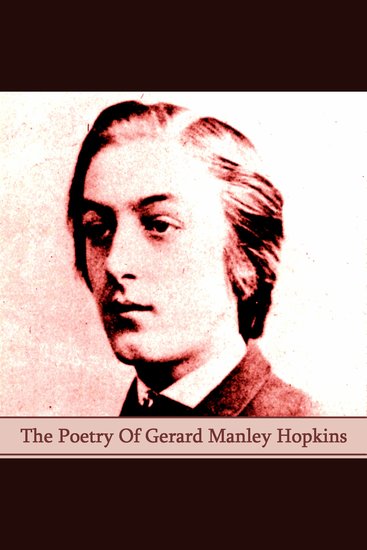
  • The Poetry of Gerard Manley Hopkins - Innovative poet that posthumously inspired T S Eliot Dylan Thomas W H Auden & others - cover

    The Poetry of Gerard Manley...

    Gerard Manley Hopkins

    • 0
    • 0
    • 0
    Gerard Manley Hopkins was born in Stratford, then part of Essex on 28th July, 1844, to deeply religious parents?the first of nine children. 
    The family moved to Hampstead in 1852, near to where John Keats had lived thirty years before.  At age ten the young Gerard was sent to school in nearby Highgate and afterwards to Balliol College, Oxford. 
    Hopkins was unusually shy and reserved and prone to bizarre ideas. He once argued that most people drank more liquids than they really needed and bet that he could go without drinking for a week. He persisted until his tongue was black and he collapsed.  
    In January 1866 Hopkins composed his most ascetic poem, The Habit of Perfection but a few days later he included poetry in the list of things to be given up for Lent. In July he decided to become a Catholic and by May 1868 Hopkins firmly "resolved to be religious." Less than a week later, he made a bonfire of his poems and ceased to write for almost seven years.  
    In 1874 Hopkins returned to the Society of Jesus at Manresa House, Roehampton to teach classics. While he was studying in the Jesuit house of theological studies in North Wales, he was asked to write a poem to commemorate the foundering of a German ship in a storm. So in 1875 he was moved to take up poetry once more and write a lengthy poem, The Wreck of the Deutschland, inspired by the Deutschland maritime disaster in which 157 people died, including five nuns.  The poem was accepted but not printed by a Jesuit publication. This rejection fed his ambivalence about his poetry. Most of his poetry remained unpublished until after his death. 
    Hopkins chose the austere and restrictive life of a Jesuit and was at times gloomy. The brilliant student who had left Oxford with a first-class honours degree failed his final theology exam and although ordained in 1877, Hopkins would not progress in the order. That same year he wrote God’s Grandeur, and sonnets including The Starlight Night and finished The Windhover. 
    In 1884 he became professor of Greek and Latin at University College Dublin. His English roots, his disagreement with current Irish politics, as well as his own small stature (5'2"), shy nature and personal foibles meant that he was not an effective teacher. This and his isolation in Ireland deepened his gloom.  
    The final years of his life continued to find him in a depressed state and to restrict his poetic inspiration. His extremely heavy work load coupled with the dislike of living in Dublin, away from England and friends meant his health further deteriorated, even his eyesight began to fail. As a devout Jesuit, he found himself in an artistic dilemma. To subdue any egotism which would violate the humility required by his religious position, he decided never to publish his poems.  
    After suffering several bouts of diarrhoea, Gerard Manley Hopkins died of typhoid fever on 8th June, 1889 at the early age of 44. On his death bed, his last words were, "I am so happy, I am so happy. I loved my life." 
     This volume comes to you from Portable Poetry, a specialized imprint from Deadtree Publishing.  Our range is large and growing and covers single poets, themes, and many compilations.
    Zum Buch

  • Simultaneously Part II - cover

    Simultaneously Part II

    Christina Trezevant McGriff

    • 0
    • 0
    • 0
    A book capturing the end of the Covid-19 Pandemic, the current activities of the 1st term of (#46) Biden administration in contrast to the past 1st term of (#45) Trump administration. Hot button topics such as abortion, climate control, gun control, inflation, and the ever perpetual have and have-nots in America. These sociological events are written in poetry form with pictures to capture moments in real time.
    Zum Buch
  • Revolving Door - cover

    Revolving Door

    William Sharpe

    • 0
    • 0
    • 0
    Quietly reflective, the beautifully written poems in this slim volume offer a welcome respite from the noisy insistence of modern life. The language, now simple and direct, now rich in associations, double-meanings, and imagery, has its own natural rhythm and appeal regardless of subject and rhyme. Intriguing, absorbing, thought-provoking, the poems are innovative and fresh and the intensity of the verses in places will undoubtedly strike a chord with readers of all kinds - both established readers of poetry, those who read poetry now and again, and those 
    turning to poetry for the first time. Largely relating one person's take on how it is to be in the world, the poems address such aspects of life as time, being, loss, culture, and contingency. The collection is divided into three sections - non-rhyming poems, rhyming poems, and a 
    concluding section of lighter, more humorous verses, with each of two additional poems serving as foreword and afterword.
    Zum Buch
  • Cherry Docs - cover

    Cherry Docs

    David Gow

    • 0
    • 0
    • 0
    A neo-Nazi skinhead is charged with murder, and Legal Aid has assigned him a Jewish lawyer. Over the course of developing a defense for the skinhead, the lawyer is forced to examine the limits of his own liberalism, and the demons underlying it. Cherry Docs is an unblinking examination of hatred, the explosive effect it has on our society, and the hurdles that confront us as we set about eradicating it.
    Zum Buch
  • The Higher Pantheism in a Nutshell - cover

    The Higher Pantheism in a Nutshell

    Algernon Charles Swinburne

    • 0
    • 0
    • 0
    >LibriVox volunteers bring you 9 recordings of The Higher Pantheism in a Nutshell by Algernon Charles Swinburne. This was the Fortnightly Poetry project for September 18, 2011.Algernon Charles Swinburne was an English poet, playwright, novelist, and critic. He invented the roundel form, wrote several novels, and contributed to the famous Eleventh Edition of the Encyclopaedia Britannica. He was nominated for the Nobel Prize in Literature in every year from 1903 to 1907 and again in 1909. ( Summary by Wikipedia )
    Zum Buch
  • Oh No - Not Even When First We Loved - cover

    Oh No - Not Even When First We...

    Thomas More

    • 0
    • 0
    • 0
    LibriVox volunteers bring you 18 recordings of Oh, No - Not Even When First We Loved by Thomas Moore. This was the Weekly Poetry Valentine's project for February 13, 2011.Thomas Moore (28 May 1779 – 25 February 1852) was an Irish poet, singer, songwriter, and entertainer, now best remembered for the lyrics of The Minstrel Boy and The Last Rose of Summer. He was responsible, with John Murray, for burning Lord Byron's memoirs after his death. In his lifetime he was often reffered to as Anacreon Moore. (summary by Wikipedia)
    Zum Buch