Rejoignez-nous pour un voyage dans le monde des livres!
Ajouter ce livre à l'électronique
Grey
Ecrivez un nouveau commentaire Default profile 50px
Grey
Abonnez-vous pour lire le livre complet ou lisez les premières pages gratuitement!
All characters reduced
History Of A Resistance - The Italian Military Internees - cover

History Of A Resistance - The Italian Military Internees

Marcello De Caro

Maison d'édition: CIESSE Edizioni

  • 0
  • 0
  • 0

Synopsis

History of a Resistance is an important contribution to understanding the choice made by Italian soldiers after the armistice. In fact, during the Second World War, among the millions of soldiers taken prisoner by the Germans, only the Italians captured after 8th September 1943 were offered the chance to be freed in exchange for joining the Third Reich and the newly formed Italian Social Republic. This proposal was rejected by the vast majority, who preferred to face the harsh conditions of the German Lagers, even at the risk of their lives, so as not to contribute actively to the Nazi-Fascist war effort.
The tragic story of the IMIs (Internati Militari Italiani - Italian Military Internees) is in its own right a chapter, so far too little known, in the history of the Resistance.
Disponible depuis: 03/08/2024.
Longueur d'impression: 188 pages.

D'autres livres qui pourraient vous intéresser

  • Woman Up - 'One of the most prolific writers about women's football in the UK' Evening Standard - cover

    Woman Up - 'One of the most...

    Carrie Dunn

    • 0
    • 0
    • 0
    With the triumph of England’s Lionesses at Euro 2022, the women’s game has been in the spotlight like never before, enjoying unprecedented media attention.
    Voir livre
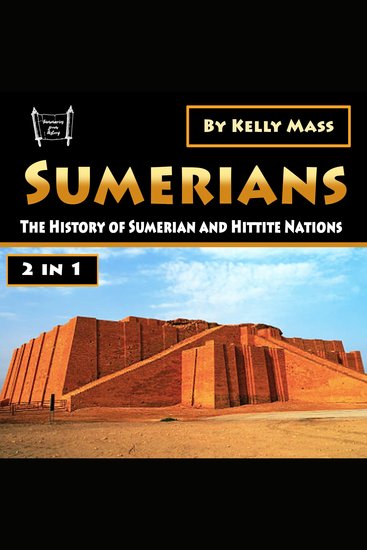
  • Sumerians - The History of Sumerian and Hittite Nations (2 in 1) - cover

    Sumerians - The History of...

    Kelly Mass

    • 0
    • 0
    • 0
    This book contains 2 topics, which are: 
    1 - Sumerians: The Sumerians were the people from Sumer, the first recognized society in the historic area of southern Mesopotamia (now southern Iraq), developed throughout the 6th and 5th centuries BC throughout the Chalcolithic and early Bronze Ages. In addition to age-old Egypt, the Caral-Supe culture, the Indus Valley civilization, the Minoan civilization, and age-old China, it is also one of the world's early civilizations. Sumerian farmers who lived along the Tigris and Euphrates valleys grew a great deal of grain and other items, which allowed them to establish metropolitan towns. Before 3000 BC, there was proto-writing. The earliest files date from between 3500 and 3000 BC and are from the cities of Uruk and Jemdet Nasr. 
    2 - Hittites: The Hittites were mentioned in the Bible. They were an Anatolian people that contributed to creating a kingdom in Kussara before 1750 BC, the Kanesh or Nesha kingdom between 1750 and 1650 BC, and finally an empire based upon Hattusa in north-central Anatolia around 1650 BC. Under uppiluliuma I, the empire reached its peak in the mid-14th century BC, when it ruled over much of Anatolia and areas of the northern Levant and Upper Mesopotamia. 
    Between the 15th and 13th centuries BC, the Hattusa Empire, also called the Hittite Empire, defended control of the Near East with the New Kingdom of Egypt, the Middle Assyrian Empire, and the Mitanni Empire. The Middle Assyrian Empire ultimately emerged as the dominant power, took much of the Hittite Empire, and ransacked the rest by Phrygian newbies to the area. The Hittites separated into numerous self-governing Syro-Hittite countries around c. 1180 BC, at the time of the Late Bronze Age collapse, some of which stayed till the 8th century BC before giving up to the Neo-Assyrian Empire.
    Voir livre
  • Living the Technology Revolution - How life has changed since I was a kid - cover

    Living the Technology Revolution...

    Martin K. Ettington

    • 0
    • 0
    • 0
    This isn't a book filled with dry timelines or technical blueprints of the digital revolution. Instead, it's a firsthand journey—my journey—through one of the most astonishing transformations in human history: the rise of personal computing and the dawn of the digital age. 
    I was born in November 1955, at a time when the word “computer” was barely whispered outside of military labs and universities. My earliest memories include a bulky black-and-white television with rabbit-ear antennas, broadcasting a single channel. That flickering screen was my first encounter with electronic media—a far cry from the high-definition, touch-responsive world we live in now. 
    Over the decades, my path as an engineer and software developer placed me squarely in the midst of this technological upheaval. I didn’t just watch the future arrive—I helped build it, one line of code and one innovation at a time. 
    This book is a personal time capsule—a chronicle of what it was really like to live through the shift from analog to digital, from typewriters to tablets, from rotary phones to the infinite power in our pockets today. If you're a younger reader curious about how we got here, or someone who remembers the glow of vacuum tubes and the clack of punch cards, I invite you to walk with me through the decades. 
    You may be surprised by how far we’ve come—and how much we’ve forgotten along the way. 
    Many of the chapters are identified with the years or periods of time where these changes occurred.
    Voir livre
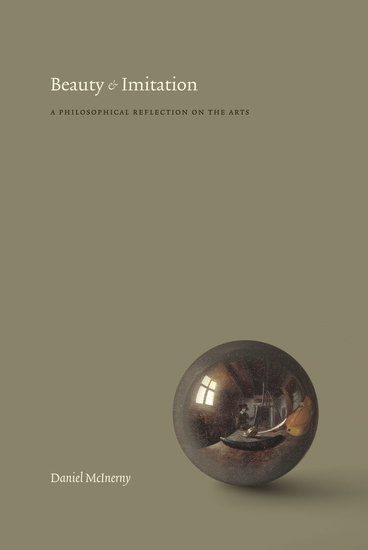
  • Beauty and Imitation - A Philosophical Reflection on the Arts - cover

    Beauty and Imitation - A...

    Daniel McInerny

    • 0
    • 0
    • 0
    The human person is a truth seeker, and one of the most compelling ways human beings pursue truth is through the arts. In Beauty and Imitation: A Philosophical Reflection on the Arts, Daniel McInerny argues for an understanding of art as a form of inquiry into truth that proceeds by way of sensible beauty.  Drawing upon the thought of Aristotle and St. Thomas Aquinas, McInerny argues for the unfashionable yet philosophically compelling view that art is essentially “mimetic,” imitative of human action. But what does it mean for art to imitate human action? It means that art imitates the way human beings by nature quest for fulfillment, or happiness. In questing for fulfillment, human life takes the form of a story, and so the arts—all the arts, from painting to music, from fiction to film—are storytelling arts whose beauty reveals the truth about human happiness.  The first part of the book features a renewed defense of the ancient Aristotelian claim that art is mimetic and that its imitation of the human story takes the form of a moral argument. The second part shows how audiences are transformed by the moral arguments the mimetic arts make, and the third concludes with a guided tour of the mimetic arts, where specific arts are considered in light of the Aristotelian and Thomistic principles advanced earlier.
    Voir livre
  • The Last Commander - The Once and Future Battle for Afghanistan - cover

    The Last Commander - The Once...

    Sami Sadat

    • 0
    • 0
    • 0
    The compelling inside story of how America abandoned Afghanistan. 


    When America retreated from Kabul amid chaos in 2021, Lieutenant General Sami Sadat, the last commander of the army of the Afghan republic, was still fighting to the end. In this firsthand account, he reveals how his troops were starved of ammunition for two years before the final pullout, while America was glad-handing the Taliban. Although Sadat spent his early career fighting alongside the CIA to track down al-Qaeda in the mountains of the Hindu Kush, it was in conventional combat—leading from the front—that he made his name. In The Last Commander, he contends that Afghanistan could have won the war if support had continued. President Biden may have ended America's longest war, but the story does not end there. Now Sadat's birth country is plunged into barbarism, where women are beaten for showing their face and his former comrades are hunted down and killed. But Sadat is planning to fight back. It will not be easy, but this riveting personal account of combat shows that if anyone can do it, he can. 


    Sadat's story was told in the Emmy Award–winning documentary Retrograde. Now he tells it for himself.
    Voir livre
  • The Narcissistic Abuse Recovery Bible - [5 in 1] The Complete Workbook & Guide to Recover from Gaslighting Codependency Complex PTSD and Overcome Emotional Trauma from Toxic Relationships - cover

    The Narcissistic Abuse Recovery...

    Joanne A. Clayton

    • 0
    • 0
    • 0
    Do you find yourself constantly questioning your reality, doubting your own worth, and feeling trapped in toxic relationships? 
    Drawing on the latest research in psychology and neuroscience, as well as her own personal experience and that of her clients, author and therapist Joanne provides a compassionate and practical guide to navigating the complex terrain of narcissistic abuse and its effects.Here’s what’s inside:Not sure if your partner is a narcissist? Here is how you can figure that out!Why Codependency is such a big issue for many relationships and how to solve it step-by-step7 RED FLAGS to Watch Out from a Narcissistic PartnerWhat are the hidden codependency signs that may be ruining your relationship?What is exactly gaslighting, and how to recognize it!How do you identify a gaslighter or manipulator in your relationship and get rid of that person?How does a narcissistic mind work, and what do you do if you are in this kind of relationship?Can you change a narcissistic person? And what should you do if not?How do you deal with narcissistic family members and maintain a relationship with them?Should you walk away from a narcissistic relationship, and how to do that the right way?So much more! 
    This is the only relationship guide you’ll ever need to understand toxic, abusive, narcissistic, or any other similar type of negative relationships!If you want to finally live the life you deserve then download this Audiobook!
    Voir livre