Begleiten Sie uns auf eine literarische Weltreise!
Buch zum Bücherregal hinzufügen
Grey
Einen neuen Kommentar schreiben Default profile 50px
Grey
Jetzt das ganze Buch im Abo oder die ersten Seiten gratis lesen!
All characters reduced
The Boy on the Beach - Explicit Gay Erotic Short Stories for Men (Hot and Sexy) - cover

The Boy on the Beach - Explicit Gay Erotic Short Stories for Men (Hot and Sexy)

Manuel García

Verlag: Publishdrive

  • 0
  • 0
  • 0

Beschreibung

They don’t talk much. They don’t need to.Real men—rough-edged, silent, unapologetically masculine—meet in the crackling heat of confrontation and the quiet pull of glances held a second too long. The Boy on the Beach is a collection of erotic short stories where desire rises from the grit of reality: bruised knuckles, soaked shirts, and the smell of salt or sweat in the air. This is not polished fantasy. This is raw, skin-to-skin virility.
 
In the title story, a golden boy walks the beach at dawn, hiding secrets behind ice-blue eyes and a body that turns heads without effort. When he spots a dark figure stumbling into the surf—jeans still clinging to his frame, drunk or desperate—he doesn’t think. He runs. And when he pulls him out, breathes life into him, the moment twists: from rescue to recognition, from mouth to mouth, skin to skin.
 
The boy—Walter—is fragile, shivering, silent. His long black hair clings to his face, his pride washed away with the tide. Daniele wraps an arm around his naked shoulders, pulls him close, not to seduce but to shelter. Jeans slide off easily. There's nothing underneath. The silence is heavier than any moan could be. Something electric hangs in the space between breath and restraint.
 
These stories don’t promise happy endings. They offer something more dangerous: truth. Flesh that bruises. Glances that expose. And men who burn for men, even when they don’t have the words for it.Open the book. Let it touch a nerve. And see what rises.
Verfügbar seit: 23.07.2025.
Drucklänge: 70 Seiten.
Weitere Bücher, die Sie mögen werden

  • Cholula: The History and Legacy of the Sacred City that Dates Back to the Toltec Empire - cover

    Cholula: The History and Legacy...

    Editors Charles River

    • 0
    • 0
    • 0
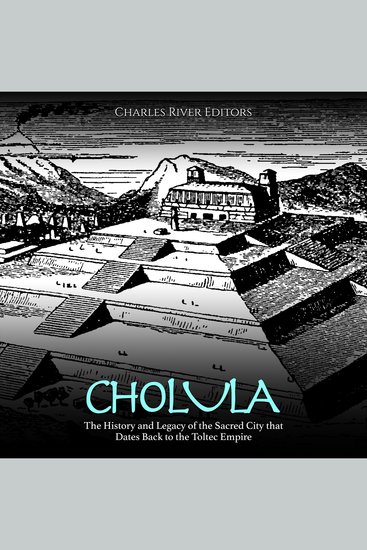
    Cholula is one of the most interesting, enigmatic, and forgotten cities in ancient Mesoamerica, and few people are aware that it is the oldest continuously-occupied settlement in the entire Western hemisphere. The current city is known for the Great Pyramid, which has the largest base of all pyramids in the world, as well as its many colonial churches and constant religious celebrations. All of these things ensure that Cholula is heavily visited, but the tremendous importance of Prehispanic Cholula has mostly been lost in the historical accounts of Puebla and even Mexico as a whole. 
    	Located in the Puebla-Tlaxcala Valley within a very fertile area, the Prehispanic city of Cholula was founded around 500 BCE. It soon developed into an important city and the construction of its Great Pyramid began around 200 BCE. During the height of Teotihuacan’s influence in the Classic period and the expansion of the Aztecs in the Postclassic, Cholula managed to maintain its independence and grew to become the greatest religious center in central Mesoamerica. As the main site for the cult of the god Quetzalcoatl, Cholula received pilgrims from many Prehispanic cities, and the two high priests of the Temple of Quetzalcoatl were charged with confirming the legitimacy of these foreign rulers, making their role one of the most important in the region. 
    	In addition to its religious influence, Cholula was also a very important commercial center. Many lavish and exotic goods were traded at its market, and the city’s merchant class also exported a variety of luxury crafts produced in Cholula, such as richly adorned textiles and very fine polychrome pottery. Cholula has been mentioned on some level in modern works concerning Mesoamerica, but in most cases it is simply named alongside a list of other Prehispanic sites.
    Zum Buch
  • Summary: Sapiens - A Brief History of Humankind by Yuval Noah Harari: Key Takeaways Summary and Analysis - cover

    Summary: Sapiens - A Brief...

    Brooks Bryant

    • 0
    • 0
    • 0
    Disclaimer: This is not the official book. This is a summary, and it does not accompany the official text. 
    Embark on a transformative journey through the history of humanity with this succinct and insightful summary of Yuval Noah Harari's acclaimed work, "Sapiens." Distilling the essence of Harari's groundbreaking narrative, this guide invites readers to explore the creation, evolution, and impact of Homo sapiens on the world. 
    "Sapiens" delves deep into our past, tracing the steps of humanity from the appearance of modern cognition about 70,000 years ago to our current dominance as the sole surviving species of human on Earth. Harari’s work stands out for its integration of history and biology, challenging conventional narratives and encouraging readers to consider humanity’s role in the global ecosystem, the rise and fall of empires, and the potential futures that await us. 
    This summary encapsulates the key themes and insights of "Sapiens," offering a clear and concise exploration of how biology and history have intertwined to shape our understanding of what it means to be human. From examining our impact on the planet to contemplating the ethical implications of our increasing power to design the world and ourselves, this guide provides a thought-provoking overview of Harari’s revolutionary ideas. 
    Ideal for fans of Jared Diamond, James Gleick, Matt Ridley, Robert Wright, and Sharon Moalem, this summary provides a doorway to understanding humanity's past, present, and potential future. Join us on a journey of discovery and debate as we delve into the questions that define our species and consider the paths that lie ahead. 
    This is a summary, and it does not accompany the official text of "Sapiens" by Yuval Noah Harari.
    Zum Buch
  • The Egyptian Book of the Dead - Texts and Interpretations - cover

    The Egyptian Book of the Dead -...

    Omar Khalil

    • 0
    • 0
    • 0
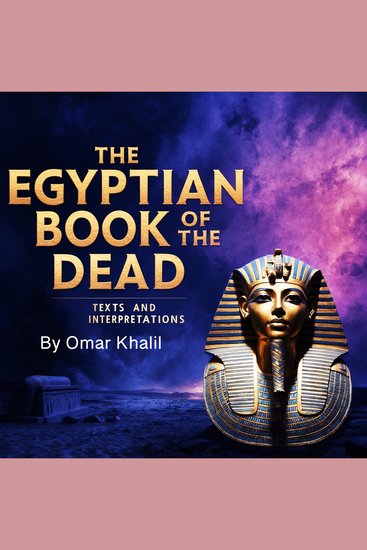
    The Egyptian Book of the Dead is one of the most significant and enigmatic works of ancient Egyptian literature. It is a collection of funerary texts that were intended to guide the soul of the deceased through the afterlife. The texts were not a single work but rather a compilation of spells, hymns, and prayers, which were tailored to ensure a safe passage to the afterlife and to grant protection in the realm of the dead. The Book of the Dead, also known as the "Book of Going Forth by Day," was typically inscribed on papyrus and placed in the tombs of the deceased, often alongside various amulets and offerings to aid the soul's journey. 
    The origins of the Book of the Dead can be traced back to the Pyramid Texts and Coffin Texts of the Old Kingdom, which were intended for royal burials. Over time, these texts evolved into the more accessible and expansive collection found in the New Kingdom, where it was available for individuals from all social classes. The Book of the Dead represents an essential aspect of ancient Egyptian religion, providing a vivid description of the journey the soul would undergo after death. It was believed that through the proper recitation and understanding of these texts, the deceased could navigate the trials of the underworld, known as Duat, and ultimately reach the afterlife in the presence of the gods. 
    The role of the Book of the Dead in Egyptian religion was deeply intertwined with the belief in Ma’at, the concept of divine order, truth, and justice. The texts emphasized the importance of the deceased’s heart being weighed in the Hall of Ma’at, where it would be measured against the feather of Ma’at to determine whether the soul was worthy of entering the eternal paradise. This idea of judgment after death is a central theme throughout the Book of the Dead and reflects the profound importance of moral conduct and the balance of cosmic forces in Egyptian thought.
    Zum Buch
  • History of Marathas EP05 - Attack on Shaista Khan - cover

    History of Marathas EP05 -...

    Vikrant Pande

    • 0
    • 0
    • 0
    It was late in the night when the group reached Pune. The soft diffused light of the ashtami moon spread over the ground. The guards at the gate came out adjusting their guns hearing the horses. One of the guards challenged,
    'Kaun hai?'
    One of Ibrahim's men stepped forward and slapped the guard hard shouting, 'Badtameez! Khansahab ko pehchanta nahin?'
    The other guards hastily bent in mujras and salaams. The route was now clear. Ibrahim moved forward in a casual yet dignified manner as if nothing had happened. It was silence all over sans the intermittent warning shouts of the guards parading the area. Most of the Mughal troops were tired of the day long Ramzan fast and were fast asleep after a heavy meal.
    Zum Buch
  • Setting Sights: Histories and Reflections on Community Armed Self-Defense - cover

    Setting Sights: Histories and...

    scott crow

    • 0
    • 0
    • 0
    Decades ago, Malcolm X eloquently stated that communities have the legitimate right to defend themselves “by any means necessary” with any tool or tactic, including guns. This wide-ranging anthology uncovers the hidden histories and ideas of community armed self-defense, exploring how it has been used by marginalized and oppressed communities as well as anarchists and radicals within significant social movements of the twentieth and twenty-first centuries. 
    Far from a call to arms, or a “how-to” manual for warfare, this volume offers histories, reflections, and questions about the role of firearms in small collective defense efforts and its place in larger efforts toward the creation of autonomy and liberation. 
    Featuring diverse perspectives from movements across the globe, Setting Sights includes vivid histories and personal reflections from both researchers and those who participated in community armed self-defense. Contributors include Dennis Banks, Kathleen Cleaver, Mable Williams, Subcomandante Marcos, Kristian Williams, George Ciccariello-Maher, Ashanti Alston, and many more.
    Zum Buch
  • Idealism - Mind Over Matter in Metaphysics - cover

    Idealism - Mind Over Matter in...

    Hector Davidson

    • 0
    • 0
    • 0
    Idealism, as a philosophical doctrine, holds that the mind and its ideas are the primary reality, shaping the material world rather than being shaped by it. This perspective challenges the materialist viewpoint that places physical matter at the foundation of existence. From ancient Greek philosophy to modern quantum theories, idealism has provided a profound framework for understanding reality, perception, and consciousness. 
    Throughout history, idealism has offered a lens through which thinkers could explore the mysteries of existence. Plato’s theory of forms, for instance, posited that the tangible world is a shadow of a higher, more real world of ideas. Similarly, German idealists such as Immanuel Kant, Johann Gottlieb Fichte, and Georg Wilhelm Friedrich Hegel expanded on these concepts, arguing that human perception actively constructs reality. These ideas have not only shaped philosophy but have also influenced disciplines ranging from art to science. 
    At its core, idealism raises fundamental questions about the nature of reality. Is the external world independent of our consciousness, or does it exist only as a construct of the mind? Idealism asserts that our understanding of the universe is intrinsically tied to our subjective experiences, emphasizing that thought and consciousness are the building blocks of reality. This contrasts sharply with materialism, which contends that physical matter exists independently and is the source of all mental phenomena.
    Zum Buch