Rejoignez-nous pour un voyage dans le monde des livres!
Ajouter ce livre à l'électronique
Grey
Ecrivez un nouveau commentaire Default profile 50px
Grey
Abonnez-vous pour lire le livre complet ou lisez les premières pages gratuitement!
All characters reduced
The 12-Week TF-CBT Workbook - 60 Targeted Trauma-Focused CBT Exercises for Children Therapists and Caregivers - cover

The 12-Week TF-CBT Workbook - 60 Targeted Trauma-Focused CBT Exercises for Children Therapists and Caregivers

Manuel Charles Anderson

Maison d'édition: TherapyBooks Publishing

  • 0
  • 0
  • 0

Synopsis

"The 12-Week TF-CBT Workbook :60 Targeted Trauma-Focused CBT Exercises for Children, Therapists and Caregivers" offers a structured, step-by-step program designed to facilitate recovery from trauma through targeted Cognitive Behavioral Therapy techniques. This guide provides clear, actionable strategies that help individuals build a secure foundation, process traumatic experiences, and integrate new insights into a lasting, healing narrative. Organized into three progressive phases—Stabilization & Skills, Trauma Processing, and Integration & Growth—this roadmap is meticulously designed for children, therapists, and caregivers, ensuring that every exercise is adaptable to different settings and age groups.
 
This book empowers readers with practical tools such as visual timelines, worksheets, and self-monitoring systems, which work together to reduce overwhelm and promote sustained healing. The exercises focus on essential skills such as emotional regulation, cognitive restructuring, and relationship building, paving the way for a future marked by resilience and clarity. With an emphasis on proactive planning and self-care, this guide transforms complex trauma recovery into manageable, measurable steps, making it a valuable resource for anyone seeking to overcome the challenges of trauma.
Disponible depuis: 25/02/2025.
Longueur d'impression: 232 pages.
D'autres livres qui pourraient vous intéresser

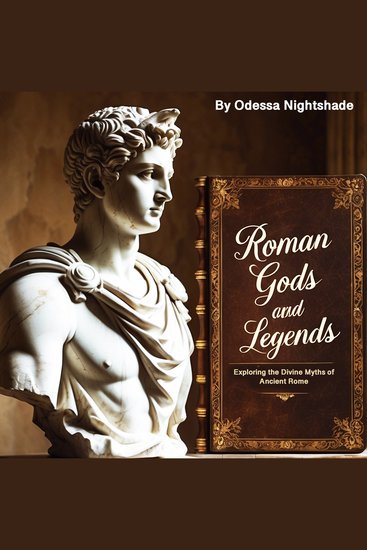
  • Roman Gods and Legends - Exploring the Divine Myths of Ancient Rome - cover

    Roman Gods and Legends -...

    Odessa Nightshade

    • 0
    • 0
    • 0
    Mythology was at the heart of ancient Roman culture, shaping the way people understood the world, their history, and even their daily lives. Roman myths were more than just entertaining stories; they provided a framework for religious practices, reinforced social hierarchies, and legitimized political authority. From grand temples dedicated to Jupiter to household shrines honoring protective spirits, mythology was deeply embedded in Roman society. These myths explained the origins of Rome, the will of the gods, and the moral expectations placed upon its people.  
      
    One of the most fascinating aspects of Roman mythology is its connection to Greek mythology. The Romans borrowed heavily from the Greeks, adapting their gods, myths, and religious traditions to fit their own culture. Jupiter became the Roman equivalent of Zeus, Venus took the place of Aphrodite, and Neptune mirrored Poseidon. Yet, Roman mythology was not simply a copy of Greek traditions—it evolved to reflect Rome’s unique values, including its emphasis on duty, discipline, and the power of the state. Roman gods were deeply tied to civic life, with religious festivals and rituals reinforcing the unity and strength of the empire.  
      
    As Rome expanded, so did its pantheon. Over time, new deities were integrated from conquered cultures, blending native Italian, Etruscan, and foreign influences into Roman religious beliefs. This constant evolution reflected the empire’s adaptability and its ability to absorb and reshape traditions to maintain social cohesion. The role of mythology also shifted, particularly as emperors began to position themselves as semi-divine figures, further intertwining politics with religion. These myths were not just ancient relics but living traditions that reinforced Rome’s identity and dominance. 
    Voir livre
  • “Whatever It Is I’m Against It” - Resistance to Change in Higher Education - cover

    “Whatever It Is I’m Against It”...

    Brian Rosenberg

    • 0
    • 0
    • 0
    In "Whatever It Is, I'm Against It," president emeritus of Macalester College Brian Rosenberg draws on decades of higher education experience to expose the entrenched structures, practices, and cultures that inhibit meaningful postsecondary reform, even as institutions face serious challenges to their financial and educational models. The book pinpoints factors that hinder the ability of United States colleges and universities to be creative and entrepreneurial amid calls to improve affordability, access, and equity for students. 


    Rosenberg illustrates internal and external dynamics that impede institutional evolution. Pressures such as declining enrollment, escalating costs, and an oversupply of PhDs in academia have long signaled a grave need for reform within a profession that lacks organizational flexibility, depends greatly on reputation and ranking, and retains traditions, from the academic calendar to grading systems, that have remained essentially the same for decades. 


    Rosenberg looks outside the United States system to find possible antidotes in innovative higher education models such as student-centered and experiential learning approaches. This thought-provoking work offers ample evidence for presidents, chancellors, deans, provosts, and faculty to consider as they plan to achieve institutional transformation.
    Voir livre
  • The Yamato Period - The Dawn of Japan's Imperial Line and Cultural Foundations - cover

    The Yamato Period - The Dawn of...

    Rolf Hedger

    • 0
    • 0
    • 0
    The Yamato period, spanning from roughly the 3rd to the 7th century, marks the emergence of Japan’s first centralized political power. At the heart of this transformation was the Yamato clan, a dominant force that laid the foundation for Japan’s imperial lineage. While early Japan was fragmented into numerous rival clans, the Yamato rulers gradually asserted their dominance, forging alliances, engaging in warfare, and adopting foreign influences to solidify their authority. 
    One of the key factors behind the Yamato clan’s rise was its strategic control over fertile land in the Kinki region, an area well-suited for agriculture. This economic advantage allowed them to amass resources necessary to support a growing military force. By subjugating neighboring clans or bringing them under their influence through political marriages and alliances, the Yamato rulers expanded their reach across central and western Japan. The development of a hierarchical system of governance helped them maintain order, as powerful regional chieftains were brought into a centralized network of control under the Yamato court. 
    Military strength played a significant role in the Yamato clan’s dominance. Archaeological evidence from kofun, or large burial mounds, reveals that these early rulers possessed advanced weaponry, including iron swords and armor, likely influenced by interactions with Korea and China. These military advantages enabled them to assert control over rival clans and protect their growing territory from external threats. The construction of these elaborate burial sites also served as a demonstration of power and legitimacy, reinforcing the Yamato rulers’ status as semi-divine figures.
    Voir livre
  • How Not To F*CK UP in Medical School - cover

    How Not To F*CK UP in Medical...

    Aleksander Shur

    • 0
    • 0
    • 0
    Going to get higher education may be stressful, especially when you want to go to medical field. So, us, as medical students have gathered some ideas, recommendations, tips and lifehacks on how to ace you medical school without too much stress. So consider this your book your mentor into medical field, and wish you all the best in medicine!
    Voir livre
  • The Wholehearted Way - Finding Peace After Life's Heartbreaks Disappointments and Rejections - cover

    The Wholehearted Way - Finding...

    Dr. Peace Amadi

    • 0
    • 0
    • 0
    A Five-Part Framework to Healing and Inner Peace 
    · Understand your patterns of pain 
    · Navigate heartbreak, disappointment, and rejection 
    · From a credentialed PsyD professor of psychology, speaker, and coach 
     
    Heartbreak, disappointment, and rejection are part of being human in a broken world. But when we experience them again and again, it can start to feel personal. Our identity and worth are shaken, and we may find that staying hurt feels easier than pursuing healing. Yet, in Christ, we are meant to be made whole. 
     
    The Wholehearted Way expresses an approach to life that requires us to tell ourselves a bigger, better, broader story about our pain, allowing us to love ourselves fully and live abundantly. Combining biblical truth with her psychology and coaching expertise, Dr. Peace Amadi helps you 
     
    · understand why rejection cuts so deep 
    · identify the hidden beliefs that sabotage your healing and restoration 
    · build a kind, life-giving relationship with your inner self 
    · ask the right questions when facing heartache, unfulfilled dreams, and unmet expectations 
    · choose freedom from the painful cycles in your life  
     
    Though pain must run its course, it doesn't have to be your life's story. The Wholehearted Way is your compassionate roadmap for navigating the heartbreak, disappointment, and rejection life hands you in order to experience true and lasting peace.
    Voir livre
  • What's Real about Race? - Untangling Science Genetics and Society - cover

    What's Real about Race? -...

    Rina Bliss

    • 0
    • 0
    • 0
    In What's Real About Race?, sociologist Rina Bliss illuminates the truth about one of the most misunderstood, controversial concepts in our society and reveals why we cannot confuse race with genetic difference. Blending energizing prose with the latest in genetics research, this paradigm-shifting tour unmasks what's truly real about race: namely, racism's impact on our bodies and lives. 


    Bliss traces the history of race, revealing how unscientific categories of identity—White, Black, Asian/Pacific Islander, and American Indian/Alaska Native—became the standard, and illuminates how the myth of biological races endures in science and society, warping our understanding of complex topics like intelligence, disease susceptibility, and behavior. Along the way, What's Real About Race? busts enduring myths about IQ, ancestry tests, behavioral racism, and more. In fascinating explorations of gene research, medicine, and social justice, Bliss argues for a new way forward. To create equity in science and society, we must disentangle our understanding of genetics from identity and see race for what it really is: a purely social category. At a time when misinformation about our bodies and identities is dangerously prevalent, What's Real About Race? is an indispensable resource and a powerful reminder that, biologically, our similarities vastly outweigh our differences.
    Voir livre