Rejoignez-nous pour un voyage dans le monde des livres!
Ajouter ce livre à l'électronique
Grey
Ecrivez un nouveau commentaire Default profile 50px
Grey
Abonnez-vous pour lire le livre complet ou lisez les premières pages gratuitement!
All characters reduced
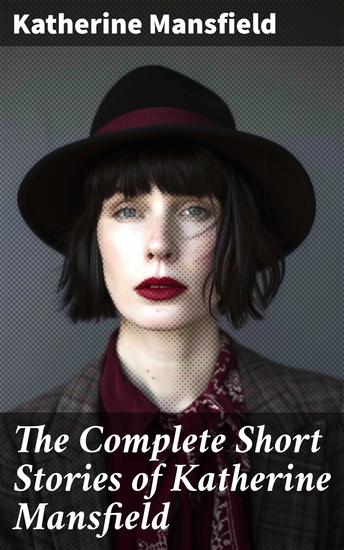
The Complete Short Stories of Katherine Mansfield - Exploring the Depths of Human Emotions: An Anthology of Modernist Fiction by a Trailblazing Female Writer - cover

The Complete Short Stories of Katherine Mansfield - Exploring the Depths of Human Emotions: An Anthology of Modernist Fiction by a Trailblazing Female Writer

Mansfield Katherine

Maison d'édition: Good Press

  • 0
  • 0
  • 0

Synopsis

In "The Complete Short Stories of Katherine Mansfield," the author presents a masterful collection that illuminates the complexities of human experience through the lens of modernism. Mansfield's narrative style, characterized by vivid imagery, intricate symbolism, and stream-of-consciousness techniques, encapsulates the fleeting moments of life, often highlighting the subtleties of emotion and social dynamics. The stories traverse a range of themes, including alienation, intimacy, and the intricacies of identity against the backdrop of early 20th century society, reflecting the author's own context as a modernist writer at the forefront of literary innovation. Katherine Mansfield, born in New Zealand and later settled in England, was a pioneer of the short story form, whose life experiences greatly influenced her work. Her intimate acquaintance with both British and expatriate life, along with her tumultuous relationships and keen observations, imbued her writing with depth and authenticity. Mansfield'Äôs friendships with literary contemporaries like Virginia Woolf and D.H. Lawrence also shaped her artistic perspective, resulting in a profound exploration of the human psyche. This anthology is an essential read for those interested in modernist literature and masterful storytelling. Mansfield'Äôs ability to distill profound insights from ordinary moments invites readers to engage deeply with her characters. "The Complete Short Stories of Katherine Mansfield" not only showcases her stylistic prowess but also offers timeless reflections on the human condition that resonate with readers today.
Disponible depuis: 29/12/2023.
Longueur d'impression: 793 pages.
D'autres livres qui pourraient vous intéresser

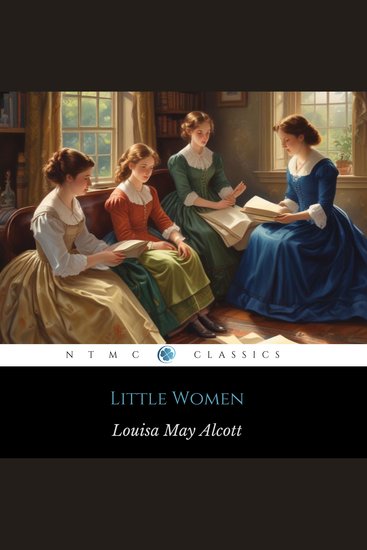
  • Little Women - cover

    Little Women

    Louisa May Alcott

    • 0
    • 0
    • 0
    Discover the timeless charm of "Little Women," Louisa May Alcott's beloved novel that has captivated readers for generations. This heartwarming tale follows the lives of the four March sisters—Meg, Jo, Beth, and Amy—as they navigate the complexities of growing up, pursuing dreams, and experiencing the bonds of sisterhood during the American Civil War.Each sister is distinctively portrayed with their aspirations and personality, making them relatable figures for readers of all ages. From Jo's ambitious literary dreams to Amy's artistic pursuits, the novel beautifully illustrates the resilience and courage of young women facing societal expectations. Alcott's rich narrative invites readers into the intimate world of the March family, offering a blend of romance, adversity, and growth, all underscored by the power of unity and familial love.Ideal for fans of classic literature and stories of personal development, "Little Women" promises to inspire, entertain, and provoke thought about the roles of women in society and the importance of family.
    Voir livre
  • On Gods and Demons - A Thousand Li Short Story - cover

    On Gods and Demons - A Thousand...

    Tao Wong

    • 0
    • 0
    • 0
    What Do Gods & Demons Have in Common?  
    Perhaps nothing, perhaps a lot. A glimpse into a world where an immortal and a demon partake in meal while plotting moves that will shake the middle kingdom and share gossip of other, more contentious issues.  
    This is a 3,000 word short story set in the A Thousand Li universe featuring as yet to be seen characters in the universe. Does not need to be read to follow the main series.
    Voir livre
  • Existential Stories - Tales of characters questioning their existence and place in the world - cover

    Existential Stories - Tales of...

    Franz Kafka

    • 0
    • 0
    • 0
    Everything we know must end.  In the fundamentals of our lives its usually our own deaths which bring that to an end.  But what if we widen that premise.  What if we are caught in its quixotic jaws. Held fast with escape merely a fleeting thought. 
    In this volume authors of real note bring their narratives of existential crisis and threat directly to our senses.  That conflict can yield terrible results. 
    And for that place the blame on Franz Kafka, Boleslaw Prus, Herman Melville, Oscar Wilde and many others. 
     
    1 - Existential Stories - An Introduction 
    2 - The Dream of a Ridiculous Man by Fyodor Dostoyevsky 
    3 - Bartleby the Scrivener - Part 1 by Herman Melville 
    4 - Bartleby the Scrivener - Part 2 by Herman Melville 
    5 - A Legend of Old Egypt by Boleslaw Prus 
    6 - An Egyptian Cigarette by Kate Chopin 
    7 - A Hunger Artist by Franz Kafka 
    8 - Mold of the Earth by Boleslaw Prus 
    9 - Solid Objects by Virginia Woolf 
    10 - An Honest Thief by Fyodor Dostoyveskey 
    11 - The Bet by Anton Chekhov 
    12 - Shades by Boleslaw Prus 
    13 - An Occurrence At Owl Creek Bridge by Ambrose Bierce 
    14 - In the Penal Colony by Franz Kafka 
    15 - The Happy Prince by Oscar Wilde 
    16 - Youth - Part 1 by Joseph Conrad 
    17 - Youth - Part 2 by Joseph Conrad
    Voir livre
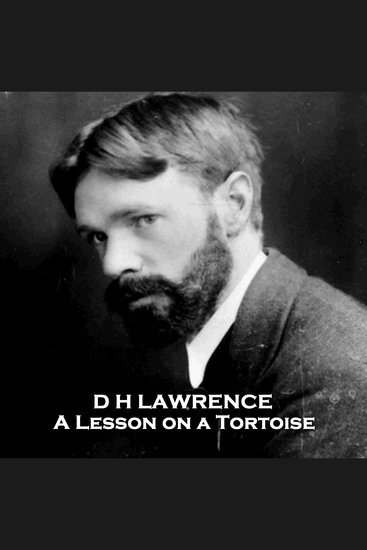
  • A Lesson on a Tortoise - From their pens to your ears genius in every story - cover

    A Lesson on a Tortoise - From...

    D H Lawrence

    • 0
    • 0
    • 0
    David Herbert Lawrence was born on the 11th September 1885 in Eastwood, Nottinghamshire, a coal mining town where the reality of a harsh life was only useful as experiences for future literary works. 
    He was educated at Beauvale Board School and became the first local boy to receive a scholarship to attend Nottingham High School. After 3 years he became a junior clerk in Haywood’s surgical appliances factory. He was also attempting a literary career which, in the short term, led to a teacher training position in Eastwood and later a teaching qualification from University College, Nottingham.  
    Lawrence’s first efforts were poems, short stories and a draft of ‘The White Peacock’. Moving to London and a teaching position in Croydon his writing attracted the attention of Ford Madox Ford, editor of The English Review, and he commissioned him to write ‘Odour of Chrysanthemums’.  
    Wanting to write full-time he now began work on what would become ‘Sons and Lovers.   
    In 1912 he met the older and married mother-of-three Frieda Weekley. They eloped to Germany and here Lawrence could see for himself the growing tensions with France.  So keen was his interest that he was arrested and accused of being a British spy.  
    In early 1914 Frieda obtained her divorce and they returned to Britain to be married just days before the outbreak of war. Owing to her German parentage, and his own public dislike of militarism and violence, the couple were treated with contempt and suspicion throughout the war years.  
    Despite this he continued to write but his reputation in England was so tarnished and, mirrored by his own disdain for the country, he and Frieda left England in November 1919, first for Europe and then America via Ceylon and Australia. 
    They bought a ranch in Taos, New Mexico and visited Mexico several times. The third visit in March 1925 caused a near fatal attack of malaria. To convalesce they moved to Florence. Here he continued work on ‘Lady Chatterley’s Lover’ which for many years would cause controversy. A renewed interest in oil painting resulted in an exhibition in 1929 which was raided by the police and several works were confiscated.  
    D H Lawrence died of complications arising from a bout of tuberculosis on the 2nd of March 1930 in Vence, France.  He was 44.
    Voir livre
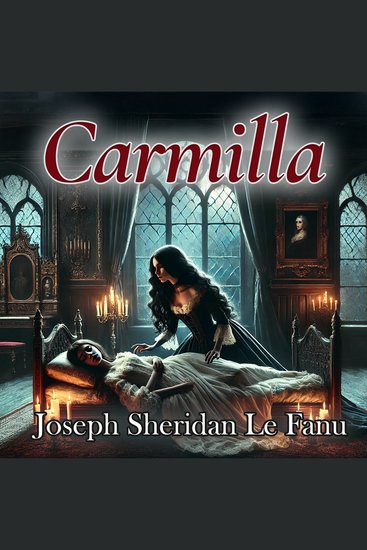
  • Carmilla - cover

    Carmilla

    J. Sheridan Le Fanu

    • 0
    • 0
    • 0
    Before Dracula, there was Carmilla — the original vampire novella that forever shaped the gothic horror genre. 
    First published in 1872, Carmilla tells the eerie and sensual tale of a young woman named Laura, who lives in a remote Austrian castle with her father. When the mysterious and alluring Carmilla arrives after a carriage accident, Laura is instantly captivated by her strange guest — and slowly begins to fall under her spell. But as dreams turn to nightmares, and villagers begin to die, Laura uncovers a dark truth that challenges her sanity, her safety, and her soul. 
    With its haunting atmosphere, psychological tension, and groundbreaking themes of female desire, Carmilla is a gothic masterpiece — and one of the earliest and most influential vampire stories in English literature. A must-listen for fans of dark fantasy, classic horror, and Victorian supernatural fiction.
    Voir livre
  • A Cullenden of Virginia - From their pens to your ears genius in every story - cover

    A Cullenden of Virginia - From...

    Thomas Wolf

    • 0
    • 0
    • 0
    Thomas Clayton Wolfe was born at the family home, 92 Woodfin Street, in Asheville, North Carolina on October 3rd, 1900.  
    Aged 15, Wolfe began his studies at the University of North Carolina at Chapel Hill (UNC) where he enrolled in a playwriting course. Wolfe graduated in 1920 and enrolled at the Graduate School for Arts and Sciences at Harvard. Here he studied playwriting under the tutelage of George Pierce Baker. In 1922 he received his master's degree from Harvard.  
    Wolfe now began the transition from studying to commercial playwright. He went to New York in November, 1923 trying to sell his plays to Broadway.  The Theatre Guild came close to producing Welcome to Our City but in the end declined.  Wolfe now believed his style of writing was more suited to fiction.  Grasping the opportunity this afforded him he sailed to England in October 1924 to write and from there on to France, Italy and Switzerland. 
    In 1926 Wolfe began writing a novel, O Lost. This would eventually become Look Homeward, Angel. It was based on his years in Asheville. The original manuscript of O Lost was over 1100 pages. Maxwell Perkins, one of the great book editors of the age, worked at his publishers, Scribner’s and he began to focus the book, cutting and re-shaping it to center it on the character of Eugene.   
    The novel was published in 1929. It was a success.   
    Wolfe now committed the next 4 years to writing a multi-volume epic entitled The October Fair.  At Scribner’s Perkins once more decided to edit it down to a single volume; Of Time and the River.  It was even more successful than his first. It was hailed as the literary event of 1935 and cemented his reputation as one of America’s foremost novelists.  
    In 1938, after submitting his new opus, which ran to an incredible one million words, to his new editor, Edward Aswell, Wolfe left to tour the West, a part of the country he had never before visited. Whilst travelling Wolfe became ill with pneumonia and spent three weeks in a Seattle hospital. Complications arose. The prognosis was serious.  He was diagnosed with miliary tuberculosis of the brain. 
    On September 6th, he was sent to Baltimore's Johns Hopkins Hospital for treatment. The ensuing operation revealed that the disease had overrun the entire right side of his brain.  
    Thomas Clayton Wolfe never regained consciousness and died shortly before his 38th birthday on September 15th, 1938.
    Voir livre