Rejoignez-nous pour un voyage dans le monde des livres!
Ajouter ce livre à l'électronique
Grey
Ecrivez un nouveau commentaire Default profile 50px
Grey
Abonnez-vous pour lire le livre complet ou lisez les premières pages gratuitement!
All characters reduced
The Life and Philosophy of Pythagoras - cover

The Life and Philosophy of Pythagoras

Manly Palmer Hall

Maison d'édition: Edizioni Aurora Boreale

  • 0
  • 0
  • 0

Synopsis

Pythagoras of Samos (Πυθαγόρας ὁ Σάμιος, c. 570 - c. 495 BC) was an ancient Ionian Greek philosopher and initiate and the eponymous founder of Pythagoreanism. Around 530 BC, he travelled to Croton in southern Italy, where he founded a school in which initiates were sworn to secrecy and lived a communal, ascetic lifestyle. This lifestyle entailed a number of dietary prohibitions, traditionally said to have included vegetarianism. He may have also devised the doctrines of Metempsychosis (transmigration of souls) and Musica Universalis, which holds that the planets move according to mathematical equations and thus resonate to produce an inaudible symphony of music. His political and religious teachings were well known in Greece and Magna Graecia and influenced the philosophies of Plato, Aristotle, and, through them, the West in general.The essay by Manly Palmer Hall that our publishing house is now proposing to modern readers, The Life and Philosophy of Pythagoras, was one of the most interesting chapters of his monumental work The Secret Teachings of All Ages, published in San Francisco in 1928.
Disponible depuis: 01/06/2023.
D'autres livres qui pourraient vous intéresser

  • Baruch Spinoza - God Nature and the Ethics of Reason - cover

    Baruch Spinoza - God Nature and...

    Hector Davidson

    • 0
    • 0
    • 0
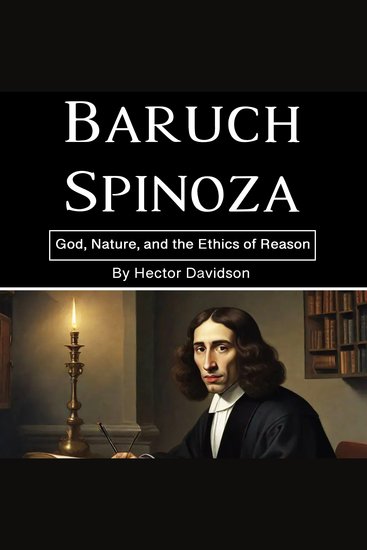
    Baruch Spinoza's philosophy is a comprehensive system that integrates metaphysics, epistemology, ethics, and political theory into a unified framework. Central to his thought is the idea of God and nature as a single, infinite substance, which Spinoza refers to as "Deus sive Natura" (God or Nature). This concept encapsulates his pantheistic view that everything that exists is a part of this one, all-encompassing reality. 
      
    Metaphysics and Substance 
      
    Spinoza's metaphysical framework revolves around the notion of substance monism. He argues that there is only one substance in the universe, which is both God and nature. This substance possesses an infinite number of attributes, with thought and extension being the two that humans can comprehend. Everything that exists, according to Spinoza, is a mode or manifestation of this single substance. This idea challenges traditional theistic views by rejecting the notion of a personal, transcendent God who is separate from the world. 
      
    Epistemology and Knowledge 
      
    In epistemology, Spinoza emphasizes the role of reason and intuitive knowledge in understanding the nature of reality. He distinguishes between different types of knowledge: imagination, reason, and intuition. Imaginative knowledge, based on sensory experience and inadequate ideas, is unreliable and often leads to confusion. Rational knowledge, which arises from understanding the necessary connections between ideas, is more accurate. The highest form of knowledge, according to Spinoza, is intuitive knowledge—an immediate, direct understanding of the essence of things.
    Voir livre
  • The Hindu Pantheon - Myths Gods and Rituals of Ancient India - cover

    The Hindu Pantheon - Myths Gods...

    Odessa Nightshade

    • 0
    • 0
    • 0
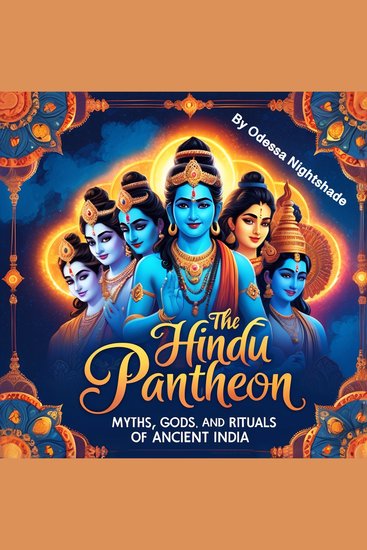
    Hindu mythology is one of the oldest and most complex religious traditions in the world. With a vast pantheon of gods, goddesses, and celestial beings, it weaves together myths, legends, and philosophical concepts that have shaped the spiritual landscape of India for thousands of years. Unlike many monotheistic traditions, Hinduism does not center around a single deity but instead embraces a diverse array of divine figures, each representing different aspects of existence. These deities are not merely supernatural beings but embodiments of cosmic principles, making Hindu mythology a unique fusion of religion, philosophy, and storytelling.  
      
    The foundation of Hindu mythology lies in its sacred texts, particularly the Vedas and Puranas. The Vedas, composed over 3,000 years ago, contain hymns and rituals dedicated to early Vedic deities, forming the spiritual bedrock of Hindu belief. The Puranas, written centuries later, expanded upon these traditions, introducing detailed narratives about the lives, battles, and divine exploits of gods like Vishnu, Shiva, and Devi. Together, these texts provide an extensive mythological framework that continues to influence Hindu practices and beliefs to this day.  
      
    One of the central themes in Hindu mythology is the concept of dharma, or cosmic order. The gods play a crucial role in maintaining balance in the universe, ensuring that righteousness prevails over chaos. Myths often depict the eternal struggle between good and evil, with divine beings intervening in the world through incarnations known as avatars. The most well-known avatars belong to Vishnu, who manifests as Rama, Krishna, and other heroic figures to restore harmony when disorder threatens creation. This belief in divine intervention reinforces the idea that morality and duty must be upheld in human life, as they are reflections of the cosmic law. 
    Voir livre
  • Summary: The End of the World Is Just the Beginning - Mapping the Collapse of Globalization By Peter Zeihan: Key Takeaways Summary & Analysis - cover

    Summary: The End of the World Is...

    Brooks Bryant

    • 0
    • 0
    • 0
    DISCLAIMER: THIS IS NOT THE OFFICIAL BOOK. 
    This is a summary, & it does not accompany the official 
    In 'The End of the World Is Just the Beginning' by Peter Zeihan, the author examines the unraveling of globalization, a phenomenon characterized by increasing speed, efficiency, and affordability of global trade and supply chains, largely driven by America. However, Zeihan argues that this era is coming to an end as America withdraws from its role in sustaining it. He highlights the critical role played by the U.S. Navy, the American dollar, and American consumer demand supporting global systems. 
    Zeihan predicts a future where nations must become self-reliant in producing goods, food, energy, and security due to shrinking and aging populations. He emphasizes that only a select few countries can adapt to this new reality, leading to a profound transformation in how the world manufactures products, grows food, generates energy, and manages global logistics. 
    In this thought-provoking and somewhat alarming book, Zeihan takes readers on a journey into a world on the brink of significant change, offering insights, humor, and his unique perspective on the future.
    Voir livre
  • How much do you know about geography - cover

    How much do you know about...

    Onofre Quezada

    • 0
    • 0
    • 0
    This audiobook is narrated by an AI Voice.   
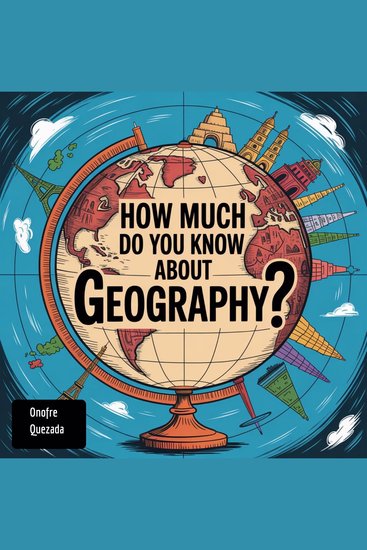
    🌍 How Much Do You Know About Geography is an invitation to test your knowledge of the world around us. Through questions, trivia, and surprising facts, this book will take you on a journey through continents, countries, cities, rivers, mountains, and natural phenomena that are part of our planet. 
    Whether you love maps, enjoy intellectual challenges, or want to learn in a fun way, you'll find an entertaining and educational journey here. Discover little-known facts, expand your general knowledge, and challenge your friends to see who knows the most about geography. 
    📖 Perfect for students, travelers, or just curious people, this book is a dynamic way to explore the world without leaving home.
    Voir livre
  • The Poverty of the World - Rediscovering the Poor at Home and Abroad 1941-1968 - cover

    The Poverty of the World -...

    Sheyda F. A. Jahanbani

    • 0
    • 0
    • 0
    In The Poverty of the World, Sheyda Jahanbani brings together the histories of United States foreign relations and domestic politics to explain why, during a period of unprecedented affluence, Americans rediscovered poverty and supported major policy initiative to combat it. Revisiting a moment of triumph for American liberals in the 1940s, Jahanbani shows how the United States's newfound role as a global superpower prompted novel ideas among liberal thinkers about how to address poverty and generated new urgency for trying to do so. Their sense of responsibility about deploying American knowledge and wealth as a beneficent force in the world, produced such foreign aid programs as the Peace Corps. 


    Drawing on a wide variety of archival material, Jahanbani reinterprets the lives and work of prominent liberal figures in postwar American social politics to show the global origins of their ideas. By tracing how American liberals invented the problem of "global poverty" and executed a war against it, The Poverty of the World sheds new light on the domestic impacts of the Cold War, the global ambitions of American liberalism, and the way in which key intellectuals and policymakers worked to develop an alternative vision of United States empire in the decades after World War II.
    Voir livre
  • Sevastopol Sketches - A Gripping Account of War Courage and the Human Spirit - cover

    Sevastopol Sketches - A Gripping...

    Leo Tolstoy, Tim Zengerink

    • 0
    • 0
    • 0
    What if the real story of war lies not in glory—but in the hearts of those who endure it? 
    Sevastopol Sketches offers an unfiltered look into the Crimean War through the eyes of a young officer who would become one of the world’s greatest authors—Leo Tolstoy.  
    In this gripping trilogy of war vignettes—Sevastopol in December, Sevastopol in May, and Sevastopol in August—Tolstoy reveals the raw and often tragic reality of conflict.  
    From the trenches and hospitals to the fleeting moments of human compassion, this audiobook delivers a profound meditation on war’s cost, captured with rare honesty and literary brilliance. 
    What you'll discover inside: 
    ●	A Realistic Portrait of Warfare – The brutal, everyday truth of combat without romanticism. 
    ●	Three Powerful Sketches – Each offering a unique window into different phases of the siege. 
    ●	Reflections on Courage and Humanity – A deep exploration of morality in the face of death. 
    ●	Tolstoy’s Early Masterpiece – The foundation of his literary voice and philosophical depth. 
    Start listening today and experience the war that shaped one of literature’s greatest minds—and see the battlefield through the eyes of conscience.
    Voir livre