Begleiten Sie uns auf eine literarische Weltreise!
Buch zum Bücherregal hinzufügen
Grey
Einen neuen Kommentar schreiben Default profile 50px
Grey
Jetzt das ganze Buch im Abo oder die ersten Seiten gratis lesen!
All characters reduced
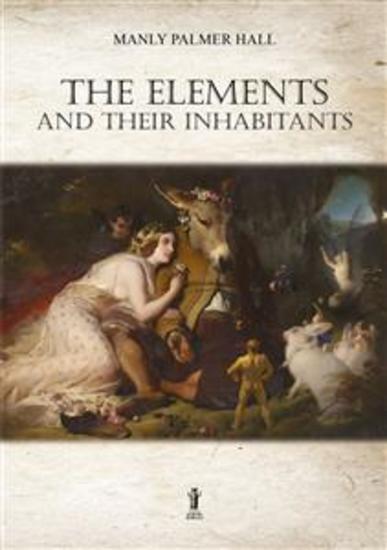
The Elements and their Inhabitants - cover

The Elements and their Inhabitants

Manly Palmer Hall

Verlag: Edizioni Aurora Boreale

  • 0
  • 0
  • 0

Beschreibung

Just as visible Nature is populated by an infinite number of living creatures, so, according to Paracelsus, the invisible, spiritual counterpart of visible Nature (composed of the tenuous principles of the visible elements) is inhabited by a host of peculiar beings, to whom he has given the name elementals, and which have later been termed the Nature spirits. Paracelsus divided these people of the elements into four distinct groups, which he called gnomes, undines, sylphs, and salamanders. He taught that they were really living entities, many resembling human beings in shape, and inhabiting worlds of their own, unknown to man because his undeveloped senses were incapable of functioning beyond the limitations of the grosser elements.The civilizations of Greece, Rome, Egypt, China, and India believed implicitly in satyrs, sprites, and goblins. They peopled the sea with mermaids, the rivers and fountains with nymphs, the air with fairies, the fire with Lares and Penates, and the earth with fauns, dryads, and hamadryads. These Nature spirits were held in the highest esteem, and propitiatory offerings were made to them.Occasionally, as the result of atmospheric conditions or the peculiar sensitiveness of the devotee, they became visible. Many authors wrote concerning them in terms which signify that they had actually beheld these inhabitants of Nature’s finer realms. A number of authorities are of the opinion that many of the Gods worshiped by the pagans were elementals, for some of these invisibles were believed to be of commanding stature and magnificent deportment.The Greeks gave the name dæmon to some of these elementals, especially those of the higher orders, and worshiped them. Probably the most famous of these dæmons is the mysterious spirit which instructed Socrates, and of whom that great philosopher spoke in the highest terms. Those who have devoted much study to the invisible constitution of man realize that it is quite probable the dæmon of Socrates and the angel of Jakob Böhme were in reality not elementals, but the overshadowing divine natures of these philosophers themselves.
Verfügbar seit: 19.04.2022.


Weitere Bücher, die Sie mögen werden

  • Mind Over Madness - Strategies for Thriving Amidst Chaos - cover

    Mind Over Madness - Strategies...

    Dan Desmarques

    • 0
    • 0
    • 0
    In a world where intelligence is overshadowed by ignorance, where success is met with envy and hatred, and where the pursuit of knowledge is often misunderstood, one individual navigates the complexities of life with resilience and determination. "Mind Over Madness: Strategies for Thriving Amidst Chaos" delves into the personal journey of an author who faces the challenges of living a life that many secretly desire but few truly understand. Through encounters with haters, manipulative personalities, and the limitations of the average mind, the protagonist discovers the true value of intellect, perseverance, and self-esteem. 
    As the story unfolds, readers are invited to explore themes of resilience, self-discovery, and the pursuit of truth in a world filled with illusions and misconceptions. From confronting betrayal and psychological abuse to finding solace in solitude and contemplation, the protagonist's experiences offer profound insights into the complexity of human nature and the power of individual growth. 
    "Mind Over Madness: Strategies for Thriving Amidst Chaos" is a compelling exploration of the human experience that challenges perceptions and invites readers to reflect on the dynamics of success, intelligence, and personal fulfillment.
    Zum Buch
  • Egyptian Book of the Dead and the Mysteries of Amenta - Ancient Egypt the Light of the World Book 4 - cover

    Egyptian Book of the Dead and...

    Gerald Massey

    • 0
    • 0
    • 0
    There is no death in the Osirian religion, only decay and change, and periodic renewal; only evolution and transformation in the domain of matter and the transubstantiation into spirit. In the so-called death of Osiris it is rebirth, not death, exactly the same as in the changes of external nature. At the close of the day the solar orb went down and left the sun god staring blankly in the dark of death. Taht the moon god met him in Amenta with the eye of Horus as the light the was to illuminate the darkness of the subterranean world. –from “Egyptian Book of the Dead and the Mysteries of Amenta” It goes unappreciated by modern Egyptologists, but it is embraced by those who savor the concept of a “hidden history” of humanity, and those who approach all human knowledge from the perspective of the esoteric. Gerard Massey’s massive Ancient Egypt: The Light of the World–first published in 1907 and the crowning achievement of the self-taught scholar–redefines the roots of Christianity via Egypt, proposing that Egyptian mythology was the basis for Jewish and Christian beliefs. Here, Cosimo proudly presents Book 4 of Ancient Egypt, in which Massey discusses the Egyptian Book of the Dead as the “pre-Christian word of God,” and explores the idea that Amenta, the threshold to the Egyptian underworld, is the first overt expression of a human desire for a noncorporeal afterlife. Massey goes on to connect the “mystery of the mummy” to “the mystery of the Christ” by likening the Christian dogma of physical resurrection to the Egyptian impetus for mummification. Peculiar and profound, this work will intrigue and delight readers of history, religion, and mythology. British author GERALD MASSEY (1828-1907) published works of poetry, spiritualism, Shakespearean criticism, and theology, but his best-known works are in the realm of Egyptology, including A Book of the Beginnings and The Natural Genesis.
    Zum Buch
  • The Ashtray - (Or the Man Who Denied Reality) - cover

    The Ashtray - (Or the Man Who...

    Errol Morris

    • 0
    • 0
    • 0
    In 1972, philosopher of science Thomas Kuhn threw an ashtray at Errol Morris. This book is the result. At the time, Morris was a graduate student. Now we know him as one of the most celebrated and restlessly probing filmmakers of our time, the creator of such classics of documentary investigation as The Thin Blue Line. Kuhn was—and, posthumously, remains—a star in his field and author of The Structure of Scientific Revolutions, a landmark book that introduced the concept of "paradigm shifts" to the larger culture. And Morris thought the idea was bunk. 


    The Ashtray tells why—and in doing so, it makes a powerful case for Morris's way of viewing the world, and the centrality to that view of a fundamental conception of the necessity of truth. "For me," Morris writes, "truth is about the relationship between language and the world: a correspondence idea of truth." He has no patience for philosophical systems that aim for internal coherence and disdain the world itself. Morris wants to establish as clearly as possible what we know and can say about the world, reality, history, our actions, and interactions. It's the fundamental desire that animates his filmmaking. Truth may be slippery, but that doesn't mean we have to grease its path of escape through philosophical evasions. Rather, Morris argues, it is our duty to do everything we can to establish and support it.
    Zum Buch
  • Stolen Fragments - Black Markets Bad Faith and the Illicit Trade in Ancient Artefacts - cover

    Stolen Fragments - Black Markets...

    Roberta Mazza

    • 0
    • 0
    • 0
    In 2012, Steve Green, billionaire and president of Hobby Lobby, announced a purchase of a Biblical artefact—a fragment of papyrus carrying lines from Paul's letter to the Romans, and dated to the second century CE. Noted scholar Roberta Mazza was stunned. When was this piece discovered, and how could Green acquire such a rare item? The answers, which Mazza spent the next ten years uncovering, came as a shock: the fragment had come from a famous collection held at Oxford University, and its rightful owners had no idea it had been sold. 


    The letter to the Romans was not the only extraordinary piece in the Green collection. They soon announced newly recovered fragments from the Gospels and writings of Sappho. Mazza's quest to confirm the provenance of these priceless fragments revealed shadowy global networks that make big business of ancient manuscripts. 


    Mazza's investigation forces us to ask what happens when the supposed custodians of our ancient heritage act in ways that threaten to destroy it. Stolen Fragments illuminates how these recent dealings are not isolated events, but the inevitable result of longstanding colonial practices and the outcome of generations of scholars who have profited from extracting the cultural heritage of places they claim they wish to preserve. Where is the boundary between protection and exploitation?
    Zum Buch
  • Deconstructing Racism - A Path toward Lasting Change - cover

    Deconstructing Racism - A Path...

    Barbara Crain Major, Joseph Barndt

    • 0
    • 0
    • 0
    Barbara Crain Major and Joseph Barndt bring ninety combined years of experience as community organizers, teachers, and anti-racism trainers in community and church settings to this book. In Deconstructing Racism, they propose the deconstruction of racism's roots within systems and institutions that have been created, both structurally and legally, to serve white people. 


    The authors seek to unmask the complexities of racism and the invisible patterns that keep it in place. There is no quick fix, but they believe racism can be deconstructed and undone. In order to do this, they identify and address race-based identity, history, and cultural issues rooted in current systems. 


    Three chapters specifically address societal systems and provide anti-racism strategies for community organizers. Three chapters address racism as rooted in systems in the church and challenge people of faith to seek racial healing through understanding, honest confession, true reconciliation, and reconstructed church institutions. A final chapter outlines a way forward to and through a new era of anti-racist reconstruction. This way forward includes a new anti-racist mission statement, a new model of decision-making power, and new processes for accountability.
    Zum Buch
  • Tales from the Haunted South - Dark Tourism and Memories of Slavery from the Civil War Era - cover

    Tales from the Haunted South -...

    Tiya Miles

    • 0
    • 0
    • 0
    In this book Tiya Miles explores the popular yet troubling phenomenon of "ghost tours," frequently promoted and experienced at plantations, urban manor homes, and cemeteries throughout the South. As a staple of the tours, guides entertain paying customers by routinely relying on stories of enslaved black specters. But who are these ghosts? Examining popular sites and stories from these tours, Miles shows that haunted tales routinely appropriate and skew African American history to produce representations of slavery for commercial gain. "Dark tourism" often highlights the most sensationalist and macabre aspects of slavery, from salacious sexual ties between white masters and black women slaves to the physical abuse and torture of black bodies to the supposedly exotic nature of African spiritual practices. Because the realities of slavery are largely absent from these tours, Miles reveals how they continue to feed problematic "Old South" narratives and erase the hard truths of the Civil War era. In an incisive and engaging work, Miles uses these troubling cases to shine light on how we feel about the Civil War and race, and how the ghosts of the past are still with us.
    Zum Buch