Begleiten Sie uns auf eine literarische Weltreise!
Buch zum Bücherregal hinzufügen
Grey
Einen neuen Kommentar schreiben Default profile 50px
Grey
Jetzt das ganze Buch im Abo oder die ersten Seiten gratis lesen!
All characters reduced
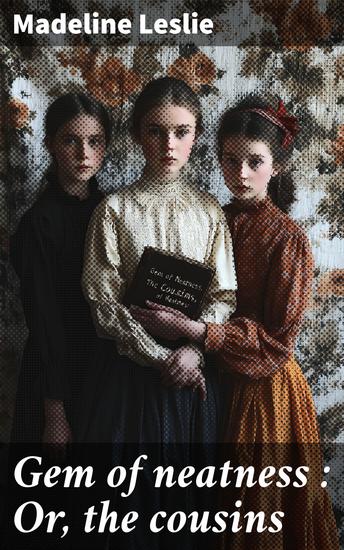
Gem of neatness : Or the cousins - cover

Gem of neatness : Or the cousins

Madeline Leslie

Verlag: Good Press

  • 0
  • 0
  • 0

Beschreibung

In "Gem of Neatness: Or, The Cousins," Madeline Leslie presents a richly woven narrative that explores the intricacies of familial relationships and moral development. Set against a backdrop of 19th-century American society, the novel employs a didactic tone, typical of the period, to illuminate the virtues of neatness, discipline, and propriety. Through the lens of the cousins' adventures and misadventures, Leslie masterfully intertwines elements of daily life with profound moral lessons, creating a compelling text that balances entertainment with educational value. Madeline Leslie, an educator and author of children's literature, wrote this book at a time when the moral instruction of youth was paramount. Her experiences in teaching likely inspired her to craft stories that both engaged young readers and imparted essential virtues. Leslie's background reflects the feminist movements of her time, aiming to empower young women through literature that not only entertains but also instructs. Recommended for readers of all ages, "Gem of Neatness" serves as both a charming tale of cousins' companionship and an insightful commentary on the virtues that underpin a well-lived life. This novel is an excellent choice for those interested in children's literature that fosters moral integrity and offers a glimpse into the societal expectations of the 19th century.
Verfügbar seit: 02.03.2025.
Drucklänge: 230 Seiten.

Weitere Bücher, die Sie mögen werden

  • The Metamorphosis - cover

    The Metamorphosis

    Franz Kafka

    • 0
    • 0
    • 0
    The Metamorphosis by Franz Kafka is a novella that explores various themes including alienation and identity through the unexpected transformation of its main character, Gregor Samsa. Gregor wakes up one morning to find that he has turned into a giant vermin: a dung beetle. The story explores Gregor's struggle to adapt to his new physical form and the implications this sudden metamorphosis holds for his family, shedding a strange light on certain societal expectations and familial responsibilities at that time.
    Zum Buch
  • The Complete Poems - cover

    The Complete Poems

    Walt Whitman

    • 0
    • 0
    • 0
    What does it mean to sing of oneself—and of a nation?
    
    The Complete Poems of Walt Whitman brings together the full poetic legacy of one of America's greatest writers. From the revolutionary verses of Leaves of Grass to powerful Civil War poems and intimate reflections on life, death, and democracy, Whitman reshaped poetry with a bold new voice.
    
    Rejecting rigid forms, Whitman embraced free verse to celebrate the human body, the soul, nature, labor, love, and the shared identity of a nation. His poetry is expansive, intimate, and deeply inclusive—speaking not just to his time, but to every generation that seeks meaning, dignity, and connection.
    
    This comprehensive collection allows readers to experience Whitman's poetic evolution in full, revealing the scope, courage, and humanity of his vision.
    
    Inside this eBook, you'll explore:
    
    The complete Leaves of Grass and related poems
    
    Civil War poetry including Drum-Taps and elegies
    
    Themes of democracy, individuality, and universal brotherhood
    
    A cornerstone collection of American literary history
    
    Studied worldwide and endlessly influential, Walt Whitman's poetry remains essential reading for anyone drawn to poetry, philosophy, and the American spirit.
    
    Hear the voice that dared to speak for all. Buy now and experience the complete poems of Walt Whitman.
    Zum Buch
  • Sherlock Holmes The Sign of the Four - Audiobook - cover

    Sherlock Holmes The Sign of the...

    Arthur Conan Doyle, Classic...

    • 0
    • 0
    • 0
    The Sign of the Four is the second book in Sir Arthur Conan Doyle's legendary series about Sherlock Holmes, following A Study in Scarlet. This gripping novel delves into one of Holmes and Dr. Watson's most thrilling cases, featuring mysterious murders, a hidden treasure, and a pact sealed by betrayal. Set in Victorian England, the story unravels a dark and captivating tale involving a secret society, exotic intrigue, and a perilous chase through the streets of London.This book also introduces Watson's future wife, Mary Morstan, adding an emotional depth to the narrative. With its complex plot and dynamic storytelling, The Sign of the Four solidifies Sherlock Holmes's place as one of the most iconic detectives in literature.
    Zum Buch
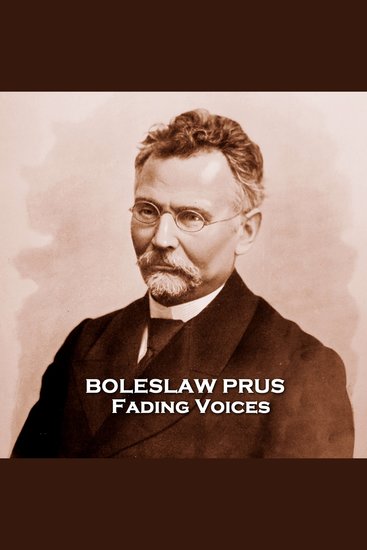
  • Fading Voices - From their pens to your ears genius in every story - cover

    Fading Voices - From their pens...

    Boleslaw Prus

    • 0
    • 0
    • 0
    Aleksander Głowacki who wrote under the nom de plume Boleslaw Prus was born on 20th August 1847 at Hrubieszów in the Kingdom of Poland, at that time, controlled by the Russian Empire. 
    At three his mother died and then at nine his father.  Female relatives helped raise him but at 15 he joined the Polish uprising against the might of Imperial Russia.  Wounded on the battlefield, arrested and imprisoned, he was later released into the care of a relative and resumed secondary school and then Warsaw University but poverty forced him to leave after two years.  At some point he developed agoraphobia which often caused problems. 
    In 1869, he enrolled in the Forestry Department at Puławy but was soon sacked and so he began a system of self-education that led to work as a newspaper columnist on a wide-ranging series of topics that eventually became the ‘Weekly Chronicles’ and spanned 40 years. 
    With his finances now stabilized he married and then adopted his late brother-in-law’s son.  
    It seems he had doubts as to the scale of his talents and early on adopted the name ‘Boleslaw Prus’ for both his journalistic and literary offerings. 
    His work as a short-story writer met with much acclaim. He wrote several dozen of them, originally published in newspapers and ranging in length from micro-story to novella. His keen observation of everyday life and sense of humor are evident in them.  
    During his career he also wrote novels. After ‘Pharoah’, in 1895, he embarked on a four-month journey taking in Berlin, Dresden, Nuremberg, Rapperswil in Switzerland, where he stayed for two months, and his final destination, Paris.  Here his agoraphobia was so bad he couldn’t cross the Seine.  
    However, his writing continued and in 1911 his novel ‘Changes’, though uncompleted, began to be serialised.  It was never finished. 
    Boleslaw Prus died on 19th May 1912, at his Warsaw apartment.  He was 64.  A National Hero, thousands attended both his funeral service and interment.
    Zum Buch
  • The Battle of Life - cover

    The Battle of Life

    Charles Dickens

    • 0
    • 0
    • 0
    Charles Dickens’s The Battle of Life is a tender tale of love, sacrifice, and the quiet struggles of the human heart. When two devoted sisters face choices that could change their futures forever, they discover that life’s true “battle” is not fought with swords, but with selflessness and compassion. Though one of Dickens’s lesser-known Christmas Books, this charming story carries his timeless message of hope, generosity, and the triumph of love over hardship.
    Zum Buch
  • A Diagnosis of Death - From their pens to your ears genius in every story - cover

    A Diagnosis of Death - From...

    Ambrose Bierce

    • 0
    • 0
    • 0
    Ambrose Gwinnett Bierce was born on 24th June 1842 at Horse Cave Creek in Meigs County, Ohio. His parents were poor but they introduced him to literature at an early age, instilling in him a deep appreciation of books, the written word and the elegance of language.  
    Growing up in Koscuisko County, Indiana poverty and religion were defining features of his childhood, and he would later describe his parents as “unwashed savages” and fanatically religious, showing him little affection but always quick to punish. He came to resent religion, and his introduction to literature appears to be their only positive effect. 
    At age 15 Bierce left home to become a printer’s devil, mixing ink and fetching type at The Northern Indian, a small Ohio paper. Falsely accused of theft he returned to his farm and spent time sending out work in the hopes of being published. 
    His Uncle Lucius advised he be sent to the Kentucky Military Institute. A year later he was commissioned as an Officer.  As the Civil War started Bierce enlisted in the 9th Indiana Infantry Regiment.  
    In April 1862 Bierce fought at the Battle of Shiloh, an experience which, though terrifying, became the source of several short stories. Two years later he sustained a serious head wound and was off duty for several months. He was discharged in early 1865.  
    A later expedition to inspect military outposts across the Great Plains took him all the way to San Francisco. He remained there to become involved with publishing and editing and to marry, Mary Ellen on Christmas Day 1871.  They had a child, Day, the following year.  
    In 1872 the family moved to England for 3 years where he wrote for Fun magazine. His son, Leigh, was born, and first book, ‘The Fiend’s Delight’, was published.  
    They returned to San Francisco and to work for a number of papers where he gained admiration for his crime reporting. In 1887 he began a column at the William Randolph Hearst’s San Francisco Examiner.  
    Bierce’s marriage fell apart when he discovered compromising letters to his wife from a secret admirer. The following year, 1889 his son Day committed suicide, depressed by romantic rejection. 
    In 1891 Bierce wrote and published the collection of 26 short stories which included ‘An Occurrence at Owl Creek Bridge’.  Success and further works including poetry followed.  
    Bierce with Hearst’s resources helped uncover a financial plot by a railroad to turn 130 million dollars of loans into a handout. Confronted by the railroad and asked to name his price Bierce answered “my price is $130 million dollars. If, when you are ready to pay, I happen to be out of town, you may hand it over to my friend, the Treasurer of the United States”.  
    He now began his first foray as a fabulist, publishing ‘Fantastic Fables’ in 1899.  But tragedy again struck two years later when his second son Leigh died of pneumonia relating to his alcoholism.  
    He continued to write short stories and poetry and also published ‘The Devil’s Dictionary’.  
    At the age of 71, in 1913 Bierce departed from Washington, D.C., for a tour of the battlefields where he had fought during the civil war. At the city of Chihuahua he wrote his last known communication, a letter to a friend. It’s closing words were “as to me, I leave here tomorrow for an unknown destination,” Ambrose Bierce then vanished without trace.
    Zum Buch