Begleiten Sie uns auf eine literarische Weltreise!
Buch zum Bücherregal hinzufügen
Grey
Einen neuen Kommentar schreiben Default profile 50px
Grey
Jetzt das ganze Buch im Abo oder die ersten Seiten gratis lesen!
All characters reduced
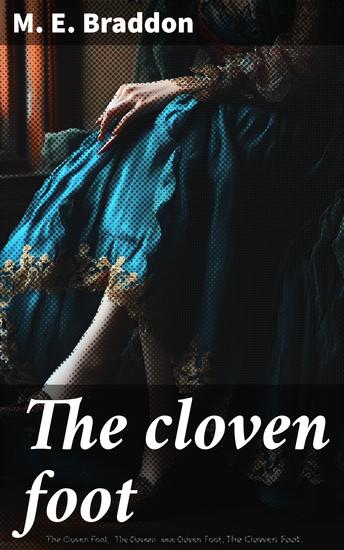
The cloven foot - A novel - cover

The cloven foot - A novel

M. E. Braddon

Verlag: Good Press

  • 0
  • 0
  • 0

Beschreibung

In "The Cloven Foot," M. E. Braddon crafts a compelling narrative that intertwines themes of social morality and the duality of human nature. Written in the late Victorian era, the novel exemplifies Braddon's mastery of the sensation fiction genre, characterized by its exploration of psychological complexity and social critique. The plot revolves around the intrigues of a mysterious protagonist whose unsettling charm reveals the darker sides of society, questioning the veneer of respectability that often masks moral corruption. Braddon's vivid prose and atmospheric settings immerse the reader in a world where personal and societal conflicts converge, showcasing her acute observations on Victorian values and the human condition. M. E. Braddon, a prominent Victorian novelist, was a pioneer in the realm of sensational literature. Her diverse experiences—ranging from her early career as an actress to her extensive writing for periodicals—shaped her narrative style and thematic concerns. Living through a period marked by rapid social change and the tensions of modernity, Braddon's works often reflect a keen awareness of female agency and the plight of women in a patriarchal society, which is vividly echoed in "The Cloven Foot." For readers seeking a rich, thought-provoking exploration of the complexities of morality and identity, "The Cloven Foot" is an essential addition to the canon of Victorian literature. Braddon's incisive character studies and dramatic plot twists create a gripping reading experience that not only entertains but prompts reflection on the darker aspects of human nature. Engage with this intriguing narrative and uncover the layers of societal critique masterfully embedded in its pages.
Verfügbar seit: 02.03.2025.
Drucklänge: 200 Seiten.
Weitere Bücher, die Sie mögen werden

  • Aunt Agatha Takes the Count - cover

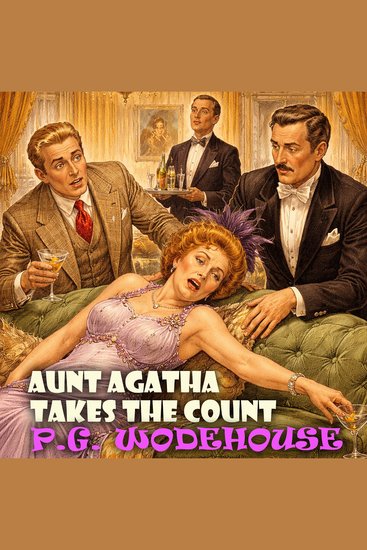
    Aunt Agatha Takes the Count

    P. G. Wodehouse

    • 0
    • 0
    • 0
    "Everything was under control… which, in retrospect, should have rung alarm bells."
    In Aunt Agatha Takes the Count, Bertie Wooster has, for once, acted with rare foresight: fled the country, secured an excellent hotel, and placed a reassuring stretch of sea between himself and his formidable Aunt Agatha. What could possibly go wrong?
    As it happens—quite a lot.
    A chance acquaintance, a dangerously winning smile, and a gesture of pure Wooster generosity… and suddenly Bertie finds himself edging into one of those situations that are not merely awkward, but the sort of thing that simply doesn't bear thinking about.
    Fortunately, Jeeves is at hand.
    Calm, imperturbable, and gifted with that quiet brilliance which has so often preserved the Wooster fortunes, he observes, deduces, and—when required—intervenes with quiet precision.
    A bright, fast-moving Wodehouse jewel: elegant, absurd, and impeccably timed. Ideal for listeners who enjoy their humor dry, their chaos refined, and their rescues flawlessly executed.
    Because in Bertie Wooster's world, disaster is never far away… but neither, thank heaven, is Jeeves.
    Zum Buch
  • MS Found In A Bottle - cover

    MS Found In A Bottle

    Edgar Allan Poe

    • 0
    • 0
    • 0
    MS. Found In A Bottle is an adventure short story by Edgar Allan Poe that first appeared in the May 1833 edition of Baltimore Saturday Visiter. The plot follows an unnamed narrator at sea who finds himself in a series of harrowing circumstances. As he nears his own disastrous death while his ship drives ever southward, he writes an "MS.", or manuscript, telling of his adventures which he casts into the sea. Some critics believe the story was meant as a satire of typical sea tales.
    Zum Buch
  • Before the Law - From their pens to your ears genius in every story - cover

    Before the Law - From their pens...

    Franz Kafka

    • 0
    • 0
    • 0
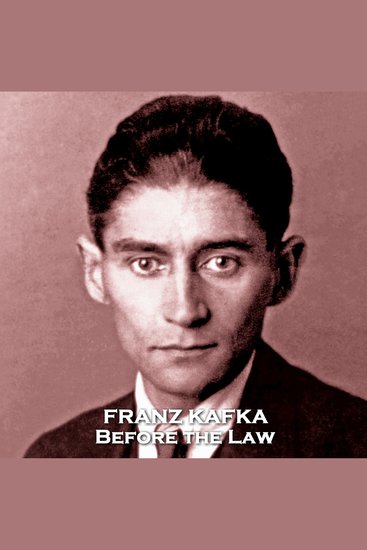
    Franz Kafka was born on 3rd July 1883 in Prague, then in Bohemia, the eldest of 6, into a middle-class Jewish family. 
    Life for the young Kafka and his passion for literature was often made an ordeal by his over-bearing and domineering entrepreneur of a father.   
    In 1889 Kafka was sent to the Deutsche Knabenschule, an elementary school in Prague. His father would only allow him to be educated in German-speaking schools and even went so far as to limit visits to the synagogue to four a year. 
    In 1901 he graduated from the classics-oriented Altstädter Gymnasium. Kafka did well there and across a large range of subjects.  He now enrolled at the Charles Ferdinand University, to study chemistry, but quickly switched to law for which he obtained his degree in June 1906 and then performed the mandatory year of unpaid service as clerk at the civil and criminal courts. 
    A job at an Italian insurance company left him little time to write and after a year he took another job with the Worker's Accident Insurance Institute for the Kingdom of Bohemia where he stayed until ill health led to his resignation in 1922. 
    Although he saw work as a means to pay the bills and to allow him time to write, he received several promotions and was noted as a good employee. 
    By 1917 Kafka was suffering from tuberculosis, which required frequent periods of convalescence. Interspersed with this, were several intense affairs before he settled in Berlin with Dora Diamant, a 25-year-old kindergarten teacher who herself having left the ghetto now influenced Kafka's interest in the book of Jewish law, the Talmud. 
     
     
    Kafka’s on-going health was littered with problems. Apart from TB there were several other ailments, including migraines, insomnia, boils, depression, all usually brought on by excessive stresses and strains. He attempted to counteract all of this by naturopathic treatments, a vegetarian diet and consuming large quantities of unpasteurized milk. 
    His tuberculosis still worsened. He returned to Prague, where he died on 3rd June 1924. He was 40.
    Zum Buch
  • The Dark Star - cover

    The Dark Star

    Robert William Chambers

    • 0
    • 0
    • 0
    Amid the tense politics of pre–World War I Europe, an American man becomes unwittingly bound to a mysterious woman whose fate is tied to a coveted secret known as the Dark Star. Pursued by spies and caught between rival powers, they race across borders to evade danger. As loyalty wavers and love deepens, they confront a conspiracy that could ignite global conflict, testing courage and trust at every turn.
    Zum Buch
  • The Rubaiyat of Omar Khayyam - cover

    The Rubaiyat of Omar Khayyam

    Omar Khayyám, Edward Fitzgerald

    • 0
    • 0
    • 0
    The Rubaiyat of Omar Khayyam is a collection of quatrains (four-line verses) attributed to the 12th-century Persian poet, mathematician, and astronomer, Omar Khayyam. While the original Persian text is complex and open to interpretation, it is the English translation by Edward Fitzgerald that popularized the work in the Western world. 
    Fitzgerald's translation portrays a world view that is often characterized as: 
    Carpe Diem: Seize the day, emphasizing the fleeting nature of life and the importance of enjoying the present moment. 
    Skepticism: Questioning traditional beliefs and religious dogma, particularly in relation to the afterlife. 
    Epicureanism: Focusing on pleasure and the senses as the primary goods in life. 
    Fatalism: Accepting one's fate and the inherent unpredictability of existence.
    Zum Buch
  • The Storm - From their pens to your ears genius in every story - cover

    The Storm - From their pens to...

    Kate Chopin

    • 0
    • 0
    • 0
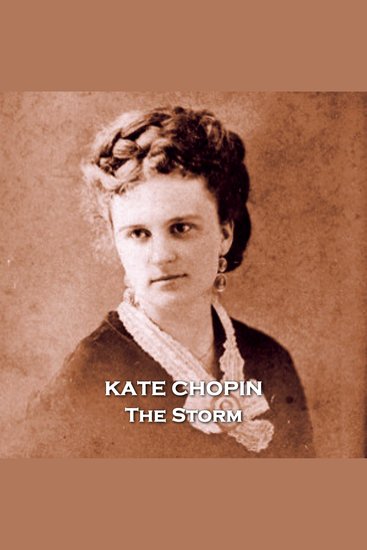
    Katherine O'Flaherty was born on the 8th February 1850 in St Louis, Missouri to parents of French and Irish descent. 
    At age 5, she was sent to the Sacred Heart Academy and, apart from a 2 year period at home when her father died, remained there until graduating in 1868.  Whilst there she began writing and became an avid reader of almost anything that crossed her path.   
    Kate married Oscar Chopin in 1870 and the couple moved to New Orleans, and later to the rural setting of Cloutierville, Louisiana to raise their 6 children.  
    In 1882 her husband died leaving her in a deep trench of debt.  Despite her best efforts to turn the businesses around they were sold, and she moved the family back to St Louis and the financial help of her mother.  Sadly, her mother died within the year.  Kate, now struggling with depression, pushed herself to write and gained a local reputation as a writer of short stories that captured the local color and vibrancy of her surroundings. 
    By the early 1890’s her short stories were published nationally.  With this widespread audience also came negative reviews, controversy, and cries of immorality as themes such as interracial relationships, the rights of women and other burning issues of the day were written about. 
    Despite the criticism, which unnerved her, she continued to write though in the main her works, around 100 short stories and two novels, were not attributed with any literary worth. 
    Kate Chopin died from a brain haemorrhage in St Louis Missouri on the 22nd of August 1904.  She was 54. 
    For much of the 20th Century her work was forgotten and out of print.  It was only in early 1970’s, with the rise of feminism and the call for a more just society that she was given the status her works had long described and shone a literary light at.  She is now safely revered as one of America’s great authors.
    Zum Buch