Rejoignez-nous pour un voyage dans le monde des livres!
Ajouter ce livre à l'électronique
Grey
Ecrivez un nouveau commentaire Default profile 50px
Grey
Abonnez-vous pour lire le livre complet ou lisez les premières pages gratuitement!
All characters reduced
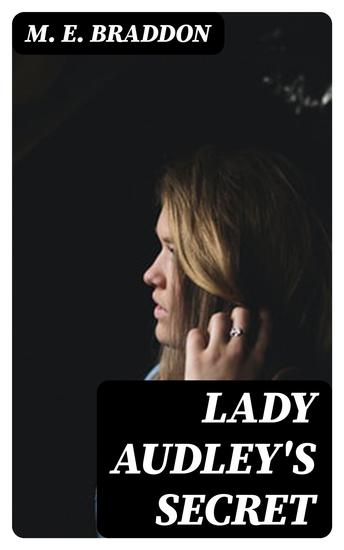
Lady Audley's Secret - Enriched edition - cover

Lady Audley's Secret - Enriched edition

M. E. Braddon

Maison d'édition: DigiCat

  • 0
  • 0
  • 0

Synopsis

M. E. Braddon's "Lady Audley's Secret" is a masterful exploration of the Victorian society's complexities, weaving a gripping tale of mystery and intrigue. The novel is recognized for its sensational style, characterized by its melodramatic elements and its thoughtful investigation of themes such as gender roles, mental illness, and social class. Set against the backdrop of a changing England, the story unfolds as the charming and seemingly perfect Lady Audley hides a harrowing past that threatens to disrupt her idyllic life, thereby challenging the expectations of womanhood in her time. M. E. Braddon, a pioneering female novelist of the Victorian era, drew inspiration from her own life experiences and the socio-political climate that shaped women's roles in society. A successful author from a young age, Braddon faced the struggles of a woman writer in an era dominated by male authorship, informing her portrayal of strong, complex female characters such as Lady Audley. Her perspectives on class dynamics and the construction of identity reflect her keen insights into the contradictions of her contemporary society. "Lady Audley's Secret" is highly recommended for readers interested in Victorian literature, feminist studies, and thrilling narratives that intertwine suspense with social commentary. Braddon's novel not only entertains but also invites readers to reflect on the societal norms of her time, making it a valuable addition to both literary and historical discourse.

In this enriched edition, we have carefully created added value for your reading experience:
- A succinct Introduction situates the work's timeless appeal and themes.
- The Synopsis outlines the central plot, highlighting key developments without spoiling critical twists.
- A detailed Historical Context immerses you in the era's events and influences that shaped the writing.
- A thorough Analysis dissects symbols, motifs, and character arcs to unearth underlying meanings.
- Reflection questions prompt you to engage personally with the work's messages, connecting them to modern life.
- Hand‐picked Memorable Quotes shine a spotlight on moments of literary brilliance.
- Interactive footnotes clarify unusual references, historical allusions, and archaic phrases for an effortless, more informed read.
Disponible depuis: 28/05/2022.
Longueur d'impression: 365 pages.

D'autres livres qui pourraient vous intéresser

  • The Castle of Otranto - cover

    The Castle of Otranto

    Horace Walpole

    • 0
    • 0
    • 0
    "The Castle of Otranto" is a novel written by Horace Walpole and first published in 1764. It is considered the first Gothic novel, setting the stage for a genre that would become popular in the late 18th and early 19th centuries. The book is known for its blend of supernatural elements, romance, and suspense. The story is set in the medieval Castle of Otranto in Italy and revolves around the mysterious and supernatural events that unfold within its walls. The narrative involves a cursed noble family, secret passages, prophecies, and a large helmet that seems to portend doom. The novel explores themes of power, love, and the supernatural, creating an atmospheric and suspenseful tale.
    Voir livre
  • Brightness Falls - From their pens to your ears genius in every story - cover

    Brightness Falls - From their...

    Mary Butts

    • 0
    • 0
    • 0
    Mary Frances Butts was born on 13th December 1890 in Poole, Dorset. 
    Her early years were spent at Salterns, an 18th-century house overlooking Poole Harbour.  Sadly in 1905 her father died, and she was sent for boarding at St Leonard's school for girls in St Andrews. 
    Her mother remarried and, from 1909, Mary studied at Westfield College in London, and here, first became aware of her bisexual feelings.  She was sent down for organising a trip to Epsom races and only completed her degree in 1914 when she graduated from the London School of Economics.  By then Mary had become an admirer of the occultist Aleister Crowley and she was given a co-authorship credit on his ‘Magick (Book 4)’. 
    In 1916, she began the diary which would now detail her future life and be a constant reference point for her observations and her absorbing experiences. 
    During World War I, she was doing social work for the London County Council in Hackney Wick, and involved in a lesbian relationship.  Life changed after meeting the modernist poet, John Rodker and they married in 1918. 
    In 1921 she spent 3 months at Aleister Crowley's Abbey of Thelema in Sicily; she found the practices dreadful and also acquired a drug habit.  Mary now spent time writing in Dorset, including her celebrated book of short stories ‘Speed the Plough’ which saw fully develop her unique Modernist prose style. 
    Europe now beckoned and several years were spent in Paris befriending many artists and writing further extraordinary stories.   
    She was continually sought after by literary magazines and also published several short story collections as books. Although a Modernist writer she worked in other genres but is essentially only known for her short stories.  Mary was deeply committed to nature conservation and wrote several pamphlets attacking the growing pollution of the countryside. 
    In 1927, she divorced and the following year her novel ‘Armed with Madness’ was published.  A further marriage followed in 1930 and time was spent attempting to settle in London and Newcastle before setting up home on the western tip of Cornwall.  By 1934 the marriage had failed. 
    Mary Butts died on 5th March 1937, at the West Cornwall Hospital, Penzance, after an operation for a perforated gastric ulcer. She was 46.
    Voir livre
  • Protagoras - cover

    Protagoras

    Plato

    • 0
    • 0
    • 0
    Jowett, in his always informative introduction, sees this dialogue as transitional between the early and middle dialogues. Socrates meets with Protagoras and other sophists and pursues his inquiry into virtue. The dialectic brings the thinkers to a surprising ending. Socrates narrates this dialogue. (Summary by Kevin Johnson )
    Voir livre
  • Anna Karenina - Key Insights - cover

    Anna Karenina - Key Insights

    Leo Tolstoy

    • 0
    • 0
    • 0
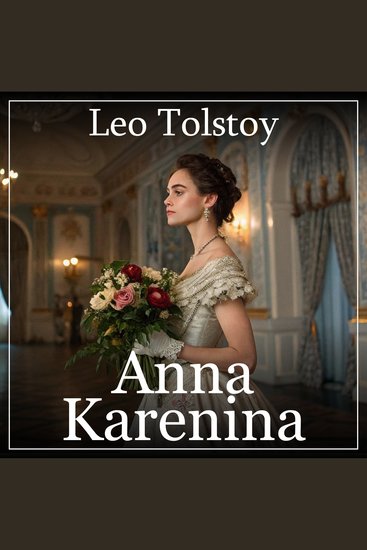
    Step into one of the greatest novels ever written, a sweeping story of passion, duty, and the search for meaning. Anna Karenina follows two powerful journeys: Anna, a woman of extraordinary beauty and charm, who risks everything for a love that defies society, and Levin, a landowner whose restless search for truth and purpose leads him through doubt, work, and ultimately to peace. 
    Set against the backdrop of 19th-century Russia, the novel explores the collision between desire and responsibility, illusion and authenticity, despair and fulfillment. From glittering ballrooms to the quiet fields of the countryside, every page reveals timeless questions about love, family, faith, and the choices that define our lives. 
    More than a tale of romance and tragedy, Anna Karenina is a profound meditation on human struggle and resilience. It reminds us that passion without balance can destroy, while steady devotion to truth and purpose can transform even the most ordinary days into a life of meaning.
    Voir livre
  • The Empty House - cover

    The Empty House

    Algernon Blackwood

    • 0
    • 0
    • 0
    🎬 Experience the atmospheric visual edition of this tale by searching “Jonathan Dunne Horror” on YouTube.Title: The Empty House 
    Series Name: Timeless Terrors 
    Series Entry: 149 
    Author: Algernon Blackwood 
    Narrator: Jonathan Dunne 
    Original Publication: 1906 
    Public Domain: Yes 
    Description: 
    The Empty House by Algernon Blackwood is a masterclass in classic haunted house horror — a slow, suffocating descent into fear within the walls of a place long abandoned to something unseen. 
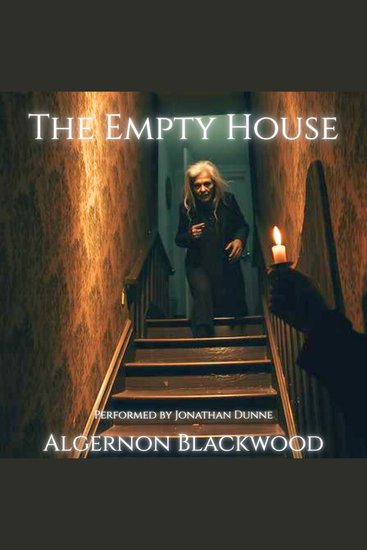
    When a scholarly investigator of the supernatural and his nervous companion decide to spend the night in a notoriously haunted house on the outskirts of London, they expect perhaps a few strange sounds or unsettling impressions. What they encounter instead is an atmosphere so oppressive and malignant that the very air of the house seems saturated with terror. 
    As they move from room to room through dust, darkness, and silence, an overwhelming sensation of invisible hostility begins to close around them. Every staircase creak, every shadowed corner, and every faint disturbance in the stillness carries the suggestion that the house is not truly empty at all — but inhabited by something watchful, ancient, and deeply evil. 
    Rather than relying on violence or spectacle, Algernon Blackwood creates fear through suggestion, psychological tension, and the unbearable feeling of entering a place where human beings are no longer welcome. The Empty House remains one of the finest old-fashioned ghost stories ever written — a chilling and atmospheric tale where the horror lies not in what is seen clearly, but in what waits just beyond perception.
    Voir livre
  • A Christmas Carol - cover

    A Christmas Carol

    Charles Dickens

    • 0
    • 0
    • 0
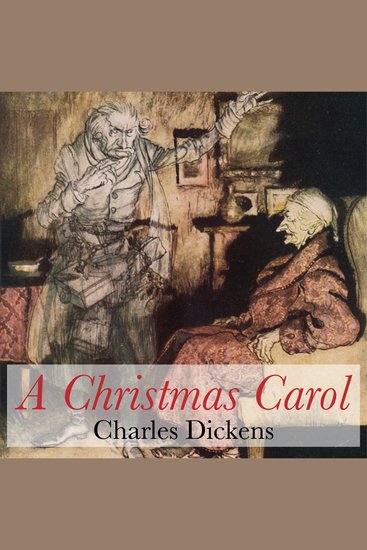
    "A Christmas Carol" is a novella by Charles Dickens, first published in 1843. It recounts the story of Ebenezer Scrooge, an elderly miser who is visited by the ghosts of Christmas Past, Present, and Yet to Come. Through these supernatural encounters, Scrooge learns about the errors of his ways and transforms into a kinder, more generous person. The novella is one of Dickens's most famous works and has been adapted into numerous forms of media over the years. It's widely regarded as a classic of both English literature and holiday storytelling.
    Voir livre