Rejoignez-nous pour un voyage dans le monde des livres!
Ajouter ce livre à l'électronique
Grey
Ecrivez un nouveau commentaire Default profile 50px
Grey
Abonnez-vous pour lire le livre complet ou lisez les premières pages gratuitement!
All characters reduced
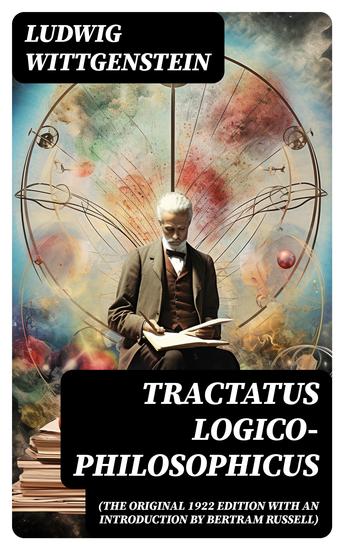
Tractatus Logico-Philosophicus (The original 1922 edition with an introduction by Bertram Russell) - cover

Tractatus Logico-Philosophicus (The original 1922 edition with an introduction by Bertram Russell)

Ludwig Wittgenstein

Maison d'édition: DigiCat

  • 0
  • 0
  • 0

Synopsis

In the seminal work 'Tractatus Logico-Philosophicus,' first published in 1922, Ludwig Wittgenstein presents a groundbreaking exploration of the relationship between language, reality, and thought. The text unfolds through a series of propositions, meticulously structured to elucidate the limits of language and its role in depicting the world. Wittgenstein's distinctive style combines precision with a poetic resonance, thus firmly situating his work within the analytic tradition of philosophy. He posits that many philosophical problems arise from misunderstandings of language, leading to a profound inquiry into the nature of meaningful statements and the underpinnings of logical representation. Ludwig Wittgenstein, a philosopher and logician, experienced a diverse background, influenced by his Austrian upbringing and studies under prominent thinkers. His compelling visions on the philosophy of language and logic were profoundly shaped by his early life in a wealthy family and his experiences during World War I. The 'Tractatus' emerged from his desire to resolve the complexities surrounding philosophical discourse, reflecting both personal and intellectual struggles that resonate deeply within his philosophy. This book is essential for anyone engaged in philosophical discussion or interested in the foundations of modern logical thought. Wittgenstein's radical ideas invite readers to reconsider the structure of language and its implications for understanding meaning. Delve into this pivotal text to gain insights that continue to inform and challenge contemporary philosophical inquiry.
Disponible depuis: 29/12/2023.
Longueur d'impression: 91 pages.

D'autres livres qui pourraient vous intéresser

  • Dealing With Doubts in Islam - For Those That Want to Clear Their Doubts Before Converting to Islam or Suffering From Whispers of Satan - cover

    Dealing With Doubts in Islam -...

    The Sincere Seeker Collection

    • 0
    • 0
    • 0
    Uncover the Truth: Addressing Doubts and Common Misconceptions About Islam to Strengthen Your Faith 
    Are you struggling with doubts about Islam or hesitant to convert because of lingering questions? It's completely natural to have doubts and to question your beliefs about God and Islam. Islam encourages those with doubts to seek knowledge and understanding to overcome uncertainty. Ignoring your doubts can lead to confusion and affect your spiritual well-being. 
    Whether you're close to converting to Islam, battling whispers of doubt from Satan, seeking a deeper understanding of the religion, or looking for a resource to strengthen your Dawah efforts, this comprehensive guide will help you address and overcome the most common misconceptions about Islam. 
    Offering clear, honest answers to challenging questions and debunking common myths spread by Islam's critics, this guide will give you the clarity and confidence to embrace the faith or strengthen your Iman (faith) if you're a Muslim. Let this guide be your companion on your spiritual journey, helping you navigate your doubts and find peace in your faith. 
    🕌 What's Inside:Exploration of common doubts and misconceptions about IslamClear explanations of controversial topics like the Prophet's Marriage to Aisha (R.A)Islamic perspectives on women's rights, inheritance, and marriage, Jihad, Sharia law, and Jizya 
    🌟 Perfect For:Those considering converting to Islam but facing uncertaintiesSeasoned Muslims struggling with doubts or Satan's whispers or seeking to deepen their understandingDawah practitioners want to strengthen their Dawah (calling others to Islam) 
    Don't let doubts hold you back! Click "Add to Cart" and discover the truth and peace that Islam offers!
    Voir livre
  • The Eighty Years War - The Netherlands War of Independence against the Spanish - cover

    The Eighty Years War - The...

    Kelly Mass

    • 0
    • 0
    • 0
    The war between the protestant Netherlands, mostly led by William of Orange, and Catholic Spain, was one of the marks in Dutch history. This war has determined the beliefs of many people who now live about the three rivers that go through the country: Most of the people north of the rivers are protestant, and most of the believers below them (even throughout Belgium as well) are Catholic. This is no coincidence. 
    The war in the 1600s has become a symbol of Dutch resistance, independence, and the royal family (of Orange). In that sense, traditions date back hundreds of years, some them that have their roots in this century. Learn more about what caused the 80 years of war between these two countries, how France was involved, and how it helped form the boundaries and borders of those countries today.
    Voir livre
  • The Bengal Famine - The Forgotten Tragedy of 1943 - cover

    The Bengal Famine - The...

    Sarah Willards

    • 0
    • 0
    • 0
    The Bengal Famine of 1943 was not an isolated event, but rather the culmination of years of political, economic, and environmental factors. To understand the tragedy that claimed the lives of millions, it is essential to examine the conditions that led to this devastating famine. 
    British colonial policies in India played a significant role in shaping the socio-economic landscape of Bengal. Under British rule, India’s agrarian economy was restructured to serve the needs of the colonial administration and its industrial empire. While the British extracted resources for their own benefit, they paid little attention to the welfare of the local population. In Bengal, a region heavily reliant on rice cultivation, this exploitation became increasingly evident as agricultural output was redirected to support the war effort, leaving the local population vulnerable to food shortages. 
    The economic strain caused by World War II exacerbated the situation in Bengal. As Britain sought to maintain its colonial empire, large quantities of rice were diverted from Bengal to support the war in the Pacific, where the Japanese threat loomed large. Additionally, the colonial government’s focus on military expenditure rather than economic development in India drained resources that could have been used for famine prevention and agricultural aid. This led to an economic imbalance, further disrupting food production and distribution in Bengal.
    Voir livre
  • Spirit Voices - The Mysteries and Magic of North Asian Shamanism - cover

    Spirit Voices - The Mysteries...

    David Shi

    • 0
    • 0
    • 0
    A guide to authentic North Asian Shamanism, past and present 


    The word shamanism is frequently bandied about but rarely used accurately. Shamanologist Nicholas Breeze Wood coined the following definition: "A shaman is someone chose by the spirits [typically at/before birth] and who can go into a controlled and repeatable deliberate trance state, during which they: A) experience 'spirit flight,' where they go to meet the spirit worlds and meet spirits, who they either fight with, negotiate with, or trick, in order to create change in this physical world, or B) are often taken over/possessed by the spirits (normally ancestral shaman spirits, or local land spirits) while in this physical world—the spirits using the shaman's voice and body to heal, or give advice to members of the shaman's community.  Without the spirits, and their blessing, a shaman can not exist or function. Without the trance state, it is not shamanism." 


    Author David Shi, for whom these are family traditions, explores the history and practice of shamanism. What is it? Where is it from? How does one become a shaman? Shi guides listeners through unfamiliar territory—the landscape of North Asia—and through what are largely hidden and unfamiliar traditions. Spirit Voices takes and in-depth look at three main cultural shamanic traditions: Turkic, Mongolic, and Tungus.
    Voir livre
  • The Sickness Unto Death and Other Fun Danish Party Games - Kierkegaard Without the Prozac - cover

    The Sickness Unto Death and...

    Sophia Blackwell

    • 0
    • 0
    • 0
    he Sickness Unto Death, and Other Fun Danish Party Games: Kierkegaard Without the Prozac is your gloriously sarcastic, brutally insightful, and occasionally soul-crushing guide to philosophy’s original sadboy, Søren Kierkegaard. 
    Tired of reading philosophy that feels like intellectual sandpaper? This book unpacks Kierkegaard’s anxiety-fueled, despair-drenched theology with the humor and honesty it desperately needs. From aesthetic dead-ends to existential panic, from absurd leaps of faith to spiritual ghosting, this irreverent (but accurate!) guide doesn’t just explain Kierkegaard—it translates him for the modern reader who’s spiritually curious and emotionally exhausted. 
    Perfect for readers who love philosophy but hate philosophers, theology with a side of dark humor, and the occasional mental breakdown in pursuit of authenticity. 
    What you’ll get inside: 
    Pseudonyms, despair, and that one time Abraham almost committed murder in the name of faith 
    The aesthetic life: fun until it isn’t 
    Why being a good person might still mean you’re completely lost 
    Faith, absurdity, and how to jump into the void without looking down 
    Kierkegaard’s existential glow-up in modern philosophy (yes, Sartre, we see you) 
    A roadmap for reading his actual books without losing your will to live 
    And a final call to wake up and stop living someone else’s life 
    No prior philosophy degree required—just a sense of humor, a tolerance for paradox, and maybe a journal for emotional damage control.
    Voir livre
  • Act 2: Debrism - cover

    Act 2: Debrism

    Anonyme

    • 0
    • 0
    • 0
    »ACT 2 | DEBRISM« is the first release on Martin Hossbach’s newly-founded sub-label Martin Hossbach Word which will release readings and audio plays only. Scott King recorded »ACT 2 | DEBRISM« using his dictaphone in one afternoon at home.
    
    King writes:
    »On the afternoon of February 28th, during the long, locked-down winter of 2020/21, I sat at my desk and looked through the files on my laptop. I have hundreds of incomplete ‘projects’, thousands of ‘emails to self’ - ‘new idea for a novel, ‘new idea for a public sculpture’, ‘new idea for an opera’, and so on. None of these ideas ever got made, because somewhere along the line, I had lost the ability to ‘just do’. What went wrong?
    
    For as long as I have known it, I have always loved and believed in the famous Kippenberger maxim: ‘Heute denken, morgen fertig’ (‘Think today, be finished tomorrow’). Though my own maxim had become much closer to: ‘Heute denken, morgen denken. Und übermorgen auch’ (‘Think today, think tomorrow. And the next day’). I had become so reliant on the skills of others (‘makers’) – and worse – even more reliant on the opinions of others (‘gatekeepers’) that my output had dwindled to virtually nothing. This had to stop, so I set myself a challenge: RECORD A SPOKEN WORD ALBUM THIS AFTERNOON. I also set myself some rules: Must not be edited. Must be done at this desk (album cover included). Must not ask for any help. Must not worry about what anyone else thinks (they are wankers).
    
    I bought a dozen cans of pale ale, found my dictaphone, sat at my desk and began. I had no idea what I was going to say, but whatever I did say would be ‘the album’.
    
    By 6pm, I had finished, and I was elated – what I’d recorded might be shit, I didn’t care – because for the first time in many years, I had ‘just done’ something. ‘Heute denken, heute fertig’ (‘Think today, finish today’).
    Voir livre