Begleiten Sie uns auf eine literarische Weltreise!
Buch zum Bücherregal hinzufügen
Grey
Einen neuen Kommentar schreiben Default profile 50px
Grey
Jetzt das ganze Buch im Abo oder die ersten Seiten gratis lesen!
All characters reduced
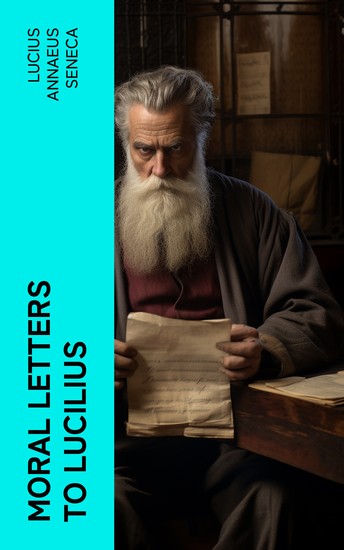
Moral Letters to Lucilius - Epistulae Morales ad Lucilium - cover

Moral Letters to Lucilius - Epistulae Morales ad Lucilium

Lucius Annaeus Seneca

Übersetzer Richard Mott Gummere

Verlag: e-artnow

  • 0
  • 0
  • 0

Beschreibung

The Epistulae Morales ad Lucilium, also known as the Moral Epistles, is a collection of 124 letters which were written by Seneca the Younger at the end of his life, during his retirement, and written after he had worked for the Emperor Nero for fifteen years. They are addressed to Lucilius, the then procurator of Sicily, although he is known only through Seneca's writings. Although these letters deal with Seneca's eclectic form of Stoic philosophy, they also give us valuable insights into daily life in ancient Rome.
Verfügbar seit: 20.12.2023.
Drucklänge: 724 Seiten.
Weitere Bücher, die Sie mögen werden

  • How to Eat - An Ancient Guide for Healthy Living - cover

    How to Eat - An Ancient Guide...

    Abigail Reno

    • 0
    • 0
    • 0
    Today, we're stuffed with dietary recommendations from every direction. Social media, advertising, food packaging, diet books, doctors—all have advice on what, how much, and when to eat. This would have been no surprise to ancient Greeks and Romans. Their doctors were intensely interested in food, offered highly prescriptive dietary advice, and developed detailed systems to categorize foods and their health effects. How to Eat is a delectable anthology of Greco-Roman writings on how to eat, exercise, sleep, bathe, and manage your sex life for optimal health. It also gathers ancient opinions on specific foods of all sorts, from how to deploy onions to cure baldness and cabbage to get sober to whether lentils are healthy and why arugula increases your sex drive. 


    With lively new translations by Claire Bubb, How to Eat features voices from medicine, philosophy, natural history, agriculture, and cooking, including Hippocrates, Pliny the Elder, Galen, Seneca, Plutarch, and Cato. 


    While medicine and science have obviously changed enormously since the classical world, and some Greco-Roman beliefs about diet now appear hilariously off the mark, How to Eat reveals that much of their advice still resonates—and all of it is fascinating.
    Zum Buch
  • Culinary Jailbreak - The Remarkable Tale of Freedom Won with an Unexpected Concoction - cover

    Culinary Jailbreak - The...

    John Harpoon

    • 0
    • 0
    • 0
    In the depths of confinement, where the walls are more than just bricks and mortar but a constant reminder of lost opportunities, an unexpected force emerged: food. This story is not just about escape in the traditional sense, but about breaking free from the psychological and emotional prisons that can often be more suffocating than physical ones. It is a testament to the unyielding human spirit, its capacity for creativity and resilience even in the most stifling of conditions. 
    Incarceration is a test of endurance. Every day is marked by repetition, isolation, and the stripping away of autonomy. It’s easy to feel like hope is a distant dream, slipping further away with each passing hour. But in the midst of despair, something remarkable happened—a plan was forged in the most unlikely of places: the prison kitchen. It was here, in a space designed to merely nourish the body, that a group of individuals came to realize the power of food as a vehicle for something greater: freedom. 
    The idea didn’t start as a grand blueprint or a well-thought-out escape plan. It began with the simple, shared joy of creating something from limited ingredients, turning mundane meals into small acts of rebellion. The kitchen, a place that was simultaneously a site of routine and surveillance, became a sanctuary for ingenuity. It was a space where culinary skills, often honed outside the confines of prison walls, found new purpose in the service of something far more important than sustenance—it became the key to unlocking doors that seemed forever closed.
    Zum Buch
  • Enemy of the People - How Jacob Zuma stole South Africa and how the people fought back - cover

    Enemy of the People - How Jacob...

    Adriaan Basson, Pieter Du Toit

    • 0
    • 0
    • 0
    He swore to serve the people, but Jacob Zuma robbed us blind. 
    This is the first definitive account of Zuma’s catastrophic misrule, offering eyewitness descriptions and cogent analysis of how South Africa was brought to its knees – and how the people fought back.  
    When Jacob Zuma took power of the ANC in December 2007, he inherited a country whose economy was growing and a party that had the support of two-thirds of the electorate. Today, South Africa is caught in the grip of state capture, the economy is moribund and a divided ANC is staring down the barrel of defeat at the 2019 elections. How did we get here? 
    Zuma ruthlessly brought his party to heel, subduing and isolating his political opponents. Then he built a patronage network of family, friends and business associates – powerful, corruptible political tenderpreneurs – who stopped at nothing to take control of state institutions and enterprises. State capture became Zuma’s brand – a maze of corruption so far-reaching that it has replaced many parts of government, causing irreparable damage to institutions, state enterprises, and the ANC itself.  
    But it hasn’t all gone Zuma’s way. In a new era of activism, former political allies, public-minded civil servants, the media and the people have stepped forward to join the anti-Zuma groundswell. In the courts, too, the pressure has mounted against a bad president, who has become an enemy of the people. 
    As a deeply divided ANC squares off for the party’s conference in December, journalists Adriaan Basson and Pieter du Toit offer an insightful, up-to-the-minute account of the Zuma era.
    Zum Buch
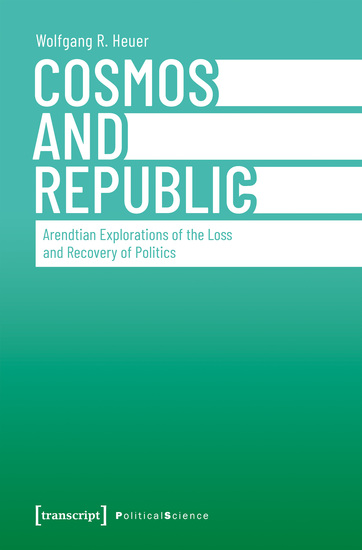
  • Cosmos and Republic - Arendtian Explorations of the Loss and Recovery of Politics - cover

    Cosmos and Republic - Arendtian...

    Wolfgang R. Heuer

    • 0
    • 0
    • 0
    In 20 essays inspired by Hannah Arendt's analysis of crisis-ridden modernity, Wolfgang R. Heuer addresses aspects of depoliticization and the loss of politics, and thus of freedom. The wide-ranging essays are grouped in five sections: When Politics Vanishes, The Call of Responsibility, Images and Emotions, Federations, and From Plurality to Cosmos. They lead to the insight that the crises of our time require a common change of perspective towards ecological and political sustainability, the unity of »Cosmos and Republic«.
    Zum Buch
  • Making Makers - The Past the Present and the Study of War - cover

    Making Makers - The Past the...

    Michael P. M. Finch

    • 0
    • 0
    • 0
    Making Makers presents a comprehensive history of a seminal work of scholarship which has exerted a persistent attraction for scholars of war and strategy: Makers of Modern Strategy. It reveals the processes by which scholars conceived and devised the book, considering both successful and failed attempts to make and remake the work across the twentieth century, and illuminating its impact and legacy. It explains how and why these volumes took their particular forms, unearths the broader intellectual processes that shaped them, and reflects on the academic parameters of the study of war in the twentieth century. In presenting a complete genesis of the Makers project in the context of intellectual trends and historical contingency, this book reflects on a more complex and nuanced appraisal of the development of scholarship on war. In so doing it also offers contributions to the intellectual biographies of key figures in the history of war in the twentieth century, including Edward Mead Earle and Peter Paret. Making Makers contributes to an intellectual history of military history and contextualizes the place of history and historians in strategic and security studies. It is not only a history of the book, but a history of the networks of scholars involved in its creation, their careers, and lines of patronage, crossing international boundaries, from Europe to the USA, to Asia and Australia.
    Zum Buch
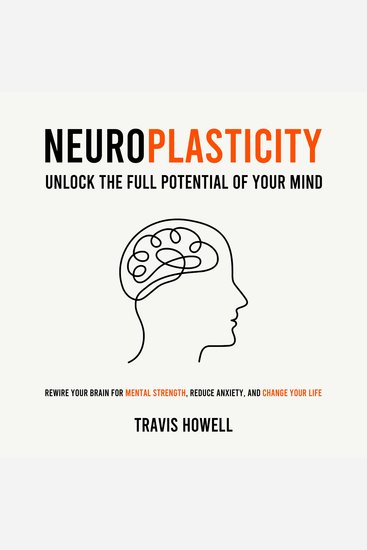
  • Neuroplasticity - Unlock the Full Potential of Your Mind - Rewire Your Brain for Mental Strength Reduce Anxiety and Change Your Life - cover

    Neuroplasticity - Unlock the...

    Travis Howell

    • 0
    • 0
    • 0
    You’re not stuck. Your brain is just used to being that way. 
    You keep hearing it: you can change. But when stress takes over, when habits sabotage your progress, or when you keep repeating thoughts that drain you — it doesn’t feel like change is even possible. 
    The truth? Most people live their entire lives thinking their brain is static. Fixed. Wired a certain way from birth. That belief alone is the trap. 
    Here’s the science-backed truth: your brain is plastic. Flexible. Rewriteable. 
    And once you know how to use that, everything changes — thought by thought, habit by habit, day by day. 
    What’s in this audiobook? 
    You’ll discover how to break the loops that keep you anxious, distracted, stuck in old patterns — and replace them with routines, responses, and mental clarity that feel natural, not forced. 
    No hype. No nonsense. Just real tools that help you:Change your habits without willpower battlesTrain your brain to respond differently to stressMake anxiety less automatic, and calm more accessibleUse mental models that reframe the way you see your challengesUnderstand your brain’s systems so they stop working against youInterrupt the loop of self-sabotage with mindful actionBuild new thought patterns that stick over timeReprogram your responses to triggers in your environmentTrain your subconscious, not just your conscious mindUse "mind hacking" techniques that feel like mental shortcuts 
    No meditation retreats required. No expensive tools. Just real understanding of your mind, and the science to back it up.Start here. Change how you think. Then watch what happens.
    Zum Buch