Begleiten Sie uns auf eine literarische Weltreise!
Buch zum Bücherregal hinzufügen
Grey
Einen neuen Kommentar schreiben Default profile 50px
Grey
Jetzt das ganze Buch im Abo oder die ersten Seiten gratis lesen!
All characters reduced
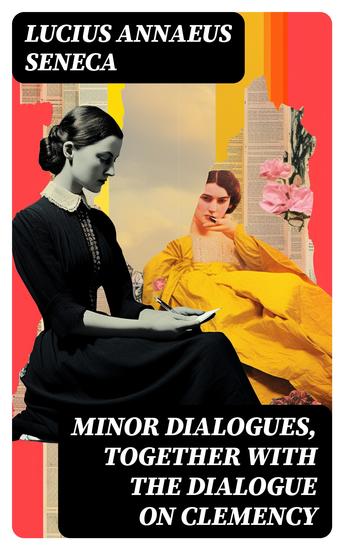
Minor Dialogues Together With the Dialogue on Clemency - Enriched edition - cover

Minor Dialogues Together With the Dialogue on Clemency - Enriched edition

Lucius Annaeus Seneca

Übersetzer Aubrey Stewart

Verlag: DigiCat

  • 0
  • 0
  • 0

Beschreibung

Lucius Annaeus Seneca's "Minor Dialogues, Together With the Dialogue on Clemency" serves as a rich repository of Stoic philosophy, encapsulated in a series of thought-provoking dialogues that address moral questions, ethical behavior, and the nature of compassion. In his signature concise and poignant style, Seneca employs a dialectical approach, bringing philosophical concepts to life through conversational exchanges that engage the reader in reflection. This work not only situates Stoicism within a broader literary context of Roman philosophy but also reflects the tumultuous sociopolitical landscape of his time, highlighting the relevance of virtue and moral duty amidst chaos. Seneca, a statesman, dramatist, and philosopher, faced the complexities of life in ancient Rome, marked by political intrigue and personal tragedy. His own experiences with power, loss, and exile profoundly shaped his philosophical inquiries, leading him to prioritize the cultivation of wisdom and moral fortitude. As a noted Stoic thinker, his dialogues are informed by his commitment to ethics, positing that true strength lies in the mastery of one's self and emotions. Readers seeking insights into Stoicism's practical applications will find "Minor Dialogues" an invaluable text. As an accessible yet profound introduction to ethical philosophy, Seneca's work encourages readers to contemplate their own lives and the pivotal role of virtue and empathy, making it a timeless read for those eager to explore the depths of human behavior and moral philosophy.

In this enriched edition, we have carefully created added value for your reading experience:
- A comprehensive Introduction outlines these selected works' unifying features, themes, or stylistic evolutions.
- The Author Biography highlights personal milestones and literary influences that shape the entire body of writing.
- A Historical Context section situates the works in their broader era—social currents, cultural trends, and key events that underpin their creation.
- A concise Synopsis (Selection) offers an accessible overview of the included texts, helping readers navigate plotlines and main ideas without revealing critical twists.
- A unified Analysis examines recurring motifs and stylistic hallmarks across the collection, tying the stories together while spotlighting the different work's strengths.
- Reflection questions inspire deeper contemplation of the author's overarching message, inviting readers to draw connections among different texts and relate them to modern contexts.
- Lastly, our hand‐picked Memorable Quotes distill pivotal lines and turning points, serving as touchstones for the collection's central themes.
Verfügbar seit: 20.11.2023.
Drucklänge: 355 Seiten.

Weitere Bücher, die Sie mögen werden

  • A Witch's Book of Terribles - Legends Tales & Parables - cover

    A Witch's Book of Terribles -...

    Wycke Malliway

    • 0
    • 0
    • 0
    This enchanting book teaches practical witchcraft through wonderfully whimsical stories suitable for all ages.   For all witches, or for the witches in all of us, the tales in this collection will serve you well. Each enchanting story contained within A Witch’s Book of Terribles offers a lesson rooted in the art of witchcraft that a walker of any path will be sure to learn from. While witches have long been the impetus of fairy tales, it is now their turn to sit at the heart of the matter. Whether it is a fable of the timid Aunt Brynelda or a legend of the primal Nonna Noxa, there is much to be garnered from each witch’s tale, both great and terrible . . .  A Witch’s Book of Terribles is a collection of story-based lessons on witchcraft told through fairy tales, poems, and anecdotes to give witches advice and warnings about the magical path.
    Zum Buch
  • The Genealogy of Morals - cover

    The Genealogy of Morals

    Friedrich Nietzsche

    • 0
    • 0
    • 0
    Friedrich Nietzsche's genealogical analysis in The Genealogy of Morals is an exploration of the historical development of certain moral values, specifically those associated with notions of justice, honour, and good. Taking a critical stance against the Enlightenment-era reception of Kantian morality, Nietzsche argues that these values were formed through a process of power dynamics rather than abstract principles. Read in English, unabridged.
    Zum Buch
  • The Broken Mirror - Adapting in the Abyss of Simulation - cover

    The Broken Mirror - Adapting in...

    Halasius Bradford

    • 0
    • 0
    • 0
    In an age where connectivity has reached unprecedented heights, humanity paradoxically experiences intensified solitude. The Internet, social media, and digital communication tools promise constant interaction, yet beneath the veneer of perpetual engagement lies a profound sense of detachment. We have woven an expansive digital web, intricately threading through every dimension of our lives. Yet, far from binding us together in deeper and more meaningful ways, this net has fragmented our relationships, distorted our sense of self, and left us lonelier than ever. 
    Indeed, the irony of our modern era is that as connectivity increases, isolation intensifies. Rather than fostering intimacy, the digital world frequently reduces interactions to hollow performances, substituting genuine human connection with a relentless pursuit of validation. We inhabit a world where messages traverse the globe instantaneously, yet conversations grow superficial; friendships are quantified by follower counts rather than measured by emotional depth; and love becomes mediated through glowing screens, stripped of warmth, tactile presence, and vulnerable authenticity.
    Zum Buch
  • Claiming Alexander - cover

    Claiming Alexander

    Leo Sparx

    • 0
    • 0
    • 0
    For readers who enjoy a dark mysterious plot with their sexy books, this m/m (and m/m/m) series is just as sinister as it is kinky and was inspired by the Edgar Allan Poe tale, “The Fall of the House of Usher.” 
    A gay otter boy (meaning: a young fit man who does not shave his body hair) named Alexander, is an out-of-work huslter in his small town by the ocean. In a sudden change of luck he finds himself drawn to a strange mansion and inside, a mysterious millionaire pulls him into a world of sinister extravagance and sexual discipline. With a background as a sex worker, Alexander is no stranger to trading his furry body for money, but he was never expecting to develop deep feelings for his new eccentric keeper. 
    With an introduction to the BDSM lifestyle, the mostly submissive Alexander learns a great deal about himself and his master through whipping, CBT, endurance, and being collared to an older man. Unsure if he is a toy, pet, or partner to the Daddy of the manor he used to think was abandoned, Alexander navigates the secrets of the interior with another otter boy from his past. Things get complicated further when emotions for the other hustler in the strict hierarchy come to the surface and he breaks one of the many rules within the house. 
    Including paranormal elements and unexpected magic, this queer erotic romance series begins in the fall season at the House of Otter then twists and turns through the seasons. Expect: jockstraps and hairy men, Daddy and Boy dynamics, bondage, sadomachochism, harnesses, dominance, fetish gear, nipple play, mystical prophecies, destiny, and whispered words with the power to open the door to forbidden fantasies. In the end, Alexander must decide how much of his body and sexual freedom he is willing to surrender in exchange for a life of opulent luxury. 
    It’s Edgar Allan Poe but with a queer, kinky, and paranormal twist!
    Zum Buch
  • Famous Campaigns of World War I The: The History of the Great War’s Most Important Battles - cover

    Famous Campaigns of World War I...

    Charles River Editors

    • 0
    • 0
    • 0
    World War I, also known in its time as the “Great War” or the “War to End all Wars”, was an unprecedented holocaust in terms of its sheer scale. Fought by men who hailed from all corners of the globe, it saw millions of soldiers do battle in brutal assaults of attrition which dragged on for months with little to no respite. Tens of millions of artillery shells and untold hundreds of millions of rifle and machine gun bullets were fired in a conflict that demonstrated man’s capacity to kill each other on a heretofore unprecedented scale, and as always, such a war brought about technological innovation at a rate that made the boom of the Industrial Revolution seem stagnant.  
    	The enduring image of World War I is of men stuck in muddy trenches, and of vast armies deadlocked in a fight neither could win. It was a war of barbed wire, poison gas, and horrific losses as officers led their troops on mass charges across No Man’s Land and into a hail of bullets. While these impressions are all too true, they hide the fact that trench warfare was dynamic and constantly evolving throughout the war as all armies struggled to find a way to break through the opposing lines. 
    	Though World War I is almost synonymous with trench warfare, that method of combat was nothing new. There had been extensive use of trenches during the later stages of the American Civil War (1864-1865), and trench warfare was constant during the Second Boer War (1899-1902), the Russo-Japanese War (1904-1905), and the Balkan Wars (1912-1913). These conflicts showed that modern firepower combined with entrenched positions gave a decisive advantage to the defender, yet European observers failed to learn any lessons from these conflicts, and the scale of trench warfare in World War I far eclipsed anything seen before or since, especially on the Western Front.
    Zum Buch
  • The Truth is Reality Two Point Zero - cover

    The Truth is Reality Two Point Zero

    Eileena Warehouser

    • 0
    • 0
    • 0
    The first step in problem solving is: PROPERLY IDENTIFYING THE PROBLEM. Often, we attempt to resolve symptoms of the real true problem. Often, we attempt to solve related or resulting problems. Often, we undertake the easiest solution, without ever solving the real true problem. Then we wonder why the problem keeps returning. 
    Race issues, office politics, personal relationships, male chauvinism, female catty/pettiness, and jealousy all stem from one source. In this book I will tell you what is the PROPERLY IDENTIFIED PROBLEM.
    Zum Buch