Rejoignez-nous pour un voyage dans le monde des livres!
Ajouter ce livre à l'électronique
Grey
Ecrivez un nouveau commentaire Default profile 50px
Grey
Abonnez-vous pour lire le livre complet ou lisez les premières pages gratuitement!
All characters reduced
The Greatest Feminist Classics in One Volume - Including 100+ Biographies & Memoirs of the Most Influential Women in History - cover

Veuillez nous excuser, les droits de la maison d'édition de ce livre ne permettent pas de le lire ce livre depuis le pays depuis lequel vous vous connectez.

The Greatest Feminist Classics in One Volume - Including 100+ Biographies & Memoirs of the Most Influential Women in History

Henrik Ibsen, Charlotte Brontë, Marietta Holley, Henry James, Louisa May Alcott, John Stuart Mill, Zona Gale, Jane Austen, Thomas Hardy, Edith Wharton, Gene Stratton-Porter, Rebecca Harding Davis, Margaret Fuller, Elizabeth Cady Stanton, Elia Wilkinson Peattie, Virginia Woolf, Mary Wollstonecraft, Willa Cather, Nathaniel Hawthorne, Mary Johnston, Grant Allen, Theodore Dreiser, Kate Chopin, Sojourner Truth, Charlotte Perkins Gilman, Harriet Martineau, Fanny Burney, Mary Ware Dennett, Julia Ward Howe, Ada Cambridge, H. G. Wells, Sarah H. Bradford, D. H. Lawrence, Nikolai Leskov, Lucy Maud Montgomery, Leo Tolstoy, Margaret Deland, Elizabeth Gaskell, Margaret Oliphant, Margaret Mitchell, Elizabeth von Arnim, Elizabeth Burgoyne Corbett

Traducteur Alfred Edward Chamot

Maison d'édition: e-artnow

  • 0
  • 0
  • 0

Synopsis

e-artnow presents to you this meticulously edited collection of feminist masterpieces - from fictional  protagonists who influenced generations of young women to the real heroines of the past, their life stories and their legacy. Fiction: Camilla (Fanny Burney) Maria; Or, The Wrongs of Woman (Mary Wollstonecraft) Pride and Prejudice (Jane Austen) Jane Eyre (Charlotte Brontë) The Scarlet Letter (Nathaniel Hawthorne) Lady Macbeth of the Mzinsk District (Nikolai Leskov) Hester (Margaret Oliphant) Life in the Iron Mills (Rebecca Davis) Little Women (Louisa May Alcott) The Portrait of a Lady (Henry James) Anna Karenina (Leo Tolstoy) Tess of the d'Urbervilles (Thomas Hardy) North and South (Elizabeth Gaskell) The Yellow Wallpaper (Charlotte Perkins Gilman) Herland (Charlotte Perkins Gilman) A Doll's House (Henrik Ibsen) Hedda Gabler (Henrik Ibsen) The Awakening (Kate Chopin) The Woman Who Did (Grant Allen) Miss Cayley's Adventures (Grant Allen) New Amazonia (Elizabeth Corbett) A Girl of the Limberlost (Gene Stratton-Porter) The Iron Woman (Margaret Deland) My Ántonia (Willa Cather) The House of Mirth (Edith Wharton) Summer (Edith Wharton) Sister Carrie (Theodore Dreiser) Sisters (Ada Cambridge) Hagar (Mary Johnston) Samantha on the Woman Question (Marietta Holley) The Precipice (Elia Wilkinson Peattie) To the Lighthouse (Virginia Woolf) Miss Lulu Bett (Zona Gale) Lady Chatterley's Lover (D. H. Lawrence) The Enchanted April (Elizabeth von Arnim) Gone with the Wind (Margaret Mitchell) Emily of New Moon (Lucy Maud Montgomery) Memoirs: Madame Vigée Lebrun Jane Austen Caroline Herschel Mrs. Seacole Elizabeth Cady Stanton Emmeline Pankhurst Biographies: Lucretia Sappho Aspasia of Cyrus Portia Octavia Cleopatra Julia Domna Zenobia Valeria Hypatia Roswitha the Nun Marie de France Mechthild of Magdeburg Joan of Arc Catharine of Arragon Anne Boleyn Queen Elizabeth Mary, Queen of Scots Queen Anne Maria Theresa Marie Antoinette Madame de Stael Augustina Saragoza Charlotte Brontë Florence Nightingale Harriet Tubman
Disponible depuis: 02/12/2023.
Longueur d'impression: 19509 pages.


D'autres livres qui pourraient vous intéresser

  • A Suspicious Science - The Uses of Psychology - cover

    A Suspicious Science - The Uses...

    Rami Gabriel

    • 0
    • 0
    • 0
    From self-help to medication, therapy, and cognitive neuroscience, this book traces the uses and limits of psychology. Offering a systematic exploration of the ways in which psychology is used in contemporary society, it refines our understanding of the extent of the field. In addition to conceptual analysis of how science, truth, biology, mind, and meaning intersect and interact in the mind sciences, A Suspicious Science draws from history and anthropology to articulate an interdisciplinary multi-level form of psychology that may serve to orient the field. The book synthesizes debates in psychology and philosophy concerning methodology and the nature of explanation with debates about its practical context as a human science. Ultimately, it suggests psychology provides us myths and rituals that ground a particular sense of meaning and motivation in our lives. By aligning cultural, emotional, and philosophical uses of psychology, this book clarifies a synoptic, humanistic model of the mind within the human sciences.
    Voir livre
  • Leland Stanford: A short biography - 5 Minutes: Short on time - long on info! - cover

    Leland Stanford: A short...

    5 Minutes, 5 Minute Biographies,...

    • 0
    • 0
    • 0
    Leland Stanford, railroad king: Life and work in a short biography! Everything you need to know, brief and concise. Infotainment, education and entertainment at its best!
    Voir livre
  • Make Believe - On Telling Stories to Children - cover

    Make Believe - On Telling...

    Mac Barnett

    • 0
    • 0
    • 0
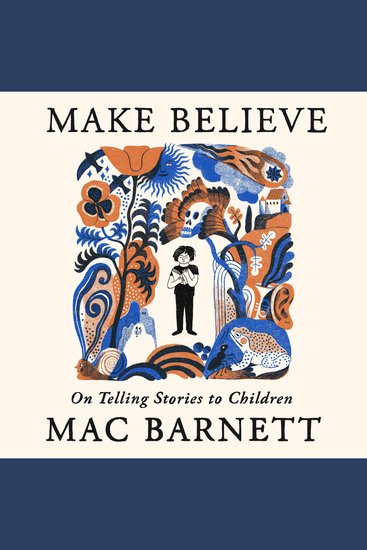
    Make Believe is a book for adults about books for children, a rallying cry for art and imagination, and a celebration of the power of storytelling in all our lives.  Mac Barnett, the beloved, bestselling children's author and U.S. National Ambassador for Young People's Literature, urges us to think expansively about the potential of children’s books—and the particular brilliance of young readers:  What if children are a great audience for art?What if they are in fact better equipped to engage deeply with stories than adults?What if humans’ ability to appreciate art is, if not innate, awakened early in childhood?  Well, then we’d better do our best to make some good kids’ books.   Barnett has published more than 60 children’s books, which have been translated into 30+ languages and have sold more than 5 million copies worldwide, winning many international prizes along the way. Make Believe is his incisive, intimate, and timely invitation to approach children’s literature not only as an art form worthy of deep study and criticism, but as a portal into the lives of the children. And at a time when we are faced with a national literacy crisis, he champions the profound joys of literature and the importance of reading for pleasure.   Written with humor and academic rigor, Make Believe reads like a letter from one’s smartest and funniest friend.
    Voir livre
  • Radical Shifts - The Overthrow of Power during the French Revolution (3 in 1) - cover

    Radical Shifts - The Overthrow...

    Amara Blackwood

    • 0
    • 0
    • 0
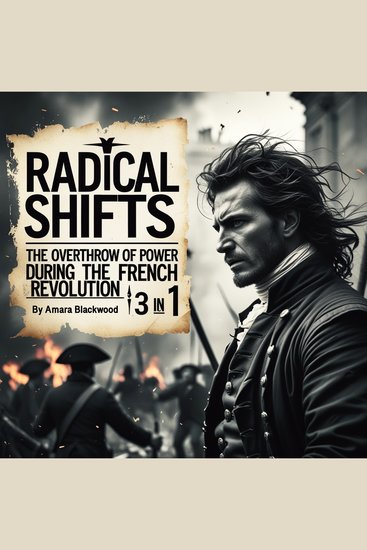
    This book combo explores the dramatic Storming of the Bastille, a powerful symbol of the oppressive monarchy, where revolutionaries took up arms in a bold act of defiance against royal authority. This event, widely considered the beginning of the revolution, sparked widespread civil unrest and the rise of revolutionary fervor across France. 
    The narrative continues with the Fall of the Monarchy, a seismic shift that ended centuries of royal rule and led to the execution of King Louis XVI and Queen Marie Antoinette. This momentous event not only marked the end of the French monarchy but also set the stage for the rise of radical political forces and the reshaping of French society. The final section covers the Women's March on Versailles, an event in which thousands of women, driven by hunger and frustration, marched to the royal palace, demanding food and accountability from the king. This march played a critical role in undermining the monarchy and bringing the Revolution to the heart of the French government. 
    Together, these events demonstrate how grassroots movements and bold actions by ordinary people, driven by a desire for justice and equality, led to one of history's most dramatic power shifts. Radical Shifts highlights the courage, sacrifice, and resolve of those who fought for a radically new France, laying the foundation for modern democracy and equality.
    Voir livre
  • Chicago - A Biography - cover

    Chicago - A Biography

    Dominic A. Pacyga

    • 0
    • 0
    • 0
    Chicago has been called by many names. Nelson Algren declared it a “City on the Make.” Carl Sandburg dubbed it the “City of Big Shoulders.” Upton Sinclair christened it “The Jungle,” while New Yorkers, naturally, pronounced it “the Second City.” 
    At last there is a book for all of us, whatever we choose to call Chicago. In this magisterial biography, historian Dominic Pacyga traces the storied past of his hometown, from the explorations of Joliet and Marquette in 1673 to the new wave of urban pioneers today. The city’s great industrialists, reformers, and politicians—and, indeed, the many not-so-great and downright notorious—animate this book, from Al Capone and Jane Addams to Mayor Richard J. Daley and President Barack Obama. But what distinguishes this book from the many others on the subject is its author’s uncommon ability to illuminate the lives of Chicago’s ordinary people. Raised on the city’s South Side and employed for a time in the stockyards, Pacyga gives voice to the city’s steelyard workers and kill floor operators, and maps the neighborhoods distinguished not by Louis Sullivan masterworks, but by bungalows and corner taverns. 
    Filled with the city’s one-of-a-kind characters and all of its defining moments, Chicago: A Biography is as big and boisterous as its namesake—and as ambitious as the men and women who built it.
    Voir livre
  • Moors The: The History of the Muslims Who Lived in North Africa and Europe during the Middle Ages - cover

    Moors The: The History of the...

    Editors Charles River

    • 0
    • 0
    • 0
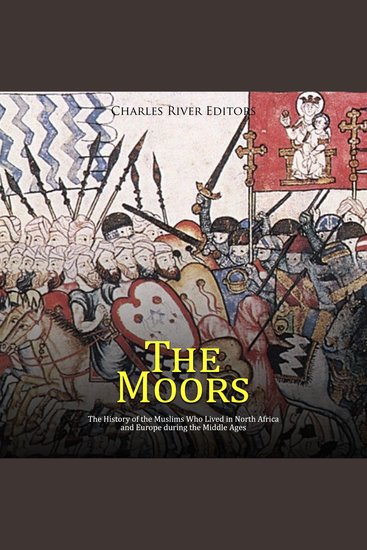
    The term Moor is a historical rather than an ethnic name. It is an invention of European Christians for the Islamic inhabitants of Maghreb (North Africa), Andalusia (Spain), Sicily and Malta, and was sometimes use to designate all Muslims. It is derived from Mauri, the Latin name for the Berbers who lived in the Roman province of Mauretania, which ranged across modern Algeria and Morocco. Saracen was another European term used to designate Muslims, though it usually referred to the Arabic peoples of the Middle East and derives from an ancient name for the Arabs, Sarakenoi. The Muslims of those regions no more refer to themselves by that term than those of North Africa call themselves Moors. Maghreb, or al-Maghreb, is a historical term used by Arabic Muslims for the territory of coastal North Africa from Alexandria to the Atlantic Coast. It means “The West” and is used in opposition to Mashrek, “The East,” used to refer to the lands of Islam in the Middle East and north-eastern Africa. The Berbers refer to the region in their own language as Tamazgha. In a limited, precise sense it can also refer to the Kingdom of Morocco, the proper name of which is al-Mamlakah al-Maghribiyyah, “Kingdom of the West.” 
    The history of the Spanish Peninsula is closely bound to that of the Moors. The term “Spain” was not in wide use until the region was united by the monarchs of Aragon and Castile, and the Moors called the lands they ruled in the Iberian Peninsula Al-Andalus, traditionally thought to be an Arabic transliteration of Vandal, the Germanic tribe which briefly ruled the region in the early fifth century. The English name Andalusia derives from the Spanish Andalucia, which is still used by Spain to name its southern region. Not surprisingly, three religions attempting to coexist during medieval times resulted in nearly incessant conflicts.
    Voir livre