Begleiten Sie uns auf eine literarische Weltreise!
Buch zum Bücherregal hinzufügen
Grey
Einen neuen Kommentar schreiben Default profile 50px
Grey
Jetzt das ganze Buch im Abo oder die ersten Seiten gratis lesen!
All characters reduced
A good woman - cover

A good woman

Louis Bromfield

Verlag: Good Press

  • 0
  • 0
  • 0

Beschreibung

In "A Good Woman," Louis Bromfield weaves a poignant narrative set against the backdrop of 1930s rural America, exploring themes of love, integrity, and the complexities of social expectations. The story revolves around a resilient woman who navigates the intricacies of personal sacrifice and societal norms, rendered with Bromfield's characteristic lyrical prose. The novel's rich descriptions and sharp characterizations reflect the author's deep appreciation for nature and human motivations, situating this work within the broader context of American literature that grapples with class and gender issues during the interwar period. Louis Bromfield, an acclaimed author and conservationist, drew heavily on his own experiences farming in Ohio, where he developed a keen interest in sustainable agriculture and the interplay between human life and the environment. His illustrious career, bolstered by a Pulitzer Prize in 1927, reflects a commitment to exploring the human condition, while his travels across Europe and dedication to ecological causes informed his portrayal of multifaceted characters struggling with moral dilemmas and personal growth. "A Good Woman" offers readers a rich exploration of an era marked by transformation and resilience. For those interested in character-driven stories that delve into the heart of human relationships against the backdrop of social change, this novel is a compelling choice that will resonate with both fans of classic literature and contemporary readers alike.
Verfügbar seit: 02.03.2025.
Drucklänge: 90 Seiten.
Weitere Bücher, die Sie mögen werden

  • A Maker of History - A vanished brother a secret document and an international mystery that could change Europe - cover

    A Maker of History - A vanished...

    E. Phillips Oppenheim

    • 0
    • 0
    • 0
    When young Englishman Guy Poynton accidentally witnesses a secret meeting on a remote railway line, he unknowingly becomes entangled in a dangerous international conspiracy. A stray official document comes into his possession, and soon after, he vanishes in Paris under mysterious circumstances. 
    His sister Phyllis arrives to find him missing, and her desperate search leads into the shadowy world of cafés, spies, diplomats, political secrets, and hidden European tensions. As Sir George Duncombe and others are drawn into the mystery, personal loyalty, romance, and national danger collide in a fast-moving tale of suspense and intrigue. 
    First published in 1905–1906, A Maker of History is a classic thriller by E. Phillips Oppenheim, one of the great popular writers of early twentieth-century mystery and espionage fiction. This Molina Classics Publishing audio edition is narrated by Richard A Molina.
    Zum Buch
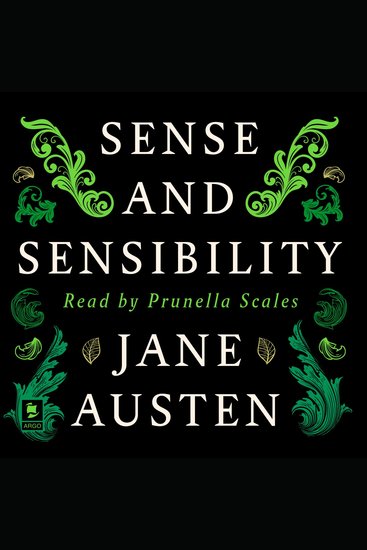
  • Sense and Sensibility (Argo Classics) - cover

    Sense and Sensibility (Argo...

    Jane Austen

    • 0
    • 0
    • 0
    William Collins Books and Decca Records are proud to present ARGO Classics, a historic catalogue of classic fiction read by some of the world’s most renowned voices. Originally released as vinyl records, these expertly abridged and remastered stories are now available to download for the first time. 
    The three Dashwood sisters move to a cottage in Devon with their widowed mother. There, they experience love, romance and heartbreak. The older sister, Elinor, is more sensible, steadfast and wary; the middle sister, Marianne, is more impulsive and idealistic. Each will find love: but the routes that take them there will be very different. 
    This beloved classic, famously adapted for film by Ang Lee and Emma Thompson, has all its wit and nuance brought to sparkling life by Prunella Scales. 
    For fans of Coralie Bickford-Smith (The Brothers Karamazov), Sheba Blake (A Room With A View), M. L. Rio (Hot Wax), Diane Long Hoeveler (Castle of Wolfenbach), and Gill Hornby (Miss Austen).
    Zum Buch
  • Too Gentlemanly - An Elizabeth and Darcy Story - cover

    Too Gentlemanly - An Elizabeth...

    Timothy Underwood

    • 0
    • 0
    • 0
    Mr. Darcy: Controlling, arrogant, enraging… unfairly handsome. 
    Fitzwilliam Darcy had grown unused to female society during his five years of seclusion since Georgiana had her illegitimate child. That was why he accidentally insulted Mrs. Bingley’s sister. And why he kept thinking about her. When Georgiana became pregnant with Wickham’s child, Darcy had not made her marry the man Colonel Fitzwilliam found to preserve her reputation. She had begged him not to, and Darcy would do anything for his sister. He would even attend the Hertfordshire assembly with Mr. Bingley, because Georgiana wanted him to enjoy society. Bingley’s neighbors had refused to let a fallen woman like Georgiana amongst them. Darcy would not pretend to be pleased to meet them. 
    Elizabeth thought Mr. Darcy was a grand philanthropist: His rudeness provided everyone with a handsome and rich man to hate. But why, if he was actively determined to sneer at all the company, had he bothered to attend their assembly? Still, he was a very handsome man. 
    Darcy needed to overcome his bad first impression if he wanted Elizabeth. But he was rich, handsome and clever. It would be easy.
    Zum Buch
  • Murder from the Memoirs of Constantine Dix - From their pens to your ears genius in every story - cover

    Murder from the Memoirs of...

    Barry Pain

    • 0
    • 0
    • 0
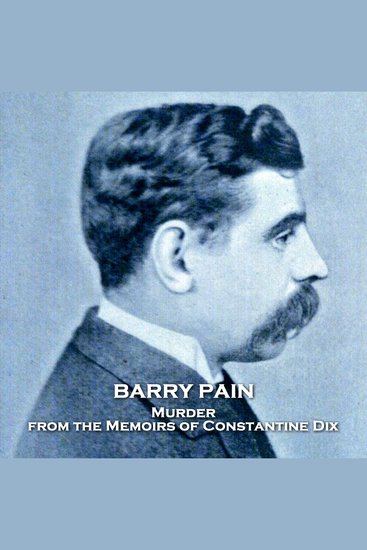
    Barry Eric Odell Pain was born at 3 Sydney Street in Cambridge on 28th September 1864. He was one of 4 children. 
    He was educated at Sedbergh School and then Corpus Christi College, Cambridge where he read classics and contributed to and edited Granta. 
    Four years of service as an Army coach followed before he moved to London. In 1889, Cornhill Magazine published his short story ‘The Hundred Gates’.  This opened the way for Pain to advance his literary career on several fronts. He became a contributor to Punch and The Speaker, as well as joining the staff of both the Daily Chronicle and Black and White.  
    In 1897 he succeeded Jerome K Jerome as editor of To-Day but still contributed regularly, until 1928, to the Windsor Magazine. 
    It is often said that Pain was discovered by Robert Louis Stevenson, who compared his work to that of Guy de Maupassant.  It’s an apt comparison. Pain was also a master of disturbing prose but able to inject parody and light comedy into many of his works.  A simple premise could in his hands suddenly expand into a world very real but somehow emotionally fraught and on the very edge of darkness as many of these short stories demonstrate.   
    Despite applying his talents to several genres and forms today Pain is more readily thought of, especially during the first decade of the 20th Century, as perhaps the leading British humorist of his day.  These stories reveal a darker side and beg to differ. 
    Barry Pain died on 5th May 1928 in Bushey, Hertfordshire.
    Zum Buch
  • The Napoleon of Notting Hill - cover

    The Napoleon of Notting Hill

    G. K. Chesterson

    • 0
    • 0
    • 0
    When dystopian futures don’t feel so future at all…   Four decades before George Orwell wrote 1984, The Napoleon of Notting Hill defined the dystopian genre. One of the first dystopian comedies, instead of a dark vision of jackboots and surveillance states, G.K. Chesterton explores the question of what a society would look like if no one could take a joke.   In this future England, each new king is decided by lottery. When Auberon Quin, a man who cares only for a good joke, is chosen to be the next king, he resolves to spend his reign teaching his fellow governors how big a joke can really be.   While most district leaders are content to put up with Auberon’s schemes even when he insists upon elaborate costumes and heraldry, one provost takes his games much too seriously. When Adam Wayne, the Provost of Notting Hill, takes a military stand against his fellow leaders and seeks to defend his tiny fiefdom by any means necessary, Auberon’s joke has gone too far.   At a time when the dystopian genre is defined by hopelessness, Chesterton’s dry wit and tongue-in-cheek humor are a welcome respite. Follow Auberon and Wayne as they ponder the meaning of humor and virtue in a world where the swords are all too real and the defense of one’s pride may well result in blood in the streets.   Foreword by Dale Ahlquist, president of the Society of G.K. Chesterton.
    Zum Buch
  • The Ghost in the Cupboard Room - From their pens to your ears genius in every story - cover

    The Ghost in the Cupboard Room -...

    Wilkie Collins

    • 0
    • 0
    • 0
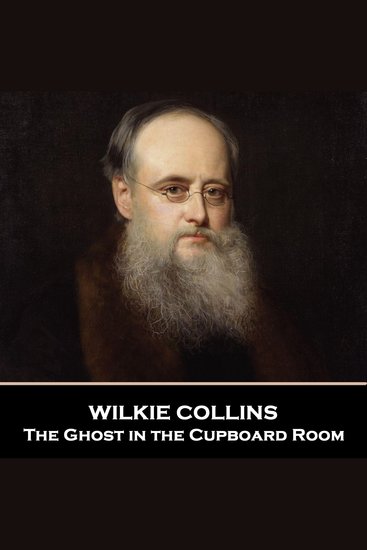
    Wilkie Collins was born on 8th January 1824 in Marylebone, London.  
    The family moved several times in his early years before, at 12, they travelled to France and Italy for 2 years where the sights and atmosphere made a deep and lasting impression on him. 
    He resumed his education at Mr Cole’s private boarding school in Highbury, Islington.  Here, he began his literary career under unusual circumstances: the school bully would give him no peace until he had been told a bedtime story.  This ‘little brute’ helped create one of England’s greatest writers.  
    On leaving school, in 1841, he became a clerk at a tea merchant before, 2 years later, publishing his first short story.  However, his first novel was rejected and remained so during his lifetime.  
    A brief stint at Lincoln’s Inn to please his father and to acquire a steady income was halted by his father’s death.  Collins then wrote and published his fathers’ memoirs.  He then completed his legal education though he would never practice.  
    In March 1851, he was introduced to Charles Dickens and there now started a period of sustained literary output and a remarkable lifelong friendship.  His stories were published in Dicken’s magazines, and he toured with Dicken’s theatrical before the two of them travelled to the Continent. 
    By the early 1860’s worrying signs of ill-health appeared with rheumatic gout.  As it worsened, he sought respite and cures in German spa towns and gave up writing to help his recuperation. 
    His personal life had become very complicated.  He was living with the widowed Caroline Graves and conducting an affair with a much younger Martha Rudd.  With the serialised release of ‘The Moonstone’ and vicious attacks of gout Caroline left him and married another.  Collins was now prescribed opium and was soon its lifelong dependent.  Martha bore him two children and with the return of a now divorced Caroline Graves he now divided his time between the two women. 
    In 1874 he set aside writing to tour North America on a reading tour. 
    Throughout his later years he continued to write and publish.  In all 30 novels, 14 plays, 60 short stories and over a 100 non-fiction essays as well as many more collaborations with Dickens. 
    In 1884 the Society of Authors elected him as it’s Vice-President. 
    Wilkie Collins died from a paralytic stroke on September 23rd, 1889, in London. He was 65.
    Zum Buch