Begleiten Sie uns auf eine literarische Weltreise!
Buch zum Bücherregal hinzufügen
Grey
Einen neuen Kommentar schreiben Default profile 50px
Grey
Jetzt das ganze Buch im Abo oder die ersten Seiten gratis lesen!
All characters reduced
Pharmacoeconomics - Principles and Practice - cover

Pharmacoeconomics - Principles and Practice

Lorenzo Pradelli, Albert Wertheimer

Verlag: SEEd Edizioni Scientifiche

  • 0
  • 0
  • 0

Beschreibung

Resource constraints in healthcare and the increasing costs of new treatments have prompted the resorting to pharmacoeconomic studies. New techniques allow to tailor to the specificity of each situation, thus giving back accurate calculations and estimations.
The desire to publish a more updated version of “Pharmacoeconomics. Principle and Practice” fits into this frame and provide readers with the basic principles of this complex discipline. Compared with the version we published 10 years ago, new techniques were described, an entire new chapter about epidemiology was added, and the reference literature and the examples were updated.
The abstracts at the beginning of each chapter have the purpose to provide an overview and ease the finding of information. Readers are given also the possibility to test their knowledge thanks to the Questions and Answers sections.
Last but not least, the entire book underwent peer review, thus ensuring the highest quality level.
Verfügbar seit: 03.10.2022.

Weitere Bücher, die Sie mögen werden

  • Gladiators and Games - The Spectacles of Rome - cover

    Gladiators and Games - The...

    Rogan Fish

    • 0
    • 0
    • 0
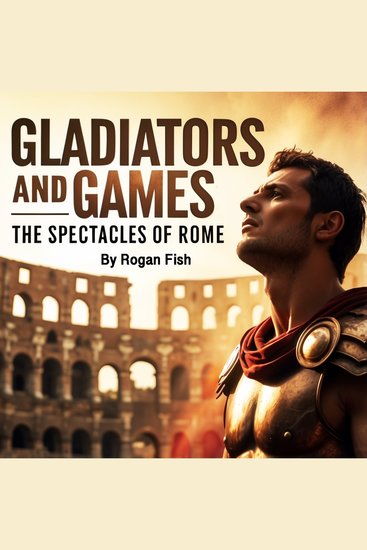
    The origins of gladiatorial games can be traced back to the ancient Roman Republic, although their roots extend even further back into earlier civilizations. While the gladiatorial contests that are iconic today were popularized by the Romans, the initial concept of such games was deeply influenced by traditions and customs from earlier societies, especially the Etruscans. In fact, the Etruscans are often credited with introducing the practice of gladiatorial combat to the Roman world. 
    The earliest gladiatorial contests were likely held as part of funeral rites. Roman aristocrats and leaders believed that these violent spectacles would honor the deceased and ensure their passage into the afterlife. These games, known as munera, were originally private events, organized by wealthy individuals to display their power and wealth, while offering a form of public entertainment. The idea was that the bloodshed and valor shown by the fighters would symbolize a tribute to the dead and possibly even appease the spirits of the departed. The number of gladiators involved in these early contests was small, and the fights were often staged in temporary arenas. 
    The practice gradually evolved from being a private funeral tradition into a state-sponsored spectacle, especially during the 3rd century BCE, as the Republic expanded and began to look for ways to solidify its control over its vast territories. The games became a tool of political propaganda, used by ambitious politicians and generals to gain favor with the masses. By the time of the Roman Empire, these gladiatorial contests had grown to monumental proportions, with arenas like the Colosseum hosting thousands of spectators.
    Zum Buch
  • Mercury and Gemini: The History and Legacy of NASA’s Groundbreaking Spaceflight Programs - cover

    Mercury and Gemini: The History...

    Editors Charles River

    • 0
    • 0
    • 0
    The successful Apollo 11 mission was certainly an astonishing technological triumph, but what is less well remembered now are that many programs preceded Apollo and were essential to its success. Project Mercury was one of those, and in many ways it represented the greatest step forward in terms of the conquest of space. Before Project Mercury, there was no certainty that a human could survive the rigors of a space launch or live outside Earth’s atmosphere. There was no agreement on just what an astronaut should be, and various individuals involved debated whether they should be pilots, technicians, scientists, or even merely observers in an automated craft. Before Project Mercury, no one was entirely certain what a rocket capable of taking a person into space would look like, or even whether building such a craft was within the capabilities of engineering in the 1950s. 
    Gemini also marked another important milestone as America finally surpassed the Soviet Union in space technology. Before Gemini, the US was playing a desperate game of catch-up as it attempted to match Soviet accomplishments. The last Project Mercury flight launched in May 1963, and before then, Russia had put the first satellite in Earth’s orbit and the first man in space and had followed these with longer flights than the tiny Mercury spacecraft. In terms of military significance, it was recognized that the ability to dominate space was very important, and to many people in America, it seemed that Russia was well on the way to doing this. No one could have guessed that it would be almost three years before the next American manned space flight occurred when Gemini 3 left the launch pad in March 1965. It seemed to many people that the Russian lead in space exploration had become unassailable and, in order to reestablish the credibility of the US space program, the Gemini flights simply had to succeed.
    Zum Buch
  • Tao Te Ching - cover

    Tao Te Ching

    Anonym

    • 0
    • 0
    • 0
    A book of only five thousand characters—yet it can transform an entire life.
    For over two millennia, the Tao Te Ching has guided seekers toward balance, clarity, and effortless living. Through poetic teachings on humility, patience, leadership, and the nature of the Tao, Laozi reveals how to move with the rhythm of the universe rather than against it. Its wisdom is simple, profound, and endlessly renewing.
    
    Celebrated as "one of the greatest spiritual texts ever written," this classic speaks to readers across cultures and generations with its quiet power and timeless truth. Whether read for insight, meditation, or daily reflection, every line offers a doorway to deeper understanding.
    
    If you seek a gentler path, a calmer mind, or wisdom that feels both ancient and newly alive, this book will become a lifelong companion.
    
    Open the book—and step into the Way that flows through all things.
    Zum Buch
  • Attila the Hun - The Warfare Strategies and Legends of the Hunnic Empire - cover

    Attila the Hun - The Warfare...

    Kelly Mass

    • 0
    • 0
    • 0
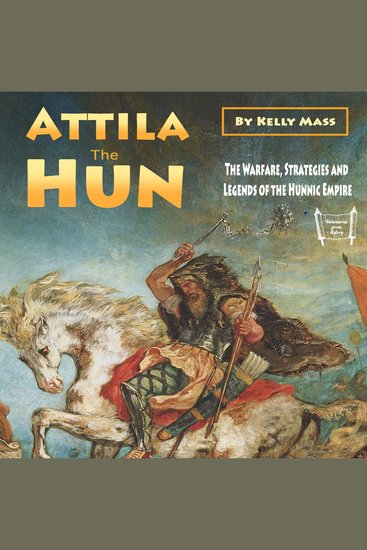
    You may have heard about him: Attila the Hun. Let's discover who this individual actually was and why he has such a bad track record of being a callous, aggressive conqueror in the first millennium after Christ. Attila the Hun was the ruler of the Huns from the year 434 till his death in the month of March in the year 453. Also, he was the leader of a tribal realm which consisted mainly of Huns, Ostrogoths, Alans and Bulgars, to name a few, in Central Europe and in Eastern Europe. 
    In this guide, you will learn more about the wars, his enemies, the battles around Rome, his life, his death, and his legacy. Some of the information about his has been falsely attributed to certain details because of how much has been lost in historical records, but we can still get a slightly accurate image of who he was, what he did, and why he has become such an infamous figure.
    Zum Buch
  • The Wonderful Colors of Paradise in Education - cover

    The Wonderful Colors of Paradise...

    Andi Sulistiadi

    • 0
    • 0
    • 0
    It's a memoir of the journey of a school principal who conducted research in the endogenous hinterland of Baduy culture to find an accurate education system for non-formal schools based on local wisdom. This book is dedicated to Indonesian & worldwide education accompanied by an album containing songs with emotional nuances for every event within.
    Zum Buch
  • Leaving the Golden Cage - A hands-on guide to starting and building your life science consulting practice - cover

    Leaving the Golden Cage - A...

    Norbert Farkas

    • 0
    • 0
    • 0
    This audiobook is for listeners who work in major, international life science companies and entertain the thought of starting their own venture, a consulting practice. 
    Have you ever felt that you have stopped growing, you do not really enjoy your work anymore or you have lost interest in what you do? Are you constantly worried that your position will be eliminated in an upcoming reorganization? Do you envy your friends when they talk about new careers and wish you also had the courage to change? Still, you prefer the nice paycheck every month, the competitive fringe benefits, a year-end bonus, and the flexible working conditions. You work with many bright colleagues who appreciate your talent and you don’t need to constantly prove yourself. 
    It sounds like you are stuck in the “golden cage.” You have a well-paid and (relatively) secure job, but somehow you feel trapped and itching for the next opportunity, potentially for your own consulting practice. 
    This audiobook will provide a hands-on guide, some personal examples, and further reading on how to break down this ambitious goal to digestible steps and start working on your ambition today. You will discover:Your motivation—why you would like to have this businessWhat you can do to prepare and incubate your idea while you are still employedHow to set up the essential business infrastructureHow to find and acquire your (first) clientsEven more importantly, how to serve your customers splendidlyIf your venture is growing, how you can add (more) value as the founderHow to avoid “founder burnout” and preserve your physical and mental health. 
    My promise to you is to not waste your time and attention, give you a quick read and let you move on.
    Zum Buch