Begleiten Sie uns auf eine literarische Weltreise!
Buch zum Bücherregal hinzufügen
Grey
Einen neuen Kommentar schreiben Default profile 50px
Grey
Jetzt das ganze Buch im Abo oder die ersten Seiten gratis lesen!
All characters reduced
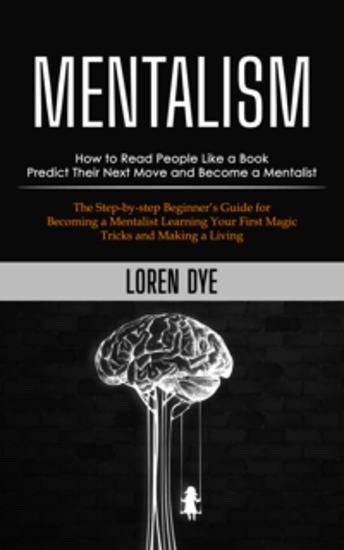
Mentalism: How to Read People Like a Book Predict Their Next Move and Become a Mentalist (The Step-by-step Beginner’s Guide for Becoming a Mentalist Learning Your First Magic Tricks and Making a Living) - cover

Mentalism: How to Read People Like a Book Predict Their Next Move and Become a Mentalist (The Step-by-step Beginner’s Guide for Becoming a Mentalist Learning Your First Magic Tricks and Making a Living)

Loren Dye

Verlag: Griffeth Mark

  • 0
  • 0
  • 0

Beschreibung

Dive into the captivating world of Mental Alchemy, where you'll uncover the secrets of mind reading, hypnotism, persuasion, and mentalism. This enthralling guide to understanding human behavior will take you on a thrilling journey through the depths of non-verbal communication, persuasion tactics, and NLP (neuro-linguistic programming), revealing the hidden power within the human mind.Have you ever imagined the possibilities if you could decipher the thoughts and emotions of others? In this transformative book, you'll learn how to interpret the unspoken language of body cues to unveil people's deepest intentions.In this guide, you will learn:Essential techniquesThe power of body languageMind-bending tricksBuilding a captivating performanceCareer opportunitiesBegin your journey into the realm of mentalism today and unlock your true potential as a master of mind reading and magic tricks. Get ready to dazzle and mystify those around you with your newfound skills and abilities.
Verfügbar seit: 19.03.2025.
Drucklänge: 70 Seiten.

Weitere Bücher, die Sie mögen werden

  • The Hiramic Legend - cover

    The Hiramic Legend

    Manly Palmer Hall

    • 0
    • 0
    • 0
    The Masonic legend of the building of Solomon's Temple does not in every particular parallel the Scriptural version, especially in those portions relating to CHiram Abiff. According to the Biblical account, this Master workman returned to his own country; in the Masonic allegory he is foully murdered. On this point A. E. Waite, in his New Encyclopædia of Freemasonry, makes the following explanatory comment: 
    "The legend of the Master-Builder is the great allegory of Masonry. It happens that his figurative story is grounded on the fact of a personality mentioned in Holy Scripture, but this historical background is of the accidents and not the essence; the significance is in the allegory and not in any point of history which may lie behind it."
    Zum Buch
  • Leadership for Sustainability - Saving the planet one school at a time - cover

    Leadership for Sustainability -...

    David Dixon

    • 0
    • 0
    • 0
    Mobilised by the rousing words and protests of Greta Thunberg, young people all over the globe are calling for more action to combat climate change and better protect their futures. Yet they cannot do this alone. They are reliant on people in positions of power to set the necessary changes in motion - and these people include their own school leaders operating within their own local communities.This book is a rallying cry for all schools to unleash their potential to deliver a brighter future for both their pupils and society at large.David Dixon draws on both his doctoral research and his 20 years' experience as a head teacher to set out how school leaders can embed eco-friendly practices in the day-to-day running of their schools that will also contribute to overall school improvement, including that recognised by inspectors.David weaves his guidance around the 'five Cs of sustainability' - captaincy, curriculum, campus, community and connections - to position sustainability as a natural vehicle for developing a type of fully integrated learning ecology and culture for the benefit of all.The book provides a detailed analysis of where we are now in terms of environmental impact, and lays out a road map to help schools move towards more effective eco-friendly provision. It shares practical examples of sustainability in schools and how these contribute to school improvement in the wider, more conventional sense too. Furthermore, each chapter concludes with a series of suggested strategies to encourage further thought and discussions among school stakeholders.Suitable for school leaders, teachers and teacher trainers - in both primary and secondary settings - and for any professionals who work in schools on environmental education or improvement projects.
    Zum Buch
  • The Mind Reset Manual - How to Reprogram Your Thinking - cover

    The Mind Reset Manual - How to...

    Caleb David

    • 0
    • 0
    • 0
    Take control of your thoughts and transform your life with 'The Mind Reset Manual,' a practical guide to reprogramming your thinking and creating lasting positive change. This book provides a step-by-step approach to identifying and changing limiting beliefs, negative thought patterns, and unproductive habits. Through actionable techniques, insightful exercises, and proven strategies, you'll learn to cultivate a positive mindset, enhance your mental clarity, and achieve your most ambitious goals. Discover how to rewire your neural pathways, build resilience, and create a life of greater purpose and fulfillment. 'The Mind Reset Manual' isn't just about changing your thoughts; it's about transforming your reality from the inside out. Whether you're seeking to improve your relationships, your career, or your overall well-being, this book will empower you to reprogram your thinking and create a life you love. Reset your mind and transform your life."
    Zum Buch
  • Caral-Supe Civilization - The First Civilization in the Americas and Peru's Oldest City - cover

    Caral-Supe Civilization - The...

    Rolf Hedger

    • 0
    • 0
    • 0
    The Caral-Supe civilization, considered the first known civilization in the Americas, emerged around 5,000 years ago in the arid coastal region of present-day Peru. Often referred to as the "mother civilization" of the Andes, Caral-Supe predates other significant Andean cultures such as the Inca by millennia. Its capital city, Caral, located in the Supe Valley, is regarded as one of the oldest urban centers in the world. The discovery of this civilization has drastically reshaped our understanding of early American societies, highlighting the complexity and sophistication of pre-Columbian cultures in the Americas. 
    The story of Caral-Supe began with its discovery in the early 1990s, when archaeologist Ruth Shady and her team identified the ancient city of Caral, which had been largely overlooked until then. The site’s impressive architectural features and its well-planned urban layout revealed that the civilization had a deep understanding of engineering, agriculture, and social organization. Caral-Supe flourished for more than a thousand years, from roughly 3000 BCE to 1800 BCE, and was a major center of culture, trade, and religion in the region. 
    Geographically, the Caral-Supe civilization developed in the Supe Valley, a narrow strip of land located between the Pacific Ocean and the Andes Mountains. This region, although dry and arid, was strategically positioned to foster trade and communication with other cultures. The valley provided fertile land for agriculture, supported by sophisticated irrigation systems, which allowed the Caral-Supe civilization to thrive in such an inhospitable environment. This innovative agricultural system was a key factor in their ability to sustain large urban populations and build monumental structures.
    Zum Buch
  • Free Thought and Official Propaganda - cover

    Free Thought and Official...

    Bertrand Russell

    • 0
    • 0
    • 0
    Russell discusses how governments and institutions use propaganda to shape the beliefs and actions of citizens. He argues that propaganda is often used to create a sense of unity and to suppress dissent, rather than to inform and educate the public. This can lead to a situation where people are unwilling or unable to question the status quo, which can be detrimental to the progress of society. Overall, "Free Thought and Official Propaganda" is a powerful critique of the use of propaganda in society and a passionate defence of free thought. It remains a relevant and thought-provoking essay in today's world, where propaganda and the manipulation of information continue to be pressing issues. Read in English, unabridged.
    Zum Buch
  • Women in Ancient Rome - Roles and Influence - cover

    Women in Ancient Rome - Roles...

    Rogan Fish

    • 0
    • 0
    • 0
    In Ancient Rome, women’s roles were predominantly shaped by social class, family status, and cultural expectations. Their daily lives varied significantly based on whether they were elite, freeborn, or enslaved, but a common thread was their primary responsibility within the household. Roman society placed great emphasis on the domestic sphere, where women were expected to manage the home, care for children, and support their husbands. Despite limited political power, women played crucial roles within their families and communities. 
    Elite women, often from patrician families, had access to wealth and social influence, but their activities were still largely confined to the private domain. These women managed large households, supervised slaves, and ensured the proper upbringing of their children. They also engaged in weaving, spinning, and other domestic crafts, which were considered virtuous pursuits even among the wealthy. While they did not hold formal political roles, elite women could indirectly influence public affairs through their relationships with powerful men, including husbands, fathers, and sons. Their ability to host social gatherings allowed them to form networks that could subtly shape political alliances. 
    For women of the lower classes, life was markedly different. These women often worked outside the home as vendors, laborers, or artisans, contributing to their family's income. Unlike elite women, who enjoyed a degree of protection within their households, working-class women faced the challenges of manual labor and financial insecurity. Some even managed small businesses or worked as midwives, nurses, or seamstresses. Despite the hardships, these women exhibited resilience and resourcefulness, balancing work and family responsibilities in a demanding social environment.
    Zum Buch