Begleiten Sie uns auf eine literarische Weltreise!
Buch zum Bücherregal hinzufügen
Grey
Einen neuen Kommentar schreiben Default profile 50px
Grey
Jetzt das ganze Buch im Abo oder die ersten Seiten gratis lesen!
All characters reduced
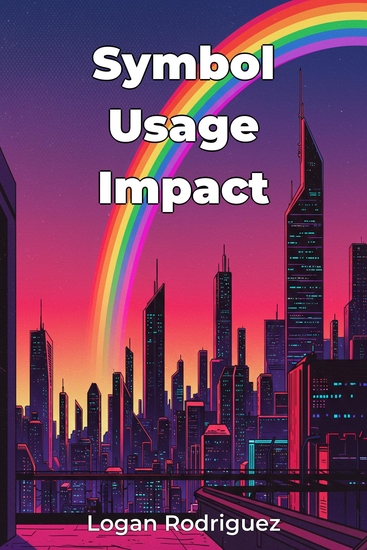
Symbol Usage Impact - cover

Symbol Usage Impact

Logan Rodriguez

Übersetzer A AI

Verlag: Publifye

  • 0
  • 0
  • 0

Beschreibung

Symbol Usage Impact explores how visual language in comic books shapes the representation of LGBTQ identities. It examines the use of color, iconography, and attire as powerful tools for cultural expression and resistance. The book highlights how these visual elements can subvert stereotypes and foster community. For example, the strategic use of color palettes can evoke emotions or challenge traditional norms, while specific attire choices can signal gender identity and subcultural affiliations. 

 
The book progresses by first establishing theoretical frameworks, then delving into the distinct roles of color, iconography, and attire. It analyzes how recurring images and motifs can become shorthand for LGBTQ themes. By combining art history, queer theory, and media studies, Symbol Usage Impact offers a nuanced understanding of visual communication and marginalized identities. This approach provides valuable insights for both academic researchers and general readers interested in LGBTQ representation and comic art.
Verfügbar seit: 07.04.2025.
Drucklänge: 65 Seiten.
Weitere Bücher, die Sie mögen werden

  • The Bitter End - The 2020 Presidential Campaign and the Challenge to American Democracy - cover

    The Bitter End - The 2020...

    John Sides, Lynn Vavreck, Chris...

    • 0
    • 0
    • 0
    The year 2020 was a tumultuous time in American politics. It brought a global pandemic, protests for racial justice, and a razor-thin presidential election outcome. It culminated in an attack on the US Capitol that attempted to deny Joe Biden's victory. The Bitter End explores the long-term trends and short-term shocks that shaped this dramatic year and what these changes could mean for the future. 


    John Sides, Chris Tausanovitch, and Lynn Vavreck demonstrate that Trump's presidency intensified the partisan politics of the previous decades. Presidential elections have become calcified, with less chance of big swings in either party's favor. Republicans remained loyal to Trump and kept the election close, despite Trump's many scandals, a recession, and the pandemic. But in a narrowly divided electorate even small changes can have big consequences. The pandemic was a case in point: when Trump pushed to reopen the country even as infections mounted, support for Biden increased. The authors explain that, paradoxically, even as Biden's win came at a time of heightened party loyalty, there remained room for shifts that shaped the election's outcome. Ultimately, the events of 2020 showed that instead of the country coming together to face national challenges—the pandemic, George Floyd's murder, and the Capitol riot—these challenges only reinforced divisions.
    Zum Buch
  • Technology and the Psychic: When Silicon Meets Spirit - How Modern Tools Are Transforming Ancient Powers - cover

    Technology and the Psychic: When...

    Martin K. Ettington

    • 0
    • 0
    • 0
    I’m both an Engineer and mostly enlightened clairvoyant so I feel comfortable in both the technology and spiritual worlds.  
    My career was mainly working as a software developer, software development manager, and IT project manager for large Aerospace corporations. I’ve also followed the history of AI tools and use them myself today. 
    Over the years I’ve written a number of books on the Paranormal and Spiritual topics many of which were based on my personal experiences such as my premonitions and prophecies. 
    These experiences have led me to believing that our entire world is conscious and we can tune into those consciousness frequencies through meditation and related practices. 
    A lot of people are worried about AI tools becoming conscious and taking over the world. This is often called us reaching the “Singularity”. 
    I decided to write this book to show how consciousness and technology are already working together and how they may work together even closer in the future. 
    Also, my perspective on whether Artificial Intelligence can ever become truly conscious. 
    So let us begin our fun exploration of exciting future possibilities.
    Zum Buch
  • Be the Best Bad Presenter Ever - Break the Rules Make Mistakes and Win Them Over - cover

    Be the Best Bad Presenter Ever -...

    Karen Hough

    • 0
    • 0
    • 0
    Karen Hough doesn't want you to be "perfect." People fear public speaking because they worry about having to conform to all sorts of handed-down rules that tie them up in knots and put their audiences to sleep. It's authenticity and passion that win people over, she says, not "polish." But you can't be authentic if you’re following guidelines that drain the life and personality out of your presentation. 


    Hough debunks over a dozen myths about presenting to make it more fun and natural for everyone. She explains how practicing in front of a mirror makes you worse, why you should never end with questions, and much more. She includes true stories of people who not only were able to become great presenters by being "bad" but actually came to enjoy it! Like them, by following Karen Hough's wise and witty advice, you'll be able to tear up the old rules and embrace and develop your own style. You'll be freed to be a living, breathing, occasionally clumsy human being whose enthusiasm is powerful and infectious.
    Zum Buch
  • Our Search for Belonging - How Our Need to Connect Is Tearing Us Apart - cover

    Our Search for Belonging - How...

    Howard J. Ross, JonRobert...

    • 0
    • 0
    • 0
    Why are we so divided today? Paradoxically, Howard Ross, author of Everyday Bias, says it's our compulsion to belong to a group--something hardwired into us-- that ends up making us deeply connected with some, yet deeply divided from others. Ross shows how we can overcome this growing tribalism. 
     
    We are living in a world of almost unparalleled separation. People are no longer disagreeing, but are instead disavowing each other's rights to an opinion. What is driving this polarization, and how can we overcome it? Howard Ross says that ironically it's our profound need to belong. He delves deeply into the powerful psychological, neurological, and biological forces that drive us to want to identify so strongly with a group we're sometimes even willing to sacrifice our individual identity. 
    Drawing on his decades of leadership in the diversity and inclusion field, Ross probes the depth and impact of this growing tribalism, the role social media plays in exacerbating it, the ways it impacts every aspect of the daily lives, and how to combat it.  Readers will gain tools for exploring contentious dialogue in healthier ways and guidelines for breaking down barriers and building bridges across difference, and organizations and institutions will be able to develop approaches that can open dialogue and encourage mutual understanding.
    Zum Buch
  • It's Too Late Now - The Autobiography of a Writer - cover

    It's Too Late Now - The...

    A. A. Milne

    • 0
    • 0
    • 0
    With characteristic self-deprecating humour, A.A. Milne recalls the formative events of his life: from a blissfully happy childhood to the writing of Winnie-the-Pooh and Christopher Robin. 
     
    ––––––––––––– 
     
    In his classic memoirs A. A. Milne, with his characteristic self-deprecating humour, recalls a blissfully happy childhood in the company of his brothers, and writes with touching affection about his father whom he adored. 
     
    From Westminster School he won a scholarship to Cambridge University where he edited the university magazine, Granta. He then went out into the world, determined to be a writer. He was assistant editor at Punch Magazine and enjoyed great success with his novels, plays and stories. And of course he is best remembered for his children's novels and verses featuring Winnie-the-Pooh and Christopher Robin. 
     
    This is both an account of how a writer was formed and a charming period piece on literary life – Milne met countless famous authors including H. G. Wells, J. M Barrie of Peter Pan fame and Rudyard Kipling. 
     
    ––––––––––––– 
     
    * Praise for It’s Too Late Now * 
     
    ‘A funny book, beautifully written’ NEIL GAIMAN 
     
    ‘A fascinating and insightful read into one of the greatest authors’ INDEPENDENT 
     
    ‘Warm and candid’ NEW YORK TIMES
    Zum Buch
  • Freedom of Choice is Not Freedom - cover

    Freedom of Choice is Not Freedom

    Jiddu Krishnamurti

    • 0
    • 0
    • 0
    Freedom of choice is not freedom - 11 November 1968 
    • What do we mean by free will? Is there such thing? 
    • Is choice ever necessary? 
    • Freedom exists only when I perceive very clearly, when the mind sees things as they are. 
    • Q: Is it possible to be free in society? 
    • Q: Is love the absence of hate? 
    • To find out what truth is you must be free of propaganda: the propaganda of 
    the Church, the propaganda of literature, propaganda of tradition, so that you see things clearly for yourself.
    Zum Buch