Unisciti a noi in un viaggio nel mondo dei libri!
Aggiungi questo libro allo scaffale
Grey
Scrivi un nuovo commento Default profile 50px
Grey
Iscriviti per leggere l'intero libro o leggi le prime pagine gratuitamente!
All characters reduced
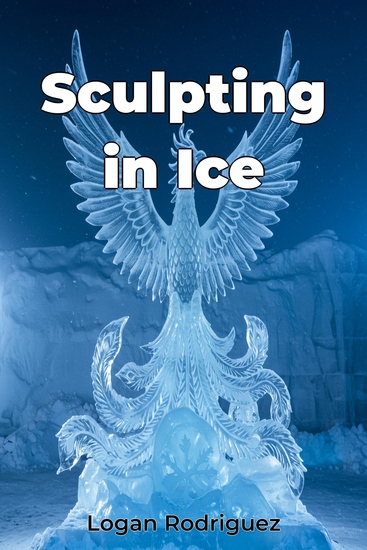
Sculpting in Ice - cover

Sculpting in Ice

Logan Rodriguez

Traduttore A AI

Casa editrice: Publifye

  • 0
  • 0
  • 0

Sinossi

"Sculpting in Ice" explores the captivating world of ice sculptures, an ephemeral art form deeply rooted in history and cultural festivals across the globe. This book examines how ice sculpting evolved from practical uses like food preservation to a celebrated art, highlighting its significance in various cultures. A key insight is how different societies, from Northern China and Japan to European aristocracy, have uniquely adapted ice sculpting to mirror their values, showcasing the art's inherent flexibility and cultural relevance.

 
The book delves into the techniques and challenges of working with ice, emphasizing the science behind its formation and manipulation. It argues that despite its transient nature, ice sculpting holds substantial cultural value, reflecting human creativity and acceptance of impermanence. The narrative unfolds chronologically, beginning with the basics of ice formation and progressing through case studies of different cultural regions before concluding with a discussion of contemporary ice sculpting in culinary displays and art.

 
Through historical documents, interviews, and photographic documentation, the book illustrates the ephemeral nature of ice art. By exploring this intersection of art history, cultural studies, and environmental science, "Sculpting in Ice" offers a unique perspective on this often-overlooked art form, emphasizing its cultural and environmental context.
Disponibile da: 26/02/2025.
Lunghezza di stampa: 61 pagine.

Altri libri che potrebbero interessarti

  • The Cleveland John Doe Case - cover

    The Cleveland John Doe Case

    Thibault Raisse

    • 0
    • 0
    • 0
    Ohio. A suicide, no fingerprints, no identity. 


    In July 2002, the Eastlake police discovered a decomposed body in a modest studio apartment in Cleveland, Ohio. It appeared to be a suicide by firearm. The man was Joseph Newton Chandler III, a retiree whom neighbors and former colleagues described as quiet, secretive, and strange. But as the investigation progressed, less and less about Joseph's life and identity made sense. 


    In 2018, thanks to scientific advances in DNA, the man's true identity was finally discovered: Robert Ivan Nichols. A veteran with a wife and three sons, Nichols eventually left his family, telling his wife "One day you will know why." A few years later, in 1965, his family reported him missing. By 1978, he had stolen the identity of Joseph Newton Chandler III, who had been killed in a car accident at eight years old. But who was this man and why did he change his name? What secret was he trying to hide? 


    Thibault Raisse examines the case, exploring the many theories that have emerged, from the craziest to the most credible. Among these theories is a possible connection to the Zodiac Killer, whose murders date back to 1968 and 1969 in California.
    Mostra libro
  • Old Man and the Sea by Ernest Hemingway The (Book Analysis) - Detailed Summary Analysis and Reading Guide - cover

    Old Man and the Sea by Ernest...

    Bright Summaries

    • 0
    • 0
    • 0
    Unlock the more straightforward side of The Old Man and the Sea with this concise and insightful summary and analysis!This engaging summary presents an analysis of The Old Man and the Sea by Ernest Hemingway, one of the author's most famous and widely acclaimed novels. After 84 days without a big catch, the elderly fisherman Santiago takes to the open sea, where he wages a three-day struggle against a tenacious swordfish only to see his prize snatched away from him at the last moment. The Old Man and the Sea won the Pulitzer Prize for Fiction and was an important contributing factor in the decision to award Hemingway the Nobel Prize for Literature in 1954. Along with contemporaries including F. Scott Fitzgerald and John Steinbeck, Hemingway was one of the most important writers of the so-called "Lost Generation", and had a major influence on subsequent generations of American writers.Find out everything you need to know about The Old Man and the Sea in a fraction of the time!This in-depth and informative reading guide brings you:• A complete plot summary• Character studies• Key themes and symbols• Questions for further reflectionWhy choose BrightSummaries.com?Available in print and digital format, our publications are designed to accompany you on your reading journey. The clear and concise style makes for easy understanding, providing the perfect opportunity to improve your literary knowledge in no time.See the very best of literature in a whole new light with BrightSummaries.com!
    Mostra libro
  • The Invention of the Restaurant - Paris and Modern Gastronomic Culture 2nd edition - cover

    The Invention of the Restaurant...

    Rebecca L. Spang, Adam Gopnik

    • 0
    • 0
    • 0
    Why are there restaurants? Why would anybody consider eating alongside perfect strangers in a loud and crowded room to be an enjoyable pastime? To find the answer, Rebecca Spang takes us back to France in the eighteenth century, when a restaurant was not a place to eat but a quasi-medicinal bouillon not unlike the bone broths of today. 


    This is a book about the French revolution in taste—about how Parisians invented the modern culture of food, changing the social life of the world in the process. We see how over the course of the Revolution, restaurants that had begun as purveyors of health food became symbols of aristocratic greed. In the early nineteenth century, the new genre of gastronomic literature worked within the strictures of the Napoleonic state to transform restaurants yet again, this time conferring star status upon oysters and champagne.
    Mostra libro
  • TEST TAKING STRATEGIES FOR EVERYONE - A Comprehensive Guide to Mastering Test Taking (2023 Beginner Crash Course) - cover

    TEST TAKING STRATEGIES FOR...

    Will Curry

    • 0
    • 0
    • 0
    "Test Taking Strategies for Everyone" is a transformative handbook that equips individuals from all walks of life with a powerful toolkit of strategies to conquer exams with confidence and achieve remarkable results. This comprehensive guide goes beyond mere memorization techniques, offering a holistic approach to test preparation that addresses the psychological, strategic, and practical aspects of test taking. 
    Inside this book, you will discover:Techniques to effectively manage test anxiety and overcome performance pressureStrategies for efficient time management to maximize study effortsMethods to identify and prioritize key concepts for targeted studyingProven tips for approaching different question formats, including multiple choice, essay, and problem-solving questionsStrategies for improving critical thinking and analytical reasoning skillsInsights on effective note-taking, summarizing information, and organizing study materialsExpert advice on interpreting exam instructions and avoiding common pitfallsTechniques for optimizing your test-taking environment for optimal focus and concentrationStrategies for self-assessment and evaluating your progress 
    And Much More!... 
    Whether you are a student preparing for college entrance exams, professional pursuing certifications, or an individual seeking personal development, "Test Taking Strategies for Everyone" empowers you to unlock your full potential and achieve success in any test-taking scenario. 
    So, scroll up and click the “Boy Now” button right now!!! 
     
    Mostra libro
  • Montenegro in the Late Middle Ages: The History of the Different States and Dynasties that Controlled the Area - cover

    Montenegro in the Late Middle...

    Editors Charles River

    • 0
    • 0
    • 0
    Much has been written about Western intervention during the breakup of Yugoslavia, and whether it made matters worse, prevented worse atrocities, or was simply ineffective. In early 1992, however, what was clear was that Europe was hopelessly divided over the best course of action to take towards Yugoslavia, and after several years of fighting, the Bosnian War was one of the most violent conflagrations in Europe since the end of World War II. 
    That war had been the byproduct of centuries of tensions in the Balkans, and an attempt in the wake of World War I to redraw the political boundaries of Europe and the Middle East. That included forming the Kingdom of Yugoslavia, initially known as the Kingdom of Serbs, Croats and Slovenes, a particularly fragile enterprise, and there was almost constant tension between the majority Serbs and the other Yugoslav nationalities, especially the Croats. As a result, the Kingdom was a land of political assassinations, underground terrorist organizations, and ethnic animosities. In 1929, King Alexander I suspended democracy and ruled as a dictator until he himself was assassinated in 1934. 
    Depending on the source, many authors have focused on different catalysts for Yugoslavia’s demise, but Vesna Drapac may have succinctly summed the situation up when he wrote that by the end, the state “lacked a reason to exist.” There is certainly something in this sentiment, but the disintegration came at an enormous cost. Given what happened in Yugoslavia, it should be little surprise the area that eventually became the modern nation of Montenegro has had a turbulent history for millennia, with shifting borders, different degrees of autonomy, and various conflicts occurring within it.
    Mostra libro
  • Power of Now The: Insights on Finding Inner Peace - A Group Discussion - cover

    Power of Now The: Insights on...

    Vines Graener

    • 0
    • 0
    • 0
    Drawing from Eastern philosophies such as Buddhism, Wallace explores why people feel dissatisfied and discontent. His key argument is that we must let go of our desire for control and instead accept the inherent uncertainty and unpredictability of life. 
    A significant portion of human unhappiness arises from being consumed by thoughts about the future—seeking assurance of a happy life on earth and, in some cases, in an afterlife. Many people turn to religion for this reassurance, believing it provides the answers to life’s uncertainties and promises salvation after death. Others chase material comforts, such as wealth and possessions, hoping these will provide lasting happiness and security. 
    However, neither approach guarantees the fulfillment we seek, as the future is unknowable—a mere abstraction filled with expectations and guesses. Moreover, the pursuit of a pain-free future is inherently flawed. Pleasure and pain are inseparable aspects of the human experience. One cannot exist without the other.
    Mostra libro