Begleiten Sie uns auf eine literarische Weltreise!
Buch zum Bücherregal hinzufügen
Grey
Einen neuen Kommentar schreiben Default profile 50px
Grey
Jetzt das ganze Buch im Abo oder die ersten Seiten gratis lesen!
All characters reduced
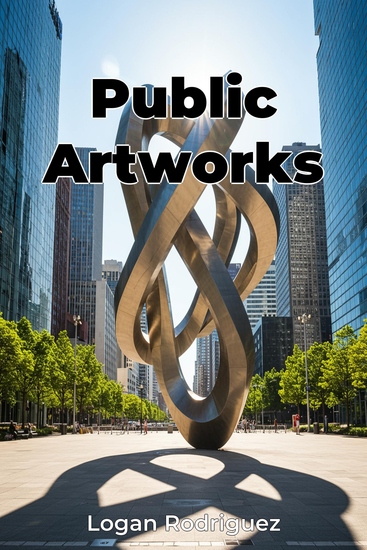
Public Artworks - cover

Public Artworks

Logan Rodriguez

Übersetzer A AI

Verlag: Publifye

  • 0
  • 0
  • 0

Beschreibung

Public Artworks explores the powerful role of sculpture in redefining urban landscapes and shaping cultural identity. It investigates how monumental sculptures in public spaces contribute to our understanding of place, while also examining the historical evolution of public art from symbols of power to contemporary works that encourage dialogue. These artworks often serve as more than mere decoration; they actively participate in the cultural development of communities. The book uniquely integrates art history with urban planning and community engagement strategies. Through visual analysis, historical research, and sociological studies, Public Artworks guides readers through the definition of public art, its historical context, and case studies of specific works across diverse geographic locations. By exploring the interplay between art, architecture, and society, the book encourages a more thoughtful approach to commissioning and interpreting public artworks. Progressing logically across chapters, the book delves into ethical considerations, community engagement, and responsible stewardship. It offers an innovative perspective, valuable for art enthusiasts, architecture students, urban planners, and community leaders, on how art can transform urban spaces and shape cultural narratives.
Verfügbar seit: 26.02.2025.
Drucklänge: 85 Seiten.

Weitere Bücher, die Sie mögen werden

  • Meeting of Minds - Volume X - cover

    Meeting of Minds - Volume X

    Steve Allen

    • 0
    • 0
    • 0
    By " assembling" some of the most fascinating figures in world history, Meeting of Minds provided a groundbreaking opportunity for audiences to be exposed to ideas by way of a medium not normally known for its intellectual vigor. Portrayed by actors, panelists engage in stimulating round-table discussions that were conducted like any other talk show but featured prominent influencers from bygone generations— not just philosophers and politicians, but poets, playwrights, and presidents. From activists and artists to international leaders— both famous and infamous— these conversations are unfailingly witty, thought-provoking, and genuinely entertaining.
    An innovative series, Meeting of Minds remains one of the most delightful ways of gaining historical perspective ever devised, and these original soundtrack recordings capture the intellectual and spirited debates of the episodes hosted by Steve Allen. The panelists featured in this volume are Scottish economist Adam Smith, birth control activist Margaret Sanger, and Indian leader Mohandas Gandhi.
    Zum Buch
  • Shakespeare on the Factory Floor - A Handbook for Actors Directors and Designers - cover

    Shakespeare on the Factory Floor...

    Andrew Hilton

    • 0
    • 0
    • 0
    A passionate, illuminating exploration of Shakespeare's greatest plays and characters, by the director of acclaimed theatre company Shakespeare at the Tobacco Factory.
    Combining close textual analysis with practical insights based on his extensive experience of directing Shakespeare's plays, Andrew Hilton delves into a fascinating range of topics such as emotional truth in the comedies, the importance of the plays' social dynamics, the choice of settings and periods, making and withholding moral judgements, working with different versions of the texts, and even adapting them.
    Throughout, Hilton urges us as audiences and theatre-makers to set aside our preconceived notions, and instead to approach Shakespeare's plays with an open mind, moment by moment, so that we can connect with them in fresh and vital ways.
    'The clear-sightedness, wit and depth of knowledge and insight into the plays and their worlds is unparalleled... should be required reading for everyone approaching these plays... A fabulous book, brimful of wisdom and revelations and a gift to anyone interested in Shakespeare or, quite frankly, in people' John Heffernan, actor
    'Andrew Hilton's Tobacco Factory Shakespeares were an inspiration... What audiences saw and heard was not a display but an uncovering. His productions did not add to the drama: they revealed it... In Shakespeare on the Factory Floor, Hilton has once again lit up Shakespeare: lucid and penetrating on the page and on the stage' Susannah Clapp, theatre critic of the Observer
    'The detail and simplicity of Andrew Hilton's directing is as potent in his writing as it is in the rehearsal room... A wonderful book' Dorothea Myer-Bennett, actor
    'Andrew Hilton has used his rich experience of many years to create a penetrating, timely and distinctive study of the plays… I only wish this book had been around when first I read Shakespeare. It would have opened my eyes and my mind much earlier' Professor Sir Christopher Frayling, Former Rector of the Royal College of Art and Chair of Arts Council England
    'Andrew Hilton's fascinating book reveals how theatrical performance offers insights into longstanding questions of literary interpretation… Written in an engaging and readable style, it will be of interest to actors, directors, scholars and anyone who enjoys reading Shakespeare's plays or seeing them performed' Lesel Dawson, Senior Lecturer in English at the University of Bristol
    Zum Buch
  • A Rare Recording of Film Icon Sharon Tate - cover

    A Rare Recording of Film Icon...

    Sharon Tate

    • 0
    • 0
    • 0
    Sharon Marie Tate Polanski (January 24, 1943 - August 9, 1969) was an American actress and model who appeared in advertisements and small television and film roles. After receiving positive reviews for her comedic and dramatic acting performances, Tate was hailed as one of Hollywood's most promising newcomers, being compared favorably with the late Marilyn Monroe. Her first major role was as Jennifer North in the 1967 American drama film Valley of the Dolls, which earned her a Golden Globe Award nomination. On August 9, 1969, Tate and four others were murdered by members of the Manson Family in the home she shared with Polanski, while he was away. She was eight-and-a-half months pregnant. The following audio clips are from 1966 and 1967.
    Zum Buch
  • Nara Period - Imperial Splendor and the Rise of Buddhist Influence - cover

    Nara Period - Imperial Splendor...

    Rolf Hedger

    • 0
    • 0
    • 0
    The Nara Period (710–794) marked a transformative era in Japanese history, characterized by the establishment of a centralized government, the increasing influence of Buddhism, and cultural exchanges with China and Korea. It was during this time that Japan’s first permanent capital was established in Nara, shaping the foundations of political and cultural development for centuries to come. 
    Before the Nara Period, Japan’s capitals frequently shifted locations with the death of each emperor, a practice rooted in Shinto beliefs regarding spiritual purity. However, in 710, Emperor Genmei broke this tradition by moving the capital to Heijō-kyō (modern-day Nara), modeling it after the grand Tang dynasty capital of Chang’an. This decision signified Japan’s growing commitment to a stable and sophisticated political structure. Nara’s grid-like city layout, Buddhist temples, and administrative buildings reflected Chinese architectural and governmental influences, showcasing the era’s desire for centralized control and cultural refinement. 
    At the heart of the Nara government was the ritsuryō system, an adaptation of China’s bureaucratic model, which aimed to solidify imperial rule through codified laws, land distribution policies, and taxation systems. The emperor held supreme authority, but powerful aristocratic families, particularly the Fujiwara clan, played a crucial role in court politics. The implementation of the Taihō Code in 701 reinforced these administrative reforms, further consolidating the emperor’s influence while allowing aristocrats to maintain their dominance over court affairs.
    Zum Buch
  • Moving Toward Life - Five Decades of Transformational Dance - cover

    Moving Toward Life - Five...

    Anna Halprin

    • 0
    • 0
    • 0
    Anna Halprin is one of the most important innovators in the history of modern dance, performance art, and post-modern dance. Moving Toward Life brings together for the first time her essays, interviews, manifestos, and teaching materials, along with over 100 illustrations, providing a rich account of the work that radicalized an entire generation of performers.Since the late 1950s, Halprin has been at the forefront of experiments in dance, from improvisation and street theatre to dances in the environment and healing dances. A brief overview of Halprin's career shows how her work has prefigured — and transfigured — crucial developments in postmodern dance. In the 1960s, Halprin invented the "workshop," and in the wake of the Watts riots, her multiracial company broke boundaries in their confrontational political performances. In the 1970s, she organized "community rituals" to explore how individual creativity feeds positively into group dynamics. These healing social events led to her current work with cancer survivors and people challenging AIDS and their caregivers.Depicting Halprin's deep commitment to social change, Moving Toward Life presents an engaging, critical document of the life of one of the most influential and least known luminaries of American dance. Sally Banes and Janice Ross join Rachel Kaplan in providing introductory essays to sections of the book.
    Zum Buch
  • Gupta Empire - Golden Age of Art Science and Literature - cover

    Gupta Empire - Golden Age of Art...

    Rolf Hedger

    • 0
    • 0
    • 0
    The Gupta Empire, one of the most influential dynasties in Indian history, emerged in the early 4th century CE. It marked the beginning of a new era characterized by political stability, territorial expansion, and remarkable advancements in various fields. The foundation of the empire was laid by Chandragupta I, whose leadership and strategic alliances set the stage for the golden age that followed. 
    The origins of the Gupta dynasty remain somewhat obscure, but historical records suggest that they were a powerful regional clan in the Magadha region, present-day Bihar. Unlike the Mauryan Empire, which had a centralized administrative structure, the Gupta rulers adopted a more decentralized approach, allowing local rulers to maintain a degree of autonomy while still pledging allegiance to the empire. This governance model contributed to their long-lasting rule and ensured stability across their vast territories. 
    Chandragupta I, who ascended the throne around 320 CE, played a crucial role in the establishment of the empire. His most significant achievement was his matrimonial alliance with the Licchavi princess Kumaradevi, which not only strengthened his position but also expanded his influence in the fertile Ganges basin. This strategic marriage helped him consolidate power and gain the support of powerful regional factions. As a result, the empire's boundaries began to expand, laying the groundwork for future conquests.
    Zum Buch