Rejoignez-nous pour un voyage dans le monde des livres!
Ajouter ce livre à l'électronique
Grey
Ecrivez un nouveau commentaire Default profile 50px
Grey
Abonnez-vous pour lire le livre complet ou lisez les premières pages gratuitement!
All characters reduced
A Few Practical Suggestions - Society for Pure English Tract 03 (1920) - cover

A Few Practical Suggestions - Society for Pure English Tract 03 (1920)

Logan Pearsall Smith, English Society for Pure

Maison d'édition: DigiCat

  • 0
  • 0
  • 0

Synopsis

A Few Practical Suggestions, curated by the Society for Pure English and Logan Pearsall Smith, presents a compelling exploration of language, rhetoric, and the nuances of English style. This anthology assembles an eclectic array of essays and writings, reflecting a commitment to the refinement and purity of English prose. The works span a diverse spectrum, from prescriptive grammar advice to meditative pieces on linguistic evolution, showcasing both classic and avant-garde literary techniques. Each contribution pushes the boundaries of traditional and modern literary discourse, encouraging readers to appreciate the beauty and complexity inherent in the English language. This collection's strength lies in its capacity to illuminate the subtle interplay between linguistic precision and creative expression. The contributing Society members, under the aegis of Logan Pearsall Smith, represent a broad cross-section of early 20th-century linguistic thought leaders committed to the development and preservation of English's richness and vibrancy. Reflecting the cultural movements of their time, these scholars provide a critical dialogue on the role of language in shaping intellect and culture. Their dedication to linguistic purity and innovation places this collection at the intersection of historical and contemporary literary criticism, providing insights into the shifts in linguistic philosophy and practice. For readers seeking to enhance their understanding of English's literary potential, A Few Practical Suggestions offers a gateway into a world where language is both muse and lens. This anthology provides an invaluable educational resource that stimulates intellectual curiosity and encourages readers to engage in a broader conversation about the evolution of language. Ideal for literary aficionados, students, and academics alike, this collection invites reflection upon how language molds society and thought, presenting a unique opportunity to explore language in its most profound and artful forms.
Disponible depuis: 15/09/2022.
Longueur d'impression: 19 pages.

D'autres livres qui pourraient vous intéresser

  • Drink Wise Live Well - Conversations on Responsible Drinking - cover

    Drink Wise Live Well -...

    Elise Lovelace

    • 0
    • 0
    • 0
    My name is Elise Lovelace and I am a licensed therapist and professional counselor in Florida and California. I invite you to explore with me the idea of drinking responsibly. Step into a world where enjoying life and responsible choices intersect. This isn't about saying 'no' to fun; it's about saying 'yes' to a balanced, mindful approach to drinking. Through insightful strategies and practical tips, we'll explore how to embrace a vibrant social life without sacrificing well-being. This isn't about abstinence; it's about finding the sweet spot where drinking and responsibility meet to create a reasonable drinking practice. Working with individuals who have struggled with substance use has been a substantial portion of my professional practice. It is my sincerest hope that what I have learned from working in collaboration with many courageous individuals to overcome alcohol misuse be imparted to you as a more balanced approach to drinking.  
    Cheers to Balance!
    Voir livre
  • The Entrepreneur's Shepherd - cover

    The Entrepreneur's Shepherd

    Larry Morgan

    • 0
    • 0
    • 0
    This audiobook is narrated by an AI Voice.   
    • A practical guide to catalyze your entrepreneurial spirit and unleash your productivity. 
    • Filled with proven techniques, real-world examples, and easy-to-execute action plans. 
    • The complete journey from ideation to scaling your business to lessons learned. 
    • Perfect for students, entrepreneurs, and middle managers. 
    • A roadmap from learning to earning.
    Voir livre
  • The Emperors of Rome - A Biographical Dictionary - cover

    The Emperors of Rome - A...

    Rogan Fish

    • 0
    • 0
    • 0
    The Founding Emperors of Rome laid the groundwork for the Roman Empire, marking a shift from the Roman Republic to imperial rule. Augustus, Tiberius, and Caligula stand as the pivotal figures in this transformation, each shaping the empire in distinct ways. 
    Augustus, born Gaius Octavius, was the first emperor and one of the most successful leaders in Roman history. His reign, from 27 BCE to 14 CE, ushered in the Pax Romana, a period of relative peace and prosperity. Augustus was not only a military genius but also a skilled politician who effectively consolidated power. By presenting himself as the restorer of the Roman Republic, he maintained a delicate balance between autocratic rule and the preservation of traditional republican institutions. Augustus implemented numerous reforms, including the establishment of a professional standing army and a system of taxation that stabilized the empire’s finances. His legacy is marked by the expansion of Roman territory and the establishment of Rome as the center of the ancient world. 
    Following Augustus, his stepson Tiberius became emperor in 14 CE. Tiberius' reign is often seen as a contrast to Augustus. While Augustus sought to maintain the image of republican values, Tiberius became increasingly reclusive and suspicious, particularly in the later years of his reign. His reign was marked by significant military achievements, including the consolidation of Rome’s frontiers in Germania and the Balkans, but his reign was also tainted by political purges and a growing atmosphere of distrust. Tiberius left the throne to his adopted son Caligula, but the political instability and paranoia of his reign would have lasting consequences on the empire.
    Voir livre
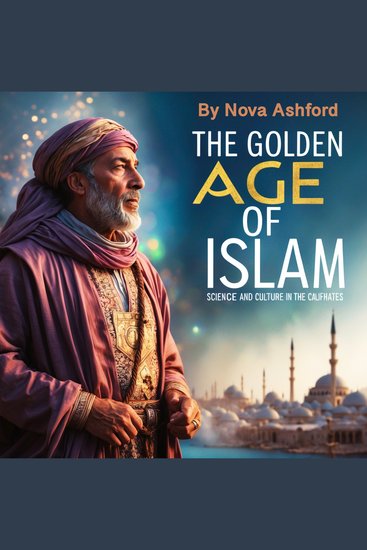
  • The Golden Age of Islam - Science of Culture in the Califhates - cover

    The Golden Age of Islam -...

    Nova Ashford

    • 0
    • 0
    • 0
    The Islamic Golden Age, which spanned from the 8th to the 13th century, was a period of extraordinary cultural, intellectual, and scientific development within the Islamic world. This flourishing era was deeply rooted in the foundational principles of Islam, where the pursuit of knowledge, the preservation of classical texts, and the quest for understanding the natural world were seen as acts of divine service. The Islamic civilization, during this time, became the beacon of knowledge and scholarship, laying the groundwork for significant advances in various fields that would influence the world for centuries to come. 
    The foundation of this golden age can be traced back to the establishment of the early Islamic empire, starting with the Rashidun Caliphate and continuing through the Umayyad and Abbasid Caliphates. Under the Abbasids, particularly, the capital city of Baghdad became a hub of intellectual activity and learning. The Abbasid caliphs, especially during the reign of Caliph Harun al-Rashid and his successors, recognized the importance of knowledge and promoted the translation of Greek, Persian, and Indian texts into Arabic. This movement, known as the translation movement, brought works of classical antiquity, such as those of Aristotle, Galen, and Ptolemy, to Islamic scholars. These translated texts formed the basis of advanced research in fields like philosophy, mathematics, and medicine. 
    At the heart of the Islamic intellectual renaissance was the House of Wisdom (Bayt al-Hikma), an institution established in Baghdad that became a center for scholars from diverse backgrounds. The House of Wisdom hosted translators, philosophers, mathematicians, astronomers, and doctors who would carry out research and engage in dialogue that bridged cultures and philosophies. This institution was instrumental in the synthesis of knowledge from different civilizations, fostering an environment of intellectual collaboration and exchange.
    Voir livre
  • AI + The New Human Frontier - Reimagining the Future of Time Trust + Truth - cover

    AI + The New Human Frontier -...

    Erica Orange

    • 0
    • 0
    • 0
    AI + The New Human Frontier: Reimagining the Future of Time, Trust + Truth by Erica Orange, a renowned futurist, offers a compelling exploration of generative AI's potential to enhance human creativity rather than replace it. This pivotal book navigates how AI tools will help shape the human experience, and aid in augmenting human ingenuity and imagination. 


    The author eloquently argues that the essence of human intelligence—our curiosity, critical thinking, empathy, and more—is not only irreplaceable but will become increasingly valuable as AI evolves to take on routine tasks. AI + the New Human Frontier is a clarion call for embedding trust, human oversight and judgment into AI development, ensuring that the technology amplifies our most human capabilities. At a time when the lines between what is real, fake, true and false are becoming more blurred, reliance on human-centric solutions, not just technological ones, will become more critical. 


    Perfect for business leaders, managers, executives, and professionals navigating the new landscape of technology, AI + The New Human Frontier provides not only a vision of the future but also practical advice on thriving in an AI-enhanced world. Add this book to your library to ensure you're ready for the transformative changes that lie ahead.
    Voir livre
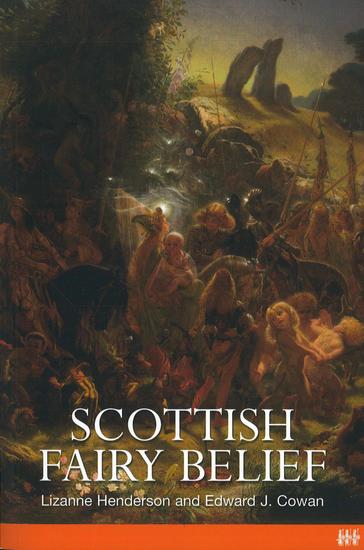
  • Scottish Fairy Belief - A History from the Fifteenth to the Nineteenth Century - cover

    Scottish Fairy Belief - A...

    Lizanne Henderson

    • 0
    • 0
    • 0
    The authorities told folk what they ought to believe, but what did they really believe? Throughout Scottish history, people have believed in fairies. They were a part of everyday life, as real as the sunrise, and as incontrovertible as the existence of God. While fairy belief was only a fragment of a much larger complex, the implications of studying this belief tradition are potentially vast, revealing some understanding of the worldview of the people of past centuries.
    This book, the first modern study of the subject, examines the history and nature of fairy belief, the major themes and motifs, the demonising attack upon the tradition, and the attempted reinstatement of the reality of fairies at the end of the seventeenth century, as well as their place in ballads and in Scottish literature.
    Voir livre