Begleiten Sie uns auf eine literarische Weltreise!
Buch zum Bücherregal hinzufügen
Grey
Einen neuen Kommentar schreiben Default profile 50px
Grey
Jetzt das ganze Buch im Abo oder die ersten Seiten gratis lesen!
All characters reduced
Havana Chronicles - cover

Havana Chronicles

Logan Bell

Übersetzer A AI

Verlag: Publifye

  • 0
  • 0
  • 0

Beschreibung

Havana Chronicles explores the vibrant and complex history of Cuba's capital, revealing how the Cuban Revolution, colonial influences, and a rich cultural spirit have shaped its identity. The book delves into Havana's architectural styles, showcasing how political ideologies materialized in the city's urban planning and public spaces. The Chronicles also highlights the irrepressible rhythms of Cuban music, viewing it as a lens through which to understand Havana's cultural resilience and the everyday lives of Habaneros.

 
The book unfolds in three parts, tracing Havana's evolution from its colonial origins to the revolutionary era and then examining the city's urban landscape. It analyzes specific architectural styles and explores the role of vintage cars as symbols of both resistance and resourcefulness. By drawing on archival documents, historical maps, and ethnographic interviews, Havana Chronicles offers a nuanced perspective on Havana's past and present.

 
The book uniquely presents Havana as a case study in urban adaptation and cultural preservation, showing how the city maintains its character amidst economic hardship and political isolation. This exploration of Havana's ability to negotiate its past and present provides valuable insights for travelers, history enthusiasts, and anyone interested in understanding the forces that have shaped this captivating city.
Verfügbar seit: 20.02.2025.
Drucklänge: 55 Seiten.

Weitere Bücher, die Sie mögen werden

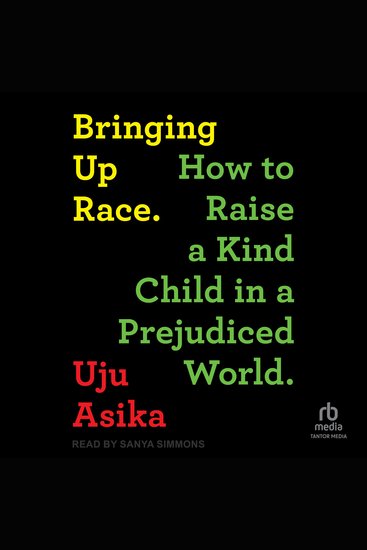
  • Bringing Up Race - How to Raise a Kind Child in a Prejudiced World - cover

    Bringing Up Race - How to Raise...

    Uju Asika

    • 0
    • 0
    • 0
    You can't avoid it, because it's everywhere. In the looks Black kids get in certain spaces, the manner in which some people speak to them, the stuff that goes over their heads. Stuff that makes them cry even when they don't know why. How do you bring up your kids to be kind and happy when there is so much out there trying to break them down? 
     
    Bringing Up Race is an important book, for all families whatever their race or ethnicity. It's for everyone who wants to instill a sense of open-minded inclusivity in their kids, and those who want to discuss difference instead of shying away from tough questions. Uju Asika draws on often shocking personal stories of prejudice along with opinions of experts, influencers, and fellow parents to give advice in this guide. 
     
    Bringing Up Race explores: when children start noticing ethnic differences; what to do if your child says something racist; how to have open, honest, age-appropriate conversations; how children and parents can handle racial bullying; and how to recognize and challenge everyday racism. 
     
    Bringing Up Race is a call to arms for all parents as our society works to combat white supremacy and dismantle systemic racism.
    Zum Buch
  • A Light in the Northern Sea - Denmark's Incredible Rescue of Their Jewish Citizens During WWII - cover

    A Light in the Northern Sea -...

    Tim Brady

    • 0
    • 0
    • 0
    August 25, 1943. A lone bicyclist transports a cache of explosives, hidden in a beer crate, to a Copenhagen hall being readied to house German troops. In a violent blast, the would-be barracks is reduced to rubble. It's the boldest act yet of Holger Danske and the growing Danish resistance combating the oppressiveness of Hitler's Reich. 


    In 1940, on its way to conquering Western Europe, Germany coerced the Danish government into a "cooperative" agreement that lasted three long years until the increasing brazenness of the Resistance movement prompted a crackdown. Denmark's nearly 8000 Jews, who had so far been spared Hitler's wrath, now became the focus of his rage. A roundup was ordered to begin on October 1st, 1943, the first day of the Jewish New Year. 


    The only passage to safety was across the Oresund to Sweden. But no group existed to organize an escape. Until the last moment, Sweden didn’t agree to allow the refugees into the country; and the strait between the two nations was swarming with Gestapo. What happened next was a miracle. 95% of Denmark's Jews survived the Holocaust, the highest percentage in Europe. Here are the riveting true accounts of ordinary Danes who, using their modest resources, wiles, remarkable courage, and camaraderie, quietly orchestrated their escape.
    Zum Buch
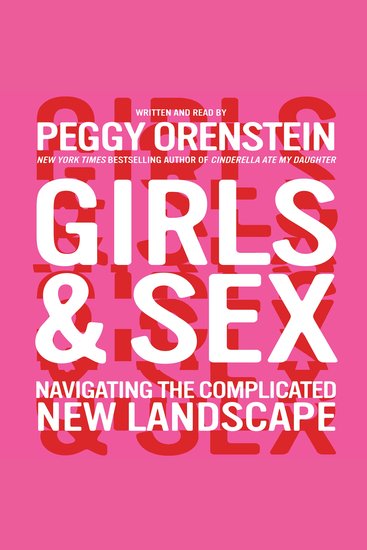
  • Girls & Sex - Navigating the Complicated New Landscape - cover

    Girls & Sex - Navigating the...

    Peggy Orenstein

    • 0
    • 0
    • 0
    The author of the New York Times bestseller Cinderella Ate My Daughter offers a clear-eyed picture of the new sexual landscape girls face in the post-princess stage—high school through college—and reveals how they are negotiating it. 
    A generation gap has emerged between parents and their girls. Even in this age of helicopter parenting, the mothers and fathers of tomorrow’s women have little idea what their daughters are up to sexually or how they feel about it. Drawing on in-depth interviews with over seventy young women and a wide range of psychologists, academics, and experts, renowned journalist Peggy Orenstein goes where most others fear to tread, pulling back the curtain on the hidden truths, hard lessons, and important possibilities of girls’ sex lives in the modern world. 
    While the media has focused—often to sensational effect—on the rise of casual sex and the prevalence of rape on campus, in Girls and Sex Peggy Orenstein brings much more to the table. She examines the ways in which porn and all its sexual myths have seeped into young people’s lives; what it means to be the “the perfect slut” and why many girls scorn virginity; the complicated terrain of hookup culture and the unfortunate realities surrounding assault. In Orenstein’s hands these issues are never reduced to simplistic “truths;” rather, her powerful reporting opens up a dialogue on a potent, often silent, subtext of American life today—giving readers comprehensive and in-depth information with which to understand, and navigate, this complicated new world.
    Zum Buch
  • It's Not You It's Capitalism - Why It's Time to Break Up and How to Move On - cover

    It's Not You It's Capitalism -...

    Malaika Jabali

    • 0
    • 0
    • 0
    A biting, brilliant, often hilarious guide to socialism for budding anti-capitalists who know it’s time to dump their toxic ex (Capitalism) and try something finer. Journalist Malaika Jabali debunks myths, centers forgotten socialists of color who have shaped our world, and shows socialism is not all Marx and Bernie Bros—it can be pretty sexy. We’ve all dated someone who took control of the relationship—you know, someone who makes you feel like you’re unhappy because you’re just not putting in the work, or it’s all in your head. But when you think about trying to meet new people, it feels terrifying. Like, have you looked at Tinder recently? It’s rough out there! Your tough-love new best friend, award-winning journalist, policy attorney, and life-long socialist Malaika Jabali is here to say: we are all in a generations-long toxic relationship with Capitalism, and it is time to get the h*ll out of there and move ALONG. She gives you everything you need to know about what a healthy relationship could actually look like, issue by issue—from healthcare and housing to the whole concept of American democracy—with our new boo: Socialism. And no, Socialism isn’t the boring, grey, authoritarian, Cold-War-era monster that you’ve heard about.  With accessible explanations and illustrations, often surprising graphs and stats, and some Drake memes, this book will show you that we NEED to build a world that’s safer, kinder, cleaner, healthier, and more equal. And that this isn’t a utopian dream – it’s within our grasp, if we collectively decide to call out Capitalism for what it really is and wake up to a better future.   Fun, smart, and inspiring, It’s Not You It’s Capitalism is the hottest new relationship in your life!
    Zum Buch
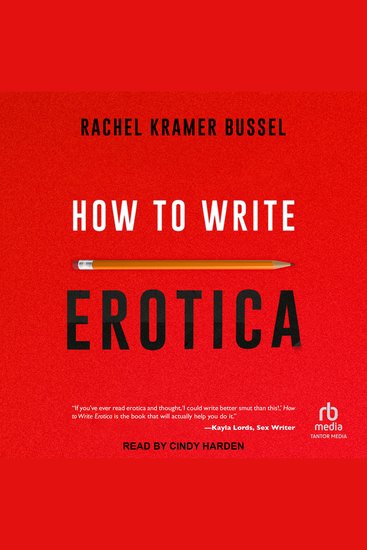
  • How to Write Erotica - cover

    How to Write Erotica

    Rachel Kramer Bussel

    • 0
    • 0
    • 0
    Have you had intimate fantasies or simmering plotlines you've wanted to write but weren't sure how or where to start? Let renowned erotica author and editor Rachel Kramer Bussel show you how to turn those fragments into fully fleshed out erotic stories, novellas, and novels. In this guide, Bussel takes her twenty plus years of experience in the genre and walks writers through the ins and outs of erotic writing. Whether you want to see your work on the shelves of bookstores, pen sexy stories or letters, or simply explore your creativity, How to Write Erotica will put you on the path to becoming the next Anaïs Nin! 


    Having taught erotic writing workshops at universities, conferences, and sex toy stores, Bussel knows how to make even those who blush at the word "sex" feel comfortable putting pen to paper. 


    Aspiring erotic authors will learn everything they need to know about gaining inspiration from their surroundings, breaking into publishing, promoting their work, and making a name for themselves. You don't need a degree, writing experience, or sexual experience to write good erotica. All you need is a keen imagination and a willingness to follow your lusty mind. 


    Contains mature themes.
    Zum Buch
  • Living With My Century - A Memoir - cover

    Living With My Century - A Memoir

    Eda Sagarra

    • 0
    • 0
    • 0
    Professor Eda Sagarra, born in 1933, has been a significant and influential figure in Irish and European academic policy-making, contributing to the early development of the Erasmus scheme. Now, aged nearly 88, this memoir gives striking evidence of her self-discipline and formidable energy. This substantial memoir by one of the foremost female academics in Ireland starts with Sagarra's own perspective on committing her life story to history during the pandemic lockdown of 2020:
    The following memoir recalls for those born in the present century and schooled without the strong sense of Irish history, which defined our people from the Great Famine of the 1840s until recent times, what it was like to grow up as a woman in the twentieth century and seek a career in a man's world. It tries to re-capture as much what it felt like to the person experiencing it as what was happening in society. Younger people today who read of the restrictions to which women were subject in the 1930s, 1940s and 1950s, will find it difficult to comprehend why our generation and the one that followed ours didn't challenge them. But probably the greatest contrast between the Ireland of then and now was the room for manoeuvre – or rather the absence of it. Today our lives are premised on a constantly changing world. Ireland is more connected across the globe than ever it was. Today most people are mobile. The Ireland when I was young was in almost every respect a static, hierarchical and paternalist society, one in which the accident of your birth would generally determine your whole life. No life is representative, but every person's experience is unique and worth recording for those who come after us. 
    A south Dublin convent girl, Sagarra probes childhood and family, schooling, and UCD — with a perceptive commentary on the Ireland of the 1930s and 1940s. Her remarkable memory and shrewd eye for detail present at times a painfully honest account of family and in the upper middle-class world of Catholic south Dublin, revealing the profound influence of Europe during her postgraduate years in post-war Germany, Switzerland and Austria.
    Running through this forensic account of her academic life is a keen awareness of the constant if subtle barriers to female advancement.
    
    For contemporary critics reconstructing the history of gender equality in Ireland and for readers of feminist history, this makes for essential reading. Her description of retirement since 1998 is colourful, poignant and revealing, and her reflections on old age and youth resonate.
    Zum Buch