Begleiten Sie uns auf eine literarische Weltreise!
Buch zum Bücherregal hinzufügen
Grey
Einen neuen Kommentar schreiben Default profile 50px
Grey
Jetzt das ganze Buch im Abo oder die ersten Seiten gratis lesen!
All characters reduced
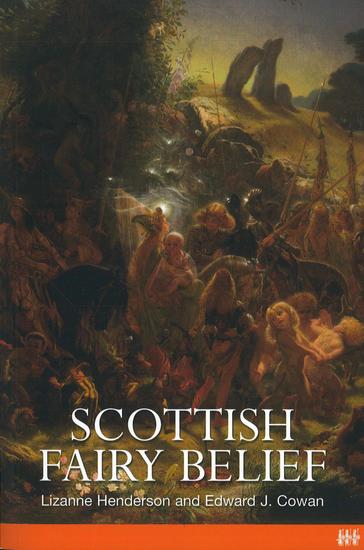
Scottish Fairy Belief - A History from the Fifteenth to the Nineteenth Century - cover

Scottish Fairy Belief - A History from the Fifteenth to the Nineteenth Century

Lizanne Henderson

Verlag: John Donald

  • 0
  • 0
  • 0

Beschreibung

The authorities told folk what they ought to believe, but what did they really believe? Throughout Scottish history, people have believed in fairies. They were a part of everyday life, as real as the sunrise, and as incontrovertible as the existence of God. While fairy belief was only a fragment of a much larger complex, the implications of studying this belief tradition are potentially vast, revealing some understanding of the worldview of the people of past centuries.
This book, the first modern study of the subject, examines the history and nature of fairy belief, the major themes and motifs, the demonising attack upon the tradition, and the attempted reinstatement of the reality of fairies at the end of the seventeenth century, as well as their place in ballads and in Scottish literature.
Verfügbar seit: 24.03.2022.
Drucklänge: 300 Seiten.
Weitere Bücher, die Sie mögen werden

  • Harriet Beecher Stowe: A short biography - 5 Minutes: Short on time - long on info! - cover

    Harriet Beecher Stowe: A short...

    5 Minutes, 5 Minute Biographies,...

    • 0
    • 0
    • 0
    Harriet Beecher-Stowe, fighter for emancipation and novelist: Life and works in a short biography! Everything you need to know, brief and concise. Infotainment, education and entertainment at its best!
    Zum Buch
  • Polivagal Theory & Daily Vagus Nerve Exercises The: 2 in 1 - Learn How to Refurbish Your Brain and Your Body Through Daily Exercises to Reduce Inflammation Anxiety and Chronic Illness - cover

    Polivagal Theory & Daily Vagus...

    Reiner Hartmann

    • 0
    • 0
    • 0
    In this book, you will discover what the vagus nerve is and how you can stimulate it to improve every aspect of your mind and life. What you will learn is to strengthen the vagus nerve through simple and very practical exercises that you can do at home as well. 
    Here are some topics you will find within this 2-in-1 book: 
    ·     What is the polyvagal theory 
    ·     How to control your emotions using the vagus nerve 
    ·     The connection between the vagus nerve and human emotions 
    ·     Daily vagus nerve exercises with massages, yoga, stretching, deep and slow breathing... 
    ...And so much more! 
    If you want to improve your mental and physical health and forget the anxiety and stress that are taking your breath away every day, listen to me until the end.Happy listening!
    Zum Buch
  • Abraham Lincoln - The Dark Side What History Didn’t Tell You - cover

    Abraham Lincoln - The Dark Side...

    Cyril Taylor-Carr

    • 0
    • 0
    • 0
    Lincoln's connection to black history may go much further than his role in slavery. In the 2001 book 'Black People and Their Place in History', historian Leroy Vaughn, alleges that Lincoln’s father was African American and his mother had Ethiopian ethnicity, both of which may have explained his “very dark skin and coarse hair.” The fact is his rivals campaigned using propaganda that depicted Lincoln as “Abraham Africanus the First,” an African man. 
     
    It is claimed that Abraham Lincoln, who became America’s 16th President in 1860, was a Melungeon; a person of European, African-American and Native American ancestry. 
    But beyond even that thoughtful historical proposition the late scholar Lerone Bennet Jr. sees America's most beloved president in a very different light to how he has been portrayed throughout time. Bennet hit a nerve in his research and writing on Lincoln. His book, 'Forced into Glory: Abraham Lincoln's White Dream', questions Lincoln's role as the "Great Emancipator". The work was described by one reviewer as a "flawed mirror." It was further criticized by historians of the Civil War period as faulty. 
     
    In his introduction, Bennett wrote: 
    "The idea of the book is simple: Everything you think you know about Lincoln and race is wrong. Every schoolchild, for example, knows the story of "the great emancipator" who freed Negroes with a stroke of the pen out of the goodness of his heart. The real Lincoln ... was a conservative politician who said repeatedly that he believed in white supremacy. Not only that: He opposed the basic principle of the Emancipation Proclamation until his death and was literally forced – Count Adam Gurowski said he was literally whipped – "into the glory of having issued the Emancipation Proclamation," which Lincoln drafted in such a way that it did not in and of itself free a single slave."
    Zum Buch
  • Most Famous Silent Film Actors The: The History of the Actors Who Helped Shape Hollywood in the Roaring Twenties - cover

    Most Famous Silent Film Actors...

    Editors Charles River

    • 0
    • 0
    • 0
    Only a select few actors become international stars in their time, but none had as unique a career as Charlie Chaplin. Chaplin was the first true film star, and he managed to do so even when films were still silent. He has been honored with too many awards to count, and the fact that his name remains instantly recognizable nearly a century after his first film is a testament to his influence. Chaplin is known for the singular blend of pathos and humor evinced by his films, and it is not uncommon for audiences to laugh and cry at alternate points of a Chaplin film, a trait that continues to endear audiences even to this day. 
    In the 1920s, the burgeoning movie industry was starting to come into its own, and alongside actor and director Charlie Chaplin, Buster Keaton was at the peak of Hollywood. It’s no surprise that Keaton was so effective in silent films, because he had been practicing comedy in his family’s vaudeville acts as “The Little Boy Who Can’t Be Damaged”, becoming a popular performer by the age of 5. Indeed, his physical form of comedy, which initially involved having his father throwing him around the stage, translated well onto the screen, and some of his slapstick and other comic gags remain legendary even today, in part because Keaton practiced his own stunts.  
    Everything about Rudolph Valentino, from his body to the characters he played, was exotic. His career may have been abbreviated by his premature death at the age of 31, but Valentino popularized the (somewhat racist) stereotype of the “Latin lover” in Hollywood, and even his name was markedly more out of the ordinary than those of other actors. In an era dominated by hyper-masculine actors like Douglas Fairbanks, or comedians such as Charlie Chaplin and Buster Keaton, Valentino had a more ethnic and mysterious appeal, and he was lusted after by women to a degree that remains unsurpassed in the industry.
    Zum Buch
  • The Hidden Face of Pope Francis - cover

    The Hidden Face of Pope Francis

    Paul Ariès

    • 0
    • 0
    • 0
    Why did Pope Francis canonize a priest responsible for the genocide of the Indians?
    Why does he wish to beatify the anti-Semitic French priest, Leon Dehon?  
    What are the unmentionable reasons for his papal election? 
    Pope Francis is presented as progressive and sensitive to the interests of the people, but underneath his smiles and his good words hides an authoritarian and dogmatic pope. This pope relies on very conservative movements such as Communion and Liberation or the Order of the Knights of Columbus, which are close to Opus Dei. 
    The good Pope Francis is beginning to drop his mask when he declares that Europe is undergoing a new Arab invasion (sic), when he calls on "Catholics with a sense of identity" to take to the streets, when he fights against republican secularism and demonizes atheists.
    After an overview of the financial, political and sexual scandals, Paul Ariès proceeds to a very detailed and documented analysis of the "Church of Francis," particularly in the areas of ecology and sexuality. This clear book offers a surprising insight into the best communicator the Church has known in a long time.
    Zum Buch
  • Wyndham Lewis and British Art Rock - A Practicological Modernism - cover

    Wyndham Lewis and British Art...

    Thomas Keller

    • 0
    • 0
    • 0
    This study connects the idiosyncratic modernism of Wyndham Lewis, co-founder of the Vorticist art movement, with works of several artists from the British art rock tradition, among them Bryan Ferry, David Bowie, art-punk pioneers Wire and electronic pop musician John Foxx. By taking a transdisciplinary and intermedial approach to texts from two fields normally studied in isolation and staking out the elements of a shared modernist ethos, the book presents a new perspective on both fields relevant to scholars of literature, popular culture, and the visual arts alike. While the book rests on sound research from the fields of literary criticism, art history, and pop theory, the structure and writing of the book is fundamentally designed to be accessible and comprehensible to non-scholarly readers.
    Zum Buch