Rejoignez-nous pour un voyage dans le monde des livres!
Ajouter ce livre à l'électronique
Grey
Ecrivez un nouveau commentaire Default profile 50px
Grey
Abonnez-vous pour lire le livre complet ou lisez les premières pages gratuitement!
All characters reduced
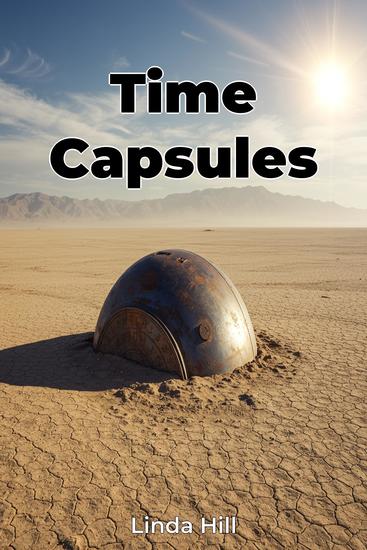
Time Capsules - cover

Time Capsules

Linda Hill

Traducteur A AI

Maison d'édition: Publifye

  • 0
  • 0
  • 0

Synopsis

"Time Capsules" explores the captivating world of intentional historical preservation, focusing on vessels buried to communicate with future generations. These caches, filled with carefully selected artifacts, offer unique insights into past societies, revealing their values, hopes, and fears. The book examines how these deliberate burials evolved from rudimentary practices to technologically advanced projects, driven by a growing desire to commemorate progress, especially during the rise of world expositions. Understanding the historical context and motivations behind these capsules allows us to decode the cultural narratives embedded within them.

 
The book argues that these capsules offer uncensored glimpses into the past, surpassing traditional historical accounts by providing direct, unedited testimony. For example, the selection of specific objects reflects a culture's priorities and worldview. Each chapter introduces the concept of time capsules, tracing their origins and motivations, before delving into specific case studies from around the world, including wartime projects and personal legacies. By analyzing the contents of these capsules, the book uncovers nuanced details about daily life, technological advancements, and societal values, offering a unique perspective for history enthusiasts and researchers.

 
The book's approach is fact-based and accessible, avoiding sensationalism while focusing on rigorous interpretation of historical preservation efforts. It progresses by exploring the evolution of time capsules, analyzing their contents, and considering the ethical implications of opening and interpreting them.
Disponible depuis: 06/03/2025.
Longueur d'impression: 63 pages.

D'autres livres qui pourraient vous intéresser

  • Summary: Stop Doing That Sh*t - End Self-Sabotage and Demand Your Life Back by Gary John Bishop: Key Takeaways Summary & Analysis - cover

    Summary: Stop Doing That Sh*t -...

    Brooks Bryant

    • 0
    • 0
    • 0
    Disclaimer: This is not the official book; but a summary & it does not accompany the official. 
    Prepare to shatter your self-defeating habits with our compelling summary of 'Stop Doing That Sh*t: End Self-Sabotage and Demand Your Life Back' by Gary Bishop. Dive deep into the heart of your self-sabotaging behaviours and unearth the keys to reclaiming control over your life. 
    In 'Stop Doing That Sh*t', Bishop unflinchingly tackles the destructive patterns we continually fall into, highlighting their origins in our hidden fears and unresolved issues. With his no-nonsense approach, he challenges readers to confront these self-defeating cycles head-on and to forge a path towards a life defined by purpose, authenticity, and personal empowerment. 
    Our summary distills the essence of Bishop's raw and motivational message. Discover the subconscious triggers driving your self-sabotage, grasp the practical steps to break free from these cycles, and learn how to rise above your past to create a future of your own design.
    Voir livre
  • Pax Romana: A Captivating Guide to Ancient Rome during the Roman Peace Period - cover

    Pax Romana: A Captivating Guide...

    Captivating History

    • 0
    • 0
    • 0
    Did you know that the biggest territorial expansion in ancient Rome took place during the reign of its first emperor, who also ruled the longest out of all of the rulers prior to the fall of the Western Roman Empire? 
    The Roman Empire reached its zenith within the first two centuries of the fall of the Roman Republic, expanding its territory and spreading its influence well beyond the borders of Europe. During that time, a sort of global peace was achieved, which historians call the Pax Romana. But what exactly is the Pax Romana, and how does one delve into this huge, ever-expanding subject? 
    Like many other segments of Roman history, the Pax Romana is riddled with murky areas, contradictory information from contemporary sources, and fascinating archaeological finds. In this book, you’ll discover what made Rome tick during those roughly two hundred years of relative peace. 
    Throughout the pages of this tome, you’ll get brief glimpses of the reigns of many emperors who made the Pax Romana into what it was. Discover the Pax Romana’s long-term effects and how it managed to cement the Roman Empire as the go-to empire for many later civilizations to try and emulate. 
    Among other things, you’ll gain new knowledge on the following facts:How the empire evolved from the former republic and who the men were that brought about the changes What made the reign of each emperor uniqueWho the best emperors during the Pax Romana were, and which ones were considered the worstWhat role the provinces and territorial expansion played in the growth and development of the empireHow the imperial Romans were stratifiedWhat societal changes came about with the abolition of the republic and the return to a monarchic model 
    Scroll up, and give that “add to cart” button a click to learn more about the Pax Romana!
    Voir livre
  • CCNY Made - Profiles in Grit - cover

    CCNY Made - Profiles in Grit

    Ronnyjane Goldsmith

    • 0
    • 0
    • 0
    Everyone loves an underdog who succeeds against the odds. CCNY Made. Profiles in Grit is the story of City College of New York alumni who beat the odds to reach the pinnacle of their professions and in the process transformed our world.Here are just a few:Andrew Grove, hearing impaired and a survivor of Nazi occupation and Communist rule became the visionary CEO of Intel Corporation, the manufacturer of the semiconductor chip found in most personal computers today.Yip Harburg, the son of immigrants, wrote the lyrics to countless music standards, including "Somewhere Over the Rainbow," one of the most celebrated songs of all times. Jonas Salk, facing antisemitism and the rebuke of the scientific community, developed the Salk Vaccine that irradicated polio from the face of the earth. Felix Frankfurter, who came to America at 12 speaking no English, would be appointed a U.S. Supreme Court Justice, and help write the unanimous opinion in Brown v. the Board of Education declaring school segregation in the United States illegal. In "CCNY Made. Profiles In Grit," the stories of CCNY alumni are recounted who exemplify the promise of Townsend Harris, founder of CCNY and The Ephebic Oath affirmed by graduating students every year. "We will strive unceasingly to quicken the public's better, of civic duty; and thus, in all these ways we will strive to transmit this city not only not less, but greater, better and more beautiful than it was transmitted to us."
    Voir livre
  • Sunshine State Mafia - A History of Florida's Mobsters Hit Men and Wise Guys - cover

    Sunshine State Mafia - A History...

    Doug Kelly

    • 0
    • 0
    • 0
    A vivid, wild ride through a century of Mafia lore, this book tells stories of organized crime rings that have settled in Florida and made the state their base of operations for bootlegging, gambling, extortion, money laundering, and drug running. 


    Featuring Al Capone and crime rings in Miami and South Florida, the Trafficante family in Tampa, Harlan Blackburn and his gambling empire in Orlando, and many more individuals both infamous and little known, this book explains how and why mob bosses from northern states came to Florida in the early 1900s—they saw the state as a respite from cold weather and a good place to evade law enforcement. 


    Doug Kelly offers never-before-told information from newly released files, interviews with retired police and FBI agents, and his own career as a security consultant during the Cocaine Cowboys era. He also defines roles within Mafia families, discusses how changes in policing have impacted the patterns of criminal organizations, and talks about what distinguishes the Mafia from other groups. 


    Sunshine State Mafia will surprise listeners with its insights into the influence of organized crime in the history of the state's small towns and cities.
    Voir livre
  • A Rare Recording of Dan Smoot On The US Constitution - cover

    A Rare Recording of Dan Smoot On...

    Dan Smoot

    • 0
    • 0
    • 0
    Dan Smoot (October 5, 1913 - July 24, 2003), born in East Prairie, MO, was an FBI agent turned conservative political commentator. From 1956 to 1971, he published The Dan Smoot Report, which was a weekly newsletter and radio program. Smoot wrote four books, including The Invisible Government (1962), concerning early members of the Council on Foreign Relations. In the following recording, Smoot discusses the US Constitution and its limited grant of powers.
    Voir livre
  • The US Army Combat Historian and Combat History Operations - World War I to the Vietnam War - cover

    The US Army Combat Historian and...

    Kathryn Roe Coker, Jason Wetzel

    • 0
    • 0
    • 0
    "How is history useful for an operational commander or to soldiers in general? What role does history have for doctrine and training to the U.S. Army as an institution? These are questions this book answers as the authors narrate the development combat historian and the evolving role of combat historians as they develop history into a useful tool for informing training, operations, and doctrine development."—New York Journal of Books
    
    In World War I, Major General Pershing proposed the idea of establishing a historical office within the AEF headquarters. The War Department reorganized the General Staff to include a Historical Branch. Evidence shows that soldiers acting as historians went "down range," albeit not into combat. By World War II, the situation had changed—whether S.L.A. Marshall's popping out of a billet in Sibret as a shells exploded on the road; Forrest Pogue's typing "on a little camp desk under an apple tree;" Chester Starr's terrain reconnaissance in the Mediterranean theater, or Ken Hechler's command of a four-man historical team interviewing soldiers at the Remagen Bridge and searching through secret documents—the World War II combat historians were there behind and on the front lines with a notebook in one hand and their carbine in the other hand, ever ready to collect battlefield information.
    
    Eight historical service detachments were deployed to Korea. The youngest commander, 1st Lieutenant Bevin Alexander, noted "We were on the front lines the whole time . . . We would interview the people afterwards and create a battle study…." After the Korean War, the duties of the combat historian further evolved as what became the Center of Military History published doctrine about military history detachments (MHDs). As America’s immersion in Vietnam escalated, there was concern regarding historical coverage. Chief of Military History Brigadier General Hal Pattison established a network of historical teams to collect information on the U.S Army in the war. A major development in the history program and in deploying MHDs came with the establishment of Headquarters, U.S. Army Vietnam (USARV) under General William C. Westmoreland’s command. In 1965, the history office was organized at Headquarters, U.S. Army Vietnam (USARV). MHDs were deployed across Vietnam, conducting combat after action interviews, and collecting documents. This study focuses on U.S. Army historical programs during combat operations from World War I to the Vietnam War with particular attention on the combat historians, those individuals deployed to a theater of war with the mission of documenting the actions of that theater for current and future historical use.
    Voir livre