Begleiten Sie uns auf eine literarische Weltreise!
Buch zum Bücherregal hinzufügen
Grey
Einen neuen Kommentar schreiben Default profile 50px
Grey
Jetzt das ganze Buch im Abo oder die ersten Seiten gratis lesen!
All characters reduced
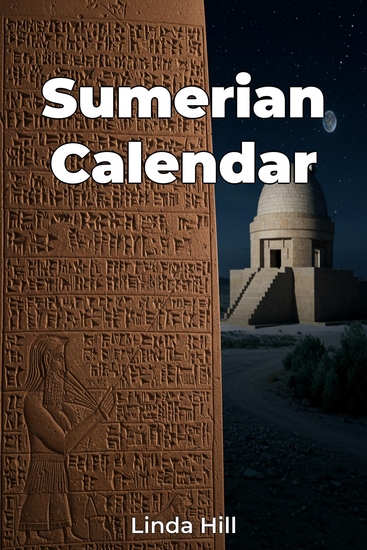
Sumerian Calendar - cover

Sumerian Calendar

Linda Hill

Übersetzer A Ai

Verlag: Publifye

  • 0
  • 0
  • 0

Beschreibung

Sumerian Calendar explores the origins of timekeeping with the first recorded calendar system developed in Mesopotamia. This world history book reveals how profoundly the Sumerian calendar, with its lunar cycles and adjustments for the solar year, influenced agriculture, religious festivals, and administration within Sumerian society. Intriguingly, this early system laid the groundwork for calendars still in use today, highlighting the Sumerians' deep understanding of astronomy. The book examines the calendar's structure, its societal integration, and its lasting legacy, drawing on cuneiform texts and archaeological findings. Furthermore, it traces the calendar's influence on later civilizations like the Babylonians and Assyrians, and its connections to Hebrew and Greek calendars. This approach combines detailed calendar analysis with its social and cultural significance.

 
Organized to guide readers, the book first introduces the basics, then explores its use in Sumerian life, and finally, traces its influence on subsequent cultures.
Verfügbar seit: 05.03.2025.
Drucklänge: 61 Seiten.

Weitere Bücher, die Sie mögen werden

  • On Breathing - Understanding the Connection Between Breath and Life - cover

    On Breathing - Understanding the...

    Aristotle, Tim Zengerink

    • 0
    • 0
    • 0
    What if you could uncover the vital link between breath and the very essence of human life? 
    In this illuminating treatise, Aristotle explores the biological and philosophical significance of breathing—an act we often take for granted. Adapted for contemporary readers, this work reveals how breath not only sustains life but also shapes our well-being and consciousness—sparking insights that resonate with today’s mind-body research. 
    What You’ll Discover in This Modern Translation: 
    - The physiological role of breath in sustaining life 
    - Aristotelian perspectives on the mind-body connection 
    - How breathing influences our energy and state of mind 
    - Ancient wisdom that complements modern wellness practices 
    Imagine harnessing the simple yet powerful act of breathing to enhance physical health, mental clarity, and emotional stability. Aristotle’s investigation inspires readers to see breath as a bridge to a more vibrant, centered way of living. 
    Take a breath and dive into a deeper understanding of life’s sustaining force. Get your copy now and reconnect with the timeless wisdom of this essential act.
    Zum Buch
  • Egyptian Burial Practices - From Tombs to Pyramids - cover

    Egyptian Burial Practices - From...

    Omar Khalil

    • 0
    • 0
    • 0
    The burial practices of ancient Egypt evolved significantly over millennia, reflecting changes in religious beliefs, social structures, and technological advancements. These practices were rooted in the belief in an afterlife, where the preservation of the body and the provision of necessary items were vital. From simple pit burials to grand pyramid constructions, the evolution of Egyptian burial customs offers valuable insights into the cultural and spiritual life of the civilization. 
    In the Predynastic period, burial customs were relatively simple, consisting of shallow pits in the desert sand. The dry, arid environment naturally mummified the bodies, preserving them for millennia. These early graves often contained personal belongings, such as pottery, jewelry, and tools, indicating a belief in a life beyond death. The positioning of the bodies, typically in a fetal position, also suggests a symbolic return to the womb, possibly signifying rebirth. 
    As Egypt unified and entered the Early Dynastic period, burial practices became more elaborate. The development of mastabas marked a significant shift in tomb architecture. These rectangular structures, made of mudbrick or stone, featured underground burial chambers and an above-ground offering chapel. Mastabas were primarily used by the elite, symbolizing their status and wealth. The inclusion of false doors and serdab chambers, which housed statues of the deceased, reflected the belief that the soul could interact with the living through offerings and rituals.
    Zum Buch
  • The Heart of It - The Canterbury Tales and Paradise Lost - cover

    The Heart of It - The Canterbury...

    Elizabeth McNamer

    • 0
    • 0
    • 0
    The Canterbury Tales & Paradise Lost are two epic works that have been entertaining— and sometimes exasperating— readers for centuries. In a series of lectures, literary scholar Elizabeth McNamer provides engaging insights into these two iconic works of British literature.
    Geoffrey Chaucer's merry charm and John Milton's high seriousness become relatable to modern minds when explored by Dr. McNamer. Chaucer's lively, lusty, and never boring Pilgrims have tales to tell that for six centuries have delighted the hearts of readers. One of the great epic poems of all time, Paradise Lost tells of Satan and his evil companions who, through pride, lost heaven for mankind. While these lectures are grounded in scholarly research, they are also accessible for contemporary audiences, helping them appreciate more fully these two great works.
    Zum Buch
  • A Brief Global History of the Left - cover

    A Brief Global History of the Left

    Shlomo Sand

    • 0
    • 0
    • 0
    The Left seems to be dying a slow death. While many commenters have predicted its demise, the Left has always defied these bleak prognoses and risen from the ashes in the most unexpected ways. Nevertheless, we are witnessing today a global decline in organized movements on the Left, and while social struggles and rebellious citizens continue to challenge dominant political regimes, these efforts do not translate into support for traditional left parties or into the creation of dynamic movements on the left. 


    Bestselling historian Shlomo Sand argues that the global decline of the Left is linked to the waning of the idea of equality that has united citizens in the past and inspired them to engage in collective action. Sand retraces the evolution of this idea in a wide-ranging account that includes seventeenth-century England, the French Revolution, the birth of anarchism and Marxism, the decolonial, feminist, and civil rights revolts, and the left populism of our time. In piecing together the thinkers and movements that built the Left, Sand illuminates the global and transnational dynamics which pushed them forward, often picking up the gauntlets their predecessors had laid down. He outlines how they shaped the notion of equality, while also analyzing how they were confronted by its material reality, and the lessons that they did—or did not—draw from this.
    Zum Buch
  • Subversive - Christ Culture and the Shocking Dorothy L Sayers - cover

    Subversive - Christ Culture and...

    Crystal Downing

    • 0
    • 0
    • 0
    Known for her bestselling detective novels, Dorothy L. Sayers lived a fascinating, groundbreaking life as a novelist, feminist, Oxford scholar, and important influence on the spiritual life of C. S. Lewis. This pioneering woman not only forged a literary career for herself but also spoke about faith and culture in revolutionary ways as she addressed the evergreen question of to what extent faith should hold on to tradition and to what extent it should evolve with a changing culture. Thanks to her unmatched wisdom, prophetic tone, and insistent strength, Dorothy Sayers is a voice that we cannot afford to ignore. 


    Providing a blueprint for bridge-building in contemporary, polarizing contexts, Subversive shows how Sayers used edgy, often hilarious metaphors to ignite new ways to think about Christianity, shocking people into seeing the truth of ancient doctrine in a new light. Urging readers to reassess interpretations of the Bible that impede the cause of Christ, Sayers helps twenty-first-century Christians navigate a society increasingly suspicious of evangelical vocabularies and find new ways to talk and think about faith and culture. Ultimately, she will inspire believers, on both the right and the left, to evaluate how and why their language perpetuates divisive certitude rather than the hopeful humility of faith, and will show us all a better way forward.
    Zum Buch
  • Embracing (Rather Than Fixing) Our Authentic Selves - cover

    Embracing (Rather Than Fixing)...

    JD David Bedrick

    • 0
    • 0
    • 0
    We are a society of armchair psychologists, who are constantly self-diagnosing. There are scores of books and television programs that suggest ways for us to reprogram and rid ourselves of disturbing feelings and behavior patterns. Bedrick is deepening the dialogue about the role and practice of psychology in today’s society. Much of mainstream or “pop” psychology give us plenty of labels, but does it go deep enough to motivate us to truly change destructive patterns? David Bedrick gives us a new vision of psychology where people are seen not as either functional or dysfunctional. It’s a psychology where awareness and dialogue are more important than labels. 
    Mainstream psychology often misses the range of diversity in people and tries to “normalize” them into a sea of sameness. In Process Oriented Psychology, for example, there are no 7 steps to a cure. This branch of psychology acknowledges that everyone is different. Bedrick is an awareness follower and says, “I’m using my awareness in watching all the communication a person gives me, much of which is not verbal.” He follows what they are showing him until the client reveals their own cure or medicine. He gives many exciting examples in this dynamic dialogue. (hosted by Justine Willis Toms)
    Zum Buch