Begleiten Sie uns auf eine literarische Weltreise!
Buch zum Bücherregal hinzufügen
Grey
Einen neuen Kommentar schreiben Default profile 50px
Grey
Jetzt das ganze Buch im Abo oder die ersten Seiten gratis lesen!
All characters reduced
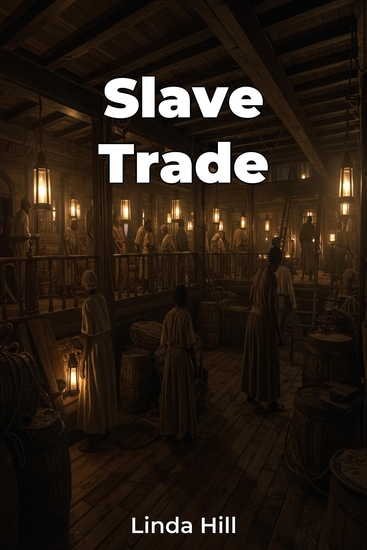
Slave Trade - cover

Slave Trade

Linda Hill

Übersetzer A Ai

Verlag: Publifye

  • 0
  • 0
  • 0

Beschreibung

"Slave Trade" explores the history of the transatlantic slave trade, a system that reshaped the world. It highlights the exploitation of African people while underscoring their agency and resistance, providing a nuanced view of this dark chapter in world history. The book examines the intricate networks that facilitated the trade, from pre-existing African systems to the rise of European colonialism and the plantation system. Readers will gain a deeper understanding of how this forced migration transformed global power dynamics and economic systems, leaving a lasting impact on societies across continents.

 
The book analyzes the slave trade's economic impact on Africa, the racial ideologies that justified slavery, and the various forms of resistance enacted by enslaved people and abolitionists. It emphasizes the interconnectedness of these elements to expose the roots of modern racial inequality and the need for social justice.

 
The book's approach is structured, beginning with the historical context and motivations behind the trade, progressing through the experiences of enslaved Africans, and concluding with an analysis of slavery's legacy in the modern world.
Verfügbar seit: 19.03.2025.
Drucklänge: 63 Seiten.


Weitere Bücher, die Sie mögen werden

  • Ancient American Civilizations - The Original Aztec Mayan and Inca Societies Explained - cover

    Ancient American Civilizations -...

    Kelly Mass

    • 0
    • 0
    • 0
    This is a combo in which you will find three different topics, namely: 
      
    Topic 1: The Mayans have lived in Central America for centuries, but many people are confused as to when and where, and what they did. In this guide, you’ll find answers to all your basic questions about the Maya people: 
      
    Their religion, human sacrifice, habits, wars, conflicts, culture, art, the roles of women in their society, merchants, science, the collapse of their empire, the attack of the Spanish conquistadores, and the main temple ruins that you can still visit as tourists today. 
      
      
    Topic 2: Many accounts of the Aztecs are about brutal, raw civilizations that were constantly at war in the jungle or were offering human lives to the sun god. And even though, there is truth in all of this, many interesting facts about the Aztec civilization (or lack thereof) have been forgotten or put in the background. 
      
    Today, you can learn more about the Aztecs and the issues they were confronted with. You will see that some parts of this society were indeed harsh and merciless, but that others were sophisticated, artistic, practical, and generous. The two seem to contradict each other, which is why it’s so intriguing to study them. 
      
      
    Topic 3: The Inca people were known for their gold and chocolate. Other aspects may have been revealed in movies, such as the human sacrifice, the ball games, the slavery, and the extensive road network they built. 
      
    The Incas were a controversial yet intricate people. They spread their empire all across Peru and some surrounding countries, they had their conflicts, their prisoners, their artwork, their family structure, and much more. 
     
    Zum Buch
  • Cajuns and Creoles The: The History and Legacy of the Unique Ethnic Groups in the American South and Caribbean - cover

    Cajuns and Creoles The: The...

    Editors Charles River

    • 0
    • 0
    • 0
    Deep within the bayous and swamps of Louisiana resides a population descended from an exodus. These people, called Cajuns or Acadians, were expelled from their homelands. Persecuted and homeless, they traveled hundreds of miles south in search of a new home and ultimately settled in the Pelican State, where they made new lives for themselves free from their British conquerors. Though not always warmly welcomed, they were accepted, allowing them to practice their different culture amidst their new neighbors. 
    	Though their home has changed flags over the centuries, the people themselves have remained, retaining a culture that goes back several centuries. While people continue to assimilate, some have continued to live same lifestyles their ancestors did for generations, and they continue to fascinate outsiders, so much so that they occasionally end up being featured on the History Channel. 
    	Contrary to popular belief, the term “Creole” is not restricted to the Louisiana Creole, nor the Creoles of color, which collectively refers to the overall ethnic group and different local Creole cultures that blossomed across the Spanish and French colonies in Louisiana, Mississippi, and northwestern Florida. Today, the term is much more complex and may be applied to any of the various Creole cultures around the globe. The word may also be used to describe any language that has spawned from a mixture of languages, or specifically the associated, but distinct tongues developed within Creole communities, as well as the speakers of these languages themselves.  
    Generally speaking, however, the word “Creole” refers to the cultures birthed from the colonial-era racial and cultural mixing between Europeans (mostly of French, Spanish, or Portuguese descent) and Africans, as well as Native Americans, and other local or indigenous peoples in French, Spanish, and Portuguese territories.
    Zum Buch
  • The Social Psychology of Sexual Interactions - cover

    The Social Psychology of Sexual...

    Roy Baumeister, Dianne Tice

    • 0
    • 0
    • 0
    Join leading social psychologists Roy Baumeister and Dianne Tice to discover what decades of data reveal about human sexuality. In this compelling audio series, renowned human behavior experts Roy Baumeister and Dianne Tice unravel the mysteries surrounding one of humanity’s most talked about but least understood forms of social interaction: sex. Playing the objective role of alien scientists observing human beings from outer space, they find patterns, puzzles, and paradoxes in how we make sexual decisions. Drawing on social psychology and even economics, they find new insights into age-old questions, such as:Do men really want to have sex more than women?Who is actually having lots of sex, and why?How has the internet changed sexual behavior?Why have so many societies tried to stifle female sexuality? In 19 eye-opening lectures, Drs. Tice and Baumeister delve into fascinating facts and findings to analyze human sexuality as a form of social interaction. While their discussions are strongly based in data about how mostly normal people make sexual decisions, they also explore larger issues about our sexual nature and motivations. This masterful audio course will answer all the questions you were afraid to ask and help you better understand human sexuality from a scientific vantage.This course is part of the Learn25 collection.
    Zum Buch
  • The Road Less Triggered - Turning Conflict into Connection with a Single Choice - cover

    The Road Less Triggered -...

    Dr. Kelly Flanagan

    • 0
    • 0
    • 0
    There is a moment that repeats itself over and over again in your relationships—it's the moment you're triggered to flip from connection mode into protection mode. This moment is the unseen source of all disconnection and conflict. However, it happens so quickly and unconsciously most of us feel powerless to choose connection. The Road Less Triggered will empower you to: 
    · quickly disrupt your defensiveness· turn inner turmoil into inner peace· connect with clarity, curiosity, and compassionThrough a powerful blend of psychology, spirituality, real-world examples, and practical exercises, clinical psychologist Dr. Kelly Flanagan illustrates in actionable detail the process through which you can free your relationships from the patterns that imprison them. Can you imagine uninterrupted peace with your partner? Kids who leave home but also love to return? Friendships that deepen instead of dwindle? Ruptured relationships restored to their highest potential? A professional life freed from personal hang-ups? All those rewards and more lie just ahead of you, down the road less triggered.
    Zum Buch
  • Dakota War of 1862 The: The History and Legacy of the Sioux Uprising during the American Civil War - cover

    Dakota War of 1862 The: The...

    Editors Charles River

    • 0
    • 0
    • 0
    Despite being one of the most erstwhile foes the U.S. government faced during the Indian Wars, the Sioux and their most famous leaders were grudgingly admired and eventually immortalized by the very people they fought. Sitting Bull and Crazy Horse remain household names due to their leadership of the Sioux at the fateful Battle of the Little Bighorn, where the native warriors wiped out much of George Custer’s 7th Cavalry and inflicted the worst defeat of the Indian Wars upon the U.S. Army. Red Cloud remains a symbol of both defiance and conciliation, resisting the Americans during Red Cloud’s War but also transitioning into a more peaceful life for decades on reservation.  
    	However, one of the more overlooked conflicts the U.S. Army had with the Sioux took place during the American Civil War. It is known by various names, including the Dakota War, the US-Dakota War, the Dakota Uprising, the Sioux Outbreak, and Little Crow’s War (after the principal Dakota leader), but the current most commonly used name for the war is the “Dakota War.” Two of the four Dakota tribes in the state unleashed their anger and frustration on largely immigrant communities that were heavily German or Norwegian, and the massacres took a heavy toll. In the process, the conflict featured the largest Indian siege of an Army fort in American history, and the end of the conflict brought the largest mass execution in American history.  
    	Indeed, the total loss of life during the Dakota War was perhaps the second largest of all the Indian Wars in North America, second only to the bloody King Philip’s War in colonial New England in the late 17th century, during which more than 1,000 settlers were killed. Throughout the Dakota War, as many as 800 whites were killed, although no one knows the total, and many of the victims were buried in anonymous mass graves.
    Zum Buch
  • Psychological Intimidation - Using Mental Tactics to Instill Fear or Compliance - cover

    Psychological Intimidation -...

    Cito Harder

    • 0
    • 0
    • 0
    Psychological intimidation refers to the use of mental tactics to instill fear, compliance, or submission in others. Unlike physical intimidation, which involves overt threats or aggressive behavior, psychological intimidation operates on a more subtle, covert level. It involves manipulating emotions, perceptions, and thought processes to control or influence an individual’s actions, often without them realizing they are being intimidated. This form of intimidation can be just as harmful as physical aggression, as it undermines the victim’s sense of security, autonomy, and well-being. 
    At its core, psychological intimidation is about the exertion of power. The intimidator uses fear or the threat of harm—whether real or perceived—to influence or dominate another person. It is often used in relationships, workplaces, and social dynamics where there is an imbalance of power. This type of intimidation can be subtle, often taking the form of guilt-tripping, manipulation, isolation, or the use of authority to control another’s behavior. It might include behaviors like silent treatment, constant criticism, gaslighting, or passive-aggressive actions, all designed to make the victim feel inadequate, fearful, or uncertain. 
    The effects of psychological intimidation are often long-lasting. Victims may experience anxiety, depression, and a diminished sense of self-worth. Over time, the individual may begin to question their own judgment, doubt their abilities, or feel that they are powerless to make decisions without the approval of the intimidator. This can create a cycle where the victim is more susceptible to future manipulation or control, reinforcing the power dynamic.
    Zum Buch