Begleiten Sie uns auf eine literarische Weltreise!
Buch zum Bücherregal hinzufügen
Grey
Einen neuen Kommentar schreiben Default profile 50px
Grey
Jetzt das ganze Buch im Abo oder die ersten Seiten gratis lesen!
All characters reduced
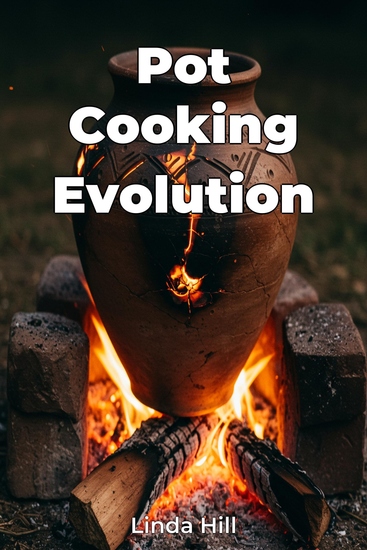
Pot Cooking Evolution - cover

Pot Cooking Evolution

Linda Hill

Übersetzer A AI

Verlag: Publifye

  • 0
  • 0
  • 0

Beschreibung

Pot Cooking Evolution unveils the profound impact of cooking pots on human history, arguing that these simple vessels have driven technological advancements, influenced culinary techniques, and shaped cultural practices. The book explores how innovations in material science, like the transition from early clay pots to metal alloys, directly expanded culinary possibilities and altered cooking methods. Early chapters detail the use of natural materials, while later chapters move through the metal ages and explore regional cooking variations across continents like Asia, Africa, Europe, and the Americas. The book uniquely bridges archaeology, culinary history, and material science to highlight the central role of pot technology in foodways.

 
Did you know that the development of sophisticated braising and stewing methods was enabled by specific pot designs? Or that pot cooking has deeply influenced social gatherings and even religious practices? The book progresses chronologically, showcasing the evolution from basic boiling and steaming techniques, to pressure cookers and slow cookers, while always emphasizing the cultural impact of pot cooking evolution.
Verfügbar seit: 27.02.2025.
Drucklänge: 63 Seiten.

Weitere Bücher, die Sie mögen werden

  • The Sickness Unto Death - cover

    The Sickness Unto Death

    Søren Kierkegaard

    • 0
    • 0
    • 0
    Soren Kierkegaard was a Danish philosopher, theologian, and religious author interested in human psychology. He is regarded as a leading pioneer of existentialism and one of the greatest philosophers of the 19th Century.
    Zum Buch
  • Club Connection - cover

    Club Connection

    Rod Mandelli

    • 0
    • 0
    • 0
    Horny Jake cruises a gay club to find the man of his dirty dreams - a blue collar stud with a hairy chest, dark eyes, and something incredibly huge between his legs. Will he bed the guy teasing him with the beer bottle?
    Zum Buch
  • History of Chemistry Volume II From 1850-1910 - cover

    History of Chemistry Volume II...

    Sir Thomas Edward Thorpe

    • 0
    • 0
    • 0
    A history of the advances in chemistry, in the fields of inorganic, organic and physical chemistry from the mid-nineteenth century through the early 1900s.  Included are brief biographical sketches of some early pioneers in the field such as Mendeleev, Liebeg, Williamson, Dewar and others.  Chapters covering the discovery of new elements, the developing understanding of structure, properties and reactivity, the beginnings of practical organic synthesis and the early work on stereoisomerism show how the way was paved for the discoveries that followed in the 20th century.   Thorpe's observation in Chapter 10 that “Organic chemistry has been largely developed by the discovery from time to time of special reagents and special types of reactions which have shown themselves to be capable of extensive application” continues to be true to this day.   (Summary by J. M. Smallheer)
    Zum Buch
  • Surviving a Shark Attack (On Land) - Overcoming Betrayal and Dealing with Revenge - cover

    Surviving a Shark Attack (On...

    Dr. Laura Schlessinger

    • 0
    • 0
    • 0
    With her trademark no-nonsense approach, New York Times bestselling author Dr. Laura Schlessinger gives her readers the emotional defenses they need to overcome the worst life will throw at them, whether it's a cheating spouse, a lying sibling, or a ruthless colleague. 
    Author and renowned radio host Dr. Laura has helped countless men and women become better husbands, wives, parents, and people. She's helped them cope with grief; shown them how to handle adversity; and set them on the path to understanding and living happy, well-adjusted lives. In Surviving a Shark Attack (on Land) she turns to an emotionally explosive subject that has touched all our lives: betrayal and the desire for revenge. And for the first time, she shares her own personal experiences with betrayal, humiliation, and pain, connecting with her readers as never before and putting this important subject into context. 
    In this powerful and thought-provoking book, Dr. Laura offers readers the perceptive, common-sense insight they need to live healthier, better lives.
    Zum Buch
  • By My Mother's Hand - As Told by Survivor Henry Melnick - cover

    By My Mother's Hand - As Told by...

    Henry Melnick, Limore Zisckind,...

    • 0
    • 0
    • 0
    Holocaust survivor Henry Melnick was born in Lodz, Poland. Shortly after the Nazis occupied Poland in 1939, he was sent to perform slave labour in the Nowy Sącz, Tarnów, and Szebnie ghettos and work camps. He was then transferred to Auschwitz-Birkenau, Buna, Dora-Mittelbau and Bergen-Belsen concentration camps. 
    When his parents were murdered in the Nazi death camp of Belżec, he became the sole survivor of his entire family. After liberation, Henry volunteered for the Israeli Army and fought for Israel’s independence. He came to Canada in 1965 with his wife Hela and their two children. 
    His story is one of strength and courage. His survival is nothing short of a miracle.
    Zum Buch
  • Spanish and Portuguese in the New World The: The History and Legacy of the First European Rivalry in the Americas - cover

    Spanish and Portuguese in the...

    Editors Charles River

    • 0
    • 0
    • 0
    In 1451, Prince Henry the Navigator helped fund and develop a new type of ship, the caravel, that featured triangular lateen sails and would be able to travel in the open ocean and sail against the wind. In 1488, Bartholomew Diaz rounded the southern tip of Africa, named the Cape of Good Hope by King John of Portugal, and entered the Indian Ocean from the Atlantic. 
    One explorer, Christopher Columbus, sought funding from the Portuguese to search for a passage to Asia by sailing westwards, but he was rejected. At this time in the late 15th century, Portugal’s domination of the western African sea routes prompted the neighboring Crown of Castile and the Catholic monarchs in modern Spain to search for an alternative route to south and east Asia (termed Indies), so they provided Columbus with the funding he required. By the time Christopher Columbus started setting back east from the New World after landing there in October 1492, he had explored San Salvador in the Bahamas (which he thought was Japan), Cuba (which he thought was China), and Hispaniola, the source of gold. As the common story goes, Columbus, en route back to Spain from his first journey, called in at Lisbon as a courtesy to brief the Portuguese King John II of his discovery of the New World. King John subsequently protested that according to the 1479 Treaty of Alcáçovas, which divided the Atlantic Ocean between Spanish and Portuguese spheres of influence, the newly discovered lands rightly belonged to Portugal. To make clear the point, a Portuguese fleet was authorized and dispatched west from the Tagus to lay claim to the “Indies,” which prompted a flurry of diplomatic activity in the court of Ferdinand and Isabella.
    Zum Buch