Begleiten Sie uns auf eine literarische Weltreise!
Buch zum Bücherregal hinzufügen
Grey
Einen neuen Kommentar schreiben Default profile 50px
Grey
Jetzt das ganze Buch im Abo oder die ersten Seiten gratis lesen!
All characters reduced
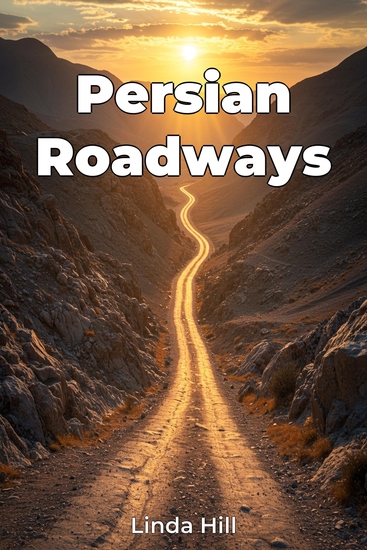
Persian Roadways - cover

Persian Roadways

Linda Hill

Übersetzer A AI

Verlag: Publifye

  • 0
  • 0
  • 0

Beschreibung

Persian Roadways explores how the Achaemenid Empire utilized an extensive network of roads, most notably the Royal Road, to consolidate power and facilitate communication across its vast territories. These ancient roads were not merely pathways; they were instruments of imperial control, enabling swift military campaigns and efficient administration. Persian ingenuity allowed for messages to travel with unprecedented speed, a crucial advantage in governing a diverse population. The book details the construction techniques and logistical challenges involved in creating and maintaining these road systems, highlighting their impact on military movements, economic activity, and cultural exchange. For example, the roads facilitated the movement of goods, people, and ideas, fostering a vibrant exchange across the empire. By examining archaeological findings and ancient texts, Persian Roadways provides a multifaceted understanding of the road systems' function.

 
The book progresses by first introducing imperial infrastructure as a tool for governance, then detailing road construction and maintenance, and finally analyzing the roads' effects on military, cultural, and economic spheres. It connects the Persian road system to later networks, such as those of the Roman Empire, and discusses its influence on modern infrastructure planning, offering valuable insights into the lasting legacy of Persian engineering and strategic planning.
Verfügbar seit: 20.03.2025.
Drucklänge: 56 Seiten.

Weitere Bücher, die Sie mögen werden

  • The History of Urbanization - From Ancient Cities to Modern Metropolises - cover

    The History of Urbanization -...

    Lyric Vale

    • 0
    • 0
    • 0
    Urbanization refers to the process through which cities and towns grow as a result of the migration of people from rural areas and the expansion of urban areas. It is a phenomenon that has shaped human history for thousands of years, influencing every aspect of society from economics to culture and beyond. As populations increase, the desire for better living conditions, access to employment, and social interaction has led individuals to seek opportunities in urban centers. Over time, these cities evolve to accommodate larger populations, evolving into complex hubs of commerce, culture, and technology. 
    The roots of urbanization trace back to the early agricultural revolution, which enabled humans to produce food more efficiently and settle in one place. This change allowed small villages to grow into the first cities, creating more permanent centers of human life. As civilizations advanced, cities became focal points for trade, governance, religion, and culture. Each of these elements played a crucial role in promoting further urban development, as settlements began to specialize in various industries, services, and functions that drew people from surrounding rural regions. 
    Historically, urbanization was most prominent in ancient civilizations such as Mesopotamia, Egypt, and later, Greece and Rome. These early cities, though primitive by modern standards, laid the foundations for the urban environments we know today. Greek and Roman cities were carefully planned, with infrastructures like roads, aqueducts, and public spaces that contributed to their growth and sustainability. In more recent centuries, urbanization expanded rapidly during the Industrial Revolution, driven by advances in technology, industry, and transportation. Factories, railroads, and new employment opportunities in cities attracted millions of people, transforming landscapes and social structures in profound ways.
    Zum Buch
  • The Classic Collection of Soren Kierkegaard - Fear and Trembling Philosophical Fragments Sickness Unto Death - cover

    The Classic Collection of Soren...

    Søren Kierkegaard

    • 0
    • 0
    • 0
    Soren Kierkegaard was a Danish theologian, philosopher, poet, social critic, and religious author who is widely considered to be the first existentialist philosopher.He wrote critical texts on organized religion, Christianity, morality, ethics, psychology, and the philosophy of religion, displaying a fondness for metaphor, irony, and parables. Much of his philosophical work deals with the issues of how one lives as a "single individual", giving priority to concrete human reality over abstract thinking and highlighting the importance of personal choice and commitment.He was against literary critics who defined idealist intellectuals and philosophers of his time, and thought that Swedenborg, Hegel, Fichte, Schelling, Schlegel, and Hans Christian Andersen were all "understood" far too quickly by "scholars".Contents:Fear and TremblingPhilosophical FragmentsSickness Unto Death
    Zum Buch
  • Egyptian Dynasties - The Pharaonic Lineages and Their Impact - cover

    Egyptian Dynasties - The...

    Omar Khalil

    • 0
    • 0
    • 0
    The Early Dynastic Period marks the beginning of ancient Egyptian civilization, a time when the foundations of one of history’s most remarkable cultures were laid. Spanning approximately from 3100 to 2686 BCE, this period is characterized by the unification of Upper and Lower Egypt under a single ruler, leading to the establishment of the first dynasties and the concept of pharaonic rule. 
    The unification of Upper and Lower Egypt is often attributed to King Narmer, a powerful ruler who is believed to have brought the two regions together. The famous Narmer Palette, an ancient ceremonial artifact, depicts Narmer wearing the crowns of both Upper and Lower Egypt, symbolizing his authority over the unified land. This pivotal moment not only marked the creation of a centralized state but also set the stage for the development of a dynastic tradition that would persist for millennia. The consolidation of power allowed the pharaohs to wield significant control over the land, fostering political stability and cultural coherence. 
    The role of Narmer and the early pharaohs was instrumental in shaping the governance and societal structure of ancient Egypt. As divine rulers, these early kings were seen as earthly embodiments of the gods, responsible for maintaining ma'at, the concept of cosmic order and balance. This religious authority legitimized their political power and reinforced their role as mediators between the divine and mortal worlds. During this period, the pharaohs established court systems, oversaw the construction of monumental architecture, and promoted the development of writing, which became crucial for record-keeping and administration.
    Zum Buch
  • How we save the world - The Fight to Rewrite Our Future Begins Now - cover

    How we save the world - The...

    Jack Jay

    • 0
    • 0
    • 0
    How We Save The World by Jack Jay is a manifesto for those eager to reshape humanity’s future. Blending philosophy with actionable wisdom, Jay explores pressing global issues like inequality, environmental damage, and AI ethics. 
    Chapter 1: Introduces a new meta-narrative, emphasizing the need for a better global story. 
    Chapter 2: Explores the rapid evolution of technology. 
    Chapter 3: Discusses how information shapes reality through the butterfly effect. 
    Chapter 4: Outlines pragmatic philosophies for creating effective global movements. 
    Chapter 5: Introduces the concept of the “Prodemic” — viral methods anyone can use to upgrade humanity. 
    Chapter 6/7: Focus on hacking dopamine systems to avoid burnout and redefine laziness. 
    Chapter 8: Advocates for simplicity in self-improvement and avoiding over-optimization. 
    Chapter 9: Addresses the AI alignment problem, offering a solution for humanity to collectively manage the risks of AI. 
    Chapter 10: Redefines consumerism and philanthropy through designer goods purchased via tax-deductible donations. 
    Chapter 11: Introduces “storyhacking” to help individuals start global movements. 
    Chapter 12: Emphasizes long-term thinking in a future dominated by AI. 
    Chapter 13: Presents the concept of "spear ritual wisdom" as a catalyst for positive global change. 
    Chapter 14-16: Dive deeper into leading and sustaining such a movement. 
    Chapter 17: Discusses real-world operations for achieving tipping points in society. 
    Chapter 18: Focuses on the strategy behind global leadership and spear rituals. 
    Chapter 19: Recaps the book’s worldview, offering new solutions and missions for a brighter future. 
    The book combines deep reflections with practical approaches for individuals and movements to spark change, encouraging people to take action in reshaping the world.
    Zum Buch
  • Five Cities that Ruled the World - How Jerusalem Athens Rome London and New York Shaped Global History - cover

    Five Cities that Ruled the World...

    Douglas Wilson

    • 0
    • 0
    • 0
      
    In Five Cities that Ruled the World, theologian Douglas Wilson fuses together, in compelling detail, the critical moments birthed in history’s most influential cities —Jerusalem, Athens, Rome, London, and New York. 
    Wilson issues a challenge to our collective understanding of history with the juxtapositions of freedom and its intrinsic failures; liberty and its deep-seated liabilities. Each revelation beckoning us deeper into a city’s story, its political systems, and how it flourished and floundered. 
    You'll discover the significance of:Jerusalem's complex history and its deep-rooted character as the city of freedom, where people found their spiritual liberty.Athens' intellectual influence as the city of reason and birthplace of democracy.Rome's evolution as the city of law and justice and the freedoms and limitations that come with liberty.London's place in the world's history as the city of literature where man's literary imagination found its wings.New York's rise to global fame as the city of commerce and how it triggered unmatched wealth, industry, and trade throughout the world. 
    Five Cities that Ruled the World chronicles the destruction, redemption, personalities, and power structures that altered the world's political, spiritual, and moral center time and again. It's an inspiring, enlightening global perspective that encourages readers to honor our shared history, contribute to the present, and look to the future with unmistakable hope.
    Zum Buch
  • Freelance Writer - cover

    Freelance Writer

    Bertie Huston

    • 0
    • 0
    • 0
    Freelance Writer: The Ultimate Guide to Successful Freelance Writing, Learn Helpful Writing Tips and Other Valuable Advice on How You Can Make Money in Freelance WritingAre you thinking of becoming a freelance writer? Being a freelance writer has its perks like being able to set your own schedule or working from home. It can be a great side business or can be a full-time career as well. But starting out can be tricky because you need to stand out from the rest of the freelance writing industry. But with persistence, hard work, focus and consistency, you would surely rise above the rest and knock off the competition.This audiobook will give you all the valuable information about freelance writing. It will teach you helpful tips on how you can improve your writing skills. You will also discover how you can successfully market yourself as freelance writer.This audiobook will discuss the following topics:- Introduction to Freelancing- Building a Successful Freelance Writing Career- Types of Freelance Writing- Creative Writing - An Art- Web Blog Writing- SEO Writing- Sales and Marketing Writing- Newsletters and Editorial Writing- Magazine Writing- Ebook Writing- Choosing the Right Topic - Limitations and Guidelines- Realizing Your Writing Skills- Inking Your Writing Skills- Analyzing Your Writing Needs- How to Establish Credibility- Finding Freelance Writing Opportunities- Freelance Writing in a GlimpseIf you love to write, freelance writing can be the perfect job for you. Starting may be difficult and the first year will test you, but once you have found your rhythm and flow and you continue to be consistent and professional, everything will fall into place.If you want to learn what it takes to be a freelance writer and need a guide for the whole process of becoming one, this audiobook is perfect for you. Scroll up and click "add to cart" now.
    Zum Buch