Begleiten Sie uns auf eine literarische Weltreise!
Buch zum Bücherregal hinzufügen
Grey
Einen neuen Kommentar schreiben Default profile 50px
Grey
Jetzt das ganze Buch im Abo oder die ersten Seiten gratis lesen!
All characters reduced
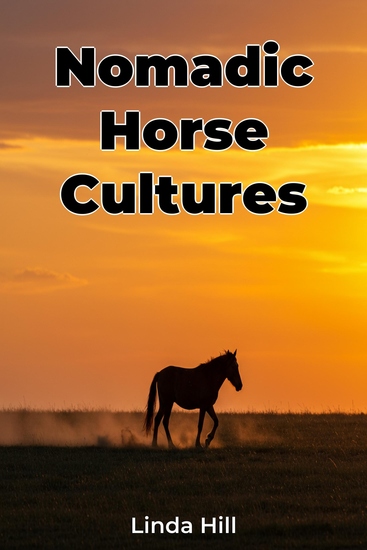
Nomadic Horse Cultures - cover

Nomadic Horse Cultures

Linda Hill

Übersetzer A Ai

Verlag: Publifye

  • 0
  • 0
  • 0

Beschreibung

Nomadic Horse Cultures explores the transformative impact of the horse on indigenous societies across Eurasia, Africa, and the Americas. It examines how the domestication of horses reshaped hunting practices, warfare, and social structures, leading to significant cultural adaptations. The book challenges traditional narratives by highlighting the agency of indigenous peoples in co-evolving with the horse, demonstrating how they actively integrated the animal into their existing lifestyles.For example, the adoption of the horse revolutionized hunting techniques, enabling more efficient hunting of bison and other large game. This study traces the horse's journey across continents, analyzing how various groups integrated it into their cultures. Early chapters focus on domestication and diffusion, while later sections delve into the horse's impact on warfare, examining the rise of horse-based warrior societies. It emphasizes the profound ways in which the horse spurred a re-organization of societies, economies, and belief systems. The book's multidisciplinary approach, drawing from archaeology, oral histories, and anthropology, provides a holistic understanding of human-animal relationships and cultural transformation in world history.
Verfügbar seit: 29.03.2025.
Drucklänge: 60 Seiten.
Weitere Bücher, die Sie mögen werden

  • Why People Kill - cover

    Why People Kill

    Raphael Terra

    • 0
    • 0
    • 0
    This audiobook has been recorded using Text to speech (TTS). 
     
    Nothing can be more terrifying than knowing the streets are being prowled by a twisted serial killer. To be a female of a certain age and profession on the streets of 19th century London, with the knowledge that one of your clients could be Jack the ripper himself. 
     
    There were many more Jack the Rippers in the world. 
     
    Every human has a capacity for good or evil. We are all dark and light. This has been known for thousands of years. It has been written, preached and symbolised across the world. 
     
    Just as there are those in history who have stood out for their compassion and good works, there are also those who have become infamous for their propensity to evil. From serial killers who murder one human after another to dictators who order mass genocide upon their own citizens - evil knows no bounds. 
     
    But what is it that creates these people? Is there an inbuilt genetic lock inside awaiting the turning of a key? Or are these people the result of their life experiences? Does abuse by parents play a key role? Does society itself have to answer for the actions of the murderers that it creates? 
     
    It is time to delve deep into the world and mind of serial killers and discover why they kill.
    Zum Buch
  • Power and Politics - The Structure and Struggles of Roman Rule (3 in 1) - cover

    Power and Politics - The...

    Rogan Fish

    • 0
    • 0
    • 0
    This bundle offers an in-depth exploration of how political institutions, civil unrest, and power dynamics shaped the Roman Republic and Empire. Beginning with the early Republic, this book dives into the foundational structures of Roman governance—such as the Senate, consuls, and tribunes—highlighting how the balance of power evolved in response to internal challenges and external expansion. The early sections emphasize the ideals of civic virtue and republicanism that underpinned Rome’s initial governance, and how those ideals were tested by growing inequality and political rivalry. 
    As Rome expanded, the book traces the emergence of social conflict between the patricians and plebeians, the rise of populist leaders, and the violence that accompanied land reform and calls for justice. From the Gracchi brothers to Julius Caesar, readers will witness how political ambition and civil war undermined the Republic’s foundations. Key events such as Caesar’s dictatorship, the assassination that followed, and the shifting alliances during the subsequent power vacuum demonstrate how Rome’s political system struggled to contain individual ambition and the burden of imperial management. 
    Finally, the book examines the transformation into empire, where power became centralized under emperors who ruled with divine authority and military backing. Though the empire brought relative stability, it came with corruption, oppression, and loss of representative governance. This section looks closely at the early emperors, the role of the Senate under imperial rule, and the public’s shifting relationship with authority. Power and Politics serves as a gripping account of how Roman ideals clashed with political reality, offering timeless lessons about governance, ambition, and civic duty.
    Zum Buch
  • Determinism - Fate Coincidence and the Question of Free Will - cover

    Determinism - Fate Coincidence...

    Hector Davidson

    • 0
    • 0
    • 0
    The question of whether humans possess free will has intrigued philosophers, scientists, and thinkers for centuries. At the heart of this debate lies the concept of determinism—the idea that every event or action is the result of preceding causes, governed by laws of nature and logic. If everything that happens is the result of a cause, can we truly say we have control over our decisions? Is free will simply an illusion? These questions challenge our sense of autonomy and personal responsibility, and they invite us to explore the complex relationship between fate, coincidence, and choice. 
    Determinism suggests that all events, including human actions, are preordained by prior causes. From a deterministic standpoint, the universe is a vast, interconnected web of cause and effect, where each moment flows seamlessly from the one before it. This view raises profound questions about the nature of human agency. If every decision we make, every thought we have, and every action we take is determined by a series of preceding events—genetic, environmental, and even cosmic—where does the space for free will lie? Are we merely puppets of fate, our strings pulled by forces beyond our control? 
    However, this deterministic view is not universally accepted. Many philosophers argue that humans can exercise free will—that we have the capacity to make choices independent of the deterministic forces at play. This belief in free will asserts that while factors such as genetics, upbringing, and circumstances may influence our decisions, we retain the ability to act in ways that transcend these influences. The challenge, then, is reconciling the possibility of free will with the idea that many of our actions may be shaped or even constrained by forces outside our conscious control.
    Zum Buch
  • How is One to Be Entirely Free of Fear? - Malibu 1970 - Small Group Discussion 8 - cover

    How is One to Be Entirely Free...

    Jiddu Krishnamurti

    • 0
    • 0
    • 0
    What do we mean by fear? Fear of what? There are various types of fear and we need not analyse every type. But we can see that fear comes into being when our comprehension of relationship is not complete. Relationship is not only between people but between ourselves and nature, between ourselves and property, between ourselves and ideas; as long as that relationship is not fully understood, there must be fear. Life is relationship. To be is to be related and without relationship there is no life. Nothing can exist in isolation; so long as the mind is seeking isolation, there must be fear. Fear is not an abstraction; it exists only in relation to something.
    Zum Buch
  • Celia A Slave - cover

    Celia A Slave

    Melton A. McLaurin, Jennifer L....

    • 0
    • 0
    • 0
    Celia was only fourteen years old when she was acquired by John Newsom, an aging widower and one of the most prosperous and respected citizens of Callaway County, Missouri. The pattern of sexual abuse that would mark their entire relationship began almost immediately. After purchasing Celia in a neighboring county, Newsom raped her on the journey back to his farm. He then established her in a small cabin near his house and visited her regularly. Over the next five years, Celia bore Newsom two children; meanwhile, she became involved with a slave named George and resolved at his insistence to end the relationship with her master. When Newsom refused, Celia one night struck him fatally with a club and disposed of his body in her fireplace. 


    Her act quickly discovered, Celia was brought to trial. She received a surprisingly vigorous defense from her court-appointed attorneys. Nevertheless, the court upheld the tenets of a white social order that wielded almost total control over the lives of slaves. Celia was found guilty and hanged. 


    Melton A. McLaurin uses Celia's story to reveal the tensions that strained the fabric of antebellum southern society. Celia's case demonstrates how one master's abuse of power over a single slave forced whites to make moral decisions about the nature of slavery.
    Zum Buch
  • What the Other Mothers Know - A Practical Guide to Child Rearing Told in a Really Nice Funny Way That Won't Make You Feel Like a Complete Idiot the Way All Those Other Parenting Books Do - cover

    What the Other Mothers Know - A...

    Michele Gendelman, Ilene Graff,...

    • 0
    • 0
    • 0
    Written by three mothers who've been through it all, What the Other Mothers Know gives you straight, funny, realistic talk on:getting drool stains out of clothing finding the perfect babysitter and maintaining her loyaltytaking car trips with toddlers recognizing how to set limits and holding to themsucking up to preschool directorskeeping your child off ihatemymom.comAnd much, much moreThe maternal wisdom of the ages is right in your hands—delivered with a heaping spoonful of humor.
    Zum Buch