Join us on a literary world trip!
Add this book to bookshelf
Grey
Write a new comment Default profile 50px
Grey
Subscribe to read the full book or read the first pages for free!
All characters reduced
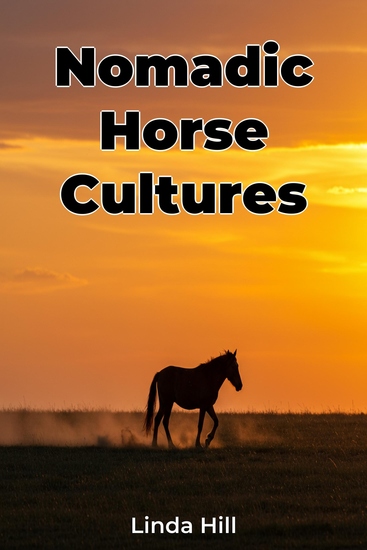
Nomadic Horse Cultures - cover

Nomadic Horse Cultures

Linda Hill

Translator A Ai

Publisher: Publifye

  • 0
  • 0
  • 0

Summary

Nomadic Horse Cultures explores the transformative impact of the horse on indigenous societies across Eurasia, Africa, and the Americas. It examines how the domestication of horses reshaped hunting practices, warfare, and social structures, leading to significant cultural adaptations. The book challenges traditional narratives by highlighting the agency of indigenous peoples in co-evolving with the horse, demonstrating how they actively integrated the animal into their existing lifestyles.For example, the adoption of the horse revolutionized hunting techniques, enabling more efficient hunting of bison and other large game. This study traces the horse's journey across continents, analyzing how various groups integrated it into their cultures. Early chapters focus on domestication and diffusion, while later sections delve into the horse's impact on warfare, examining the rise of horse-based warrior societies. It emphasizes the profound ways in which the horse spurred a re-organization of societies, economies, and belief systems. The book's multidisciplinary approach, drawing from archaeology, oral histories, and anthropology, provides a holistic understanding of human-animal relationships and cultural transformation in world history.
Available since: 03/29/2025.
Print length: 60 pages.

Other books that might interest you

  • Unbounded - Placing a designation on an individual or an object imposes constraints establishing a boundary wherein the assigned label transforms into a confining restriction - cover

    Unbounded - Placing a...

    Vines Graener

    • 0
    • 0
    • 0
    Frequently, when assigning labels to individuals or things, boundaries are inadvertently set, turning the label itself into a confining restriction. It's crucial for adults to choose their words carefully, as children absorb them swiftly. We each faced this issue when he was taunted by bullies who dubbed him "the kid with the broken brain. 
    I came to the realization that he had been approaching his challenges with the wrong set of questions. Instead of contemplating what to learn, he needed to find effective and enjoyable methods for learning. 
    In the realm of wisdom, gaining knowledge is akin to possessing extraordinary abilities. Our potential to learn is boundless; all that's required is proper guidance on accessing it. A specific mindset, motivation, and methodology can assist you in enhancing your cognitive abilities, enabling you to grasp any subject more swiftly and unlock a more exceptional life. 
    If you're not reaching your full potential in learning or living, and there's a disparity between your current and desired reality, it indicates a limitation that needs to be identified and replaced in your mindset (the what), your motivation (the why), or your approach (the how). 
    The four learning challenges often referred to as "supervillains" include digital deluge, digital distraction, digital dementia, and digital deduction. While these conditions are not directly caused by technology, it serves as an amplifier, magnifying their impact despite its numerous advantages.
    Show book
  • Comeback - Routing Trumpism Reclaiming the Nation and Restoring Democracy’s Edge - cover

    Comeback - Routing Trumpism...

    M. Steven Fish, Laila M. Aghaie

    • 0
    • 0
    • 0
    The fate of American democracy now hinges on the Democrats' ability to defeat the Republicans for the foreseeable future. But for the Democrats to win consistently, they must reestablish their credentials as fearless leaders, tough fighters, and fierce patriots. 
    Comeback delivers a bold new take on democracy’s crisis. Many liberals think that escalating economic anxieties and cultural backlash drove voters to Trump. But a crush of data shows this thinking to be deeply flawed. It also strikes working-class voters as condescending and repellent. And while the Democrats stick to “kitchen table” issues and showing how much they care, voters care more about strength and commitment to principle than prescription drug prices. 
    Politics is a dominance game and a contest to capture the flag. Politicians who seem to be the strongest leaders and most passionate patriots hold the advantage. The Republicans get it. The Democrats don't. 
    Republicans have a high-dominance political style. They take risks, savor conflict, and use provocative language. Democrats have a low-dominance style. They’re risk-averse, afraid to engage on cultural issues—and more than a little boring. Republicans hammer away at their patriotism, even as they betray the nation and shred American values. Democrats are loyal to American values but have grown squeamish about patriotism and have no national story. 
    Ordinary people often don’t recognize themselves in the stories liberal politicians tell about them, while the authoritarians speak a language of dominance and national greatness that connects. The Democrats need a new approach to messaging. Comeback spells it out—and provides a roadmap for trouncing Trumpism.
    Show book
  • Avoidant Help Workbook - Healing the Distance with Easy and Practical Everyday Exercises for Dismissive Avoidant Attachment Style - cover

    Avoidant Help Workbook - Healing...

    Alex Kingsman

    • 0
    • 0
    • 0
    Do you desire genuine connections and fulfilling relationships?Are you find yourself unintentionally sabotaging potential partnerships?Do you feel stuck and uncertain about how to start opening up? 
    Find out more in this workbook, written specifically for individuals with a dismissive avoidant attachment style! 
    Attachment style researcher Alex Kingsman provides a complete list of exercises that help readers overcome the challenges of being avoidant. As an avoidant himself, Kingsman understands the difficulties and self-blame many that avoidants experience on a day-to-day basis. 
    This workbook, born from years of research, offers a new approach that will lead you towards nurturing fulfilling relationships, without losing your sense of self. 
    While most attachment books available out there tend to blame and discard the experience of avoidant individuals, the author understands the underlying fears while, challenging many misconceptions as:Are you really afraid of losing your independence? Or do you simply fear you might lose yourself into a new relationship?Do you really resist commitment? Or do you simply not want to be manipulated into doing something? 
    This workbook presents a new outlook on how to dismantle emotional barriers while remaining authentic. Discover exercises tailored for avoidants, designed by someone who has walked the same path as you. Shed the fear of intimacy and self-sabotage in your relationships, as Kingsman offers a clear roadmap for change. 
    In the following workbook, you will learn how to:Truly understand your emotional needsDiscover the benefits of being avoidant (yes, there are some!)Let down your emotional walls and embrace changeStop idealising your ex
    Show book
  • Uncertain Allies - General Joseph Stilwell and the China-Burma-India Theater - cover

    Uncertain Allies - General...

    Eric Setzekorn

    • 0
    • 0
    • 0
    Uncertain Allies looks at the United States military's experience in the China-Burma-India (CBI) theater during World War II through the eyes of Joseph Stilwell, the commanding general of American forces in those three countries. Historian Eric Setzekorn focuses on two themes: uncertain allies and ambiguous missions. 


    Despite being allies, relationships between the Americans and Chinese, as well as Americans and the British, were marked by a lack of trust in the CBI theater. This was problematic because most combat personnel under Stilwell's command were Chinese. The lack of trust impacted tactical and operational planning. The second reoccurring theme, ambiguous missions, refers to the poorly defined goals for the theater. The CBI's mission was vague, and Stilwell lacked clear objectives. 


    Underlying both themes is the key flaw in Stilwell's conduct: a failure to understand the American political context. Stilwell advocated for a transactional military and political relationship despite indications that President Roosevelt, other leaders, and the American public desired a long-term cooperative relationship. Stilwell's proposals to make military aid and American support on a quid pro quo basis inevitably ran into staunch opposition. The result was a dangerous disconnect between American military operations and national policy.
    Show book
  • Mississippian Culture - Forgotten Cities of North America - cover

    Mississippian Culture -...

    Rolf Hedger

    • 0
    • 0
    • 0
    The Mississippian culture, a sophisticated and influential civilization, thrived in the southeastern United States from approximately 800 CE to 1600 CE. This culture, named after the Mississippi River, was centered around the river valleys and floodplains of the American Midwest, particularly in areas that are now parts of modern-day Illinois, Missouri, Arkansas, and Mississippi. It is best known for its massive earthworks, especially mounds, which were used for both ceremonial and burial purposes. The Mississippian people developed a complex society that was marked by large-scale agriculture, intricate trade networks, and powerful political and religious institutions. 
    The origins of the Mississippian culture can be traced back to the earlier Woodland period, during which smaller villages and simple mound-building practices began to emerge. By around 800 CE, however, the Mississippian culture had fully developed, distinguished by its highly organized cities, monumental architecture, and wide-reaching trade connections. The Mississippians were expert farmers, cultivating staple crops such as maize, beans, and squash, which allowed their settlements to flourish and grow in both size and complexity. 
    One of the most notable features of the Mississippian culture was its social and political structure. The culture was organized around large chiefdoms, with powerful leaders who held both political and religious authority. These chiefs often resided in large, fortified towns that served as hubs of trade, governance, and religious activity. The largest and most famous of these urban centers was Cahokia, located near present-day St. Louis, Missouri. At its height, Cahokia had a population of over 10,000 people, making it one of the largest urban centers in pre-Columbian North America.
    Show book
  • Belonging Matters - Conversations on Adoption Family and Kinship - cover

    Belonging Matters -...

    Julie Ryan McGue

    • 0
    • 0
    • 0
    Belonging Matters is meant to support the adoption community while creating a conversation with those not directly touched by adoption. The collection addresses the questions:
    —If you are part of the adoption universe, how do you find identity, family, and community
    
    —If someone you know is adopted, how do you understand and support them in their search for identity, family, and belonging
    
    —How do we improve the adoption experience to invoke social change that benefits the individual, the family unit, and the communities in which they live?
    
    This collection is about examining all that makes us unique, and it is about finding meaning and healing from the difficulties we encounter in life.
    Show book