Begleiten Sie uns auf eine literarische Weltreise!
Buch zum Bücherregal hinzufügen
Grey
Einen neuen Kommentar schreiben Default profile 50px
Grey
Jetzt das ganze Buch im Abo oder die ersten Seiten gratis lesen!
All characters reduced
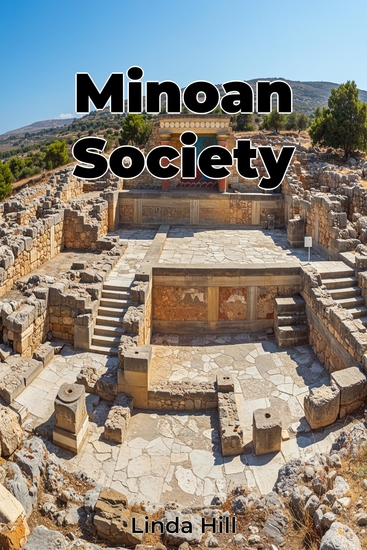
Minoan Society - cover

Minoan Society

Linda Hill

Übersetzer A AI

Verlag: Publifye

  • 0
  • 0
  • 0

Beschreibung

Minoan Society explores the fascinating world of the Minoans, a Bronze Age civilization that thrived on ancient Crete. This book delves into their daily life, economic systems, and spiritual beliefs, offering a comprehensive look at their unique culture.

 
The Minoans developed a sophisticated palatial economy, where palaces served as centers for storage, redistribution, and craft production, showcasing a complex societal structure.

 
Intriguingly, their religious practices centered on female deities, setting them apart from other Bronze Age cultures.

 
The book challenges previous interpretations, arguing that the Minoans were not merely a precursor to the Mycenaeans but a distinct civilization with a vibrant artistic tradition.

 
Examining archaeological finds from sites like Knossos and Akrotiri, alongside Linear A texts, it provides an updated perspective on Minoan life.

 
The book progresses by first introducing the geographical and chronological context, then exploring the economic foundations, delving into religious practices, and finally considering factors leading to their decline.

 
This approach connects Minoan society to broader themes of art history, religious studies, and economics.
Verfügbar seit: 29.03.2025.
Drucklänge: 61 Seiten.


Weitere Bücher, die Sie mögen werden

  • Rare Recording of Neville Goddard A - Volume 2 - cover

    Rare Recording of Neville...

    Neville Goddard

    • 0
    • 0
    • 0
    Neville Goddard (February 19, 1905 – October 1, 1972) was born in St. Michael, Barbados, and came to the US in 1922 to study drama and dance. While touring with his dance company in England he developed an interest in metaphysics. After his return to New York he gave up the entertainment industry to devote his full attention to the study of spiritual and mystical matters. While living in Los Angeles in the 1950s, he gave a series of talks on television and radio. In his lectures and books Neville dealt with what he called "The Law" and "The Promise," which relate to the method of creating one's physical reality through imagining. The following recording is from a 1968 lecture.
    Zum Buch
  • Day in the Life of the Maya A: History Culture and Daily Life in the Mayan Empire - cover

    Day in the Life of the Maya A:...

    Editors Charles River

    • 0
    • 0
    • 0
    Many ancient civilizations have influenced and inspired people in the 21st century. The Greeks and Romans continue to fascinate the West today. But of all the world’s civilizations, none have intrigued people more than the Mayans, whose culture, astronomy, language, and mysterious disappearance all continue to captivate people. 
    In 2012 especially, there has been a renewed focus on the Mayans, whose advanced calendar has led many to speculate the world will end on the same date the Mayan calendar ends. The focus on the “doomsday” scenario, however, has overshadowed the Mayans’ true contribution to astronomy, language, sports, and art. 
    The preoccupation with 2012 and the Mayan calendar has also overshadowed the discussion over who exactly the Mayans were. The Maya are one of the most famous civilizations in history, but what was it like to be Mayan at the height of their civilization in the 15th century? What did they eat? What did they play? What was their religion? How did they build their cities and organize their empire? How did they fight? 
    A Day in the Life of the Maya answers these questions by comprehensively examining and analyzing everything about their culture, including their history, religion, architecture, farming, calendar, ball game, cosmology and origins. 
    Zum Buch
  • Redefining Racism - How Racism Became "Power + Prejudice" - cover

    Redefining Racism - How Racism...

    Joseph (Jake) Klein

    • 0
    • 0
    • 0
    Have you heard that racism requires more than just prejudice, but also “power”? 
    Have you been told the dictionary definition of racism isn’t correct? 
    Where did this all come from? And why is it being taught at your school or workplace? 
    The rabbit hole goes deeper than you might have imagined. Joseph (Jake) Klein’s Redefining Racism tells the story of the group of radical white “anti-racist” corporate and high-school educators who in the late 1960s and early 70s, taking inspiration from the anti-integrationist Marxist-Leninist Stokely Carmichael, funded by an organization seeking to pay off rioters to stop, and using manipulative techniques developed in part by U.S. intelligence’s director of the “psychological warfare center for the Far East,” created and spread the “Power + Prejudice” redefinition. And the late famed crack-addicted serial bank robber “Zombie Bandit” played a role too. 
    In tracing the history of this redefinition, Redefining Racism also tells the story of the origins of “Racism Awareness Training,” today frequently called “diversity training,” in the tradition of Robin DiAngelo and White Fragility that have taken American corporations, schools, and universities by storm. 
    Redefining Racism is the definitive rebuttal for why racism is not best defined as “Power + Prejudice” and a damning origin story for much of the modern so-called “anti-racist” movement, reminding us why the best way to be an anti-racist is to look at the content of one’s character and not the color of their skin. 
    “For anyone genuinely committed to realizing an American future where race, racism, and ‘anti-racism,’ cease to be the tools used to divide us, this is an indispensable text. With Redefining Racism, Jake Klein has provided a national service.” — Thomas Chatterton Williams, author of Self-Portrait in Black and White and Losing My Cool
    Zum Buch
  • Summary of Principles for Dealing with The Changing World Order - Why Nations Succeed and Fail by Ray Dalio - cover

    Summary of Principles for...

    BOOK TIGERS

    • 0
    • 0
    • 0
    Dalio takes you through the history of the world and explains the current power dynamics in terms of long-term money and debt cycles, internal wealth and international power, and wealth cycles and power cycles. 
    Using the most volatile economic and political periods in history, he explains why the times ahead are likely to differ drastically from the ones that we've seen in our lifetimes—and offers suggestions for successfully navigating those times. A bold and practical guide to the rise and collapse of empires in the last 500 years of history, with crucial lessons for today's U.S. and Chinese leaders alike. 
    This book takes the readers on a tour of the major empires, including the Dutch, British, and American, putting the "Big Cycle" that has driven the successes and failures of all of the world's major countries throughout history into perspective.  
    This book, Summary of Principles for Dealing with The Changing World Order by Ray Dalio is an unofficial Summary of the original which includes:Book Summary OverviewChapter-by-Chapter AnalysisBackground Information about the bookBackground information about the authorTrivia questions, Discussion questionsAnd much more… 
    This book unveils the timeless and universal forces at the root of these upheavals and utilizes them to forecast the future, providing practical advice on preparing for what lies ahead. 
    Scroll up and click Add to Cart for your copy now! 
    Disclaimer: This is an UNOFFICIAL summary and analysis, not the original book. It is designed to record all the key points of the original and will provide you with an overview before or after reading the original.
    Zum Buch
  • The Invisible Man - cover

    The Invisible Man

    H. G. Wells

    • 0
    • 0
    • 0
    A mysterious, bandaged stranger arrives in the small English village of Iping - and chaos follows close behind. H.G. Wells' classic story of obsession, murder, and science run amok.
    Zum Buch
  • Shame Guilt and the Body - cover

    Shame Guilt and the Body

    Jim Colajuta

    • 0
    • 0
    • 0
    Shame is a powerful self-conscious emotion that arises from being perceived as imperfect, inferior, insufficient, or weak. External shame is a socially contextualized feeling defined as the uneasy belief that others see one's own inner self and exterior physical traits as undesirable, leading to others ignoring, criticizing, or rejecting one.Whatever we are doing, we are certainly doing it with our bodies. We rely on our bodies from the minute we wake up, whether consciously or unconsciously. When we glance in the mirror, we may notice changes in our bodies, and even tiny alterations can impact how we feel about ourselves. The image we have of our bodies impacts how we feel our bodies in daily life.Shame can be found in the bedroom, at the beach, in the doctor's office, and in the therapist's office. Shame can be seen in the mirror and on camera. It has many consequences, from low self-esteem to addiction, from rare medical attention to suicide. Shame is a health and wellness issue and a community and family issue that is both deeply personal and publicly political.
    Zum Buch